
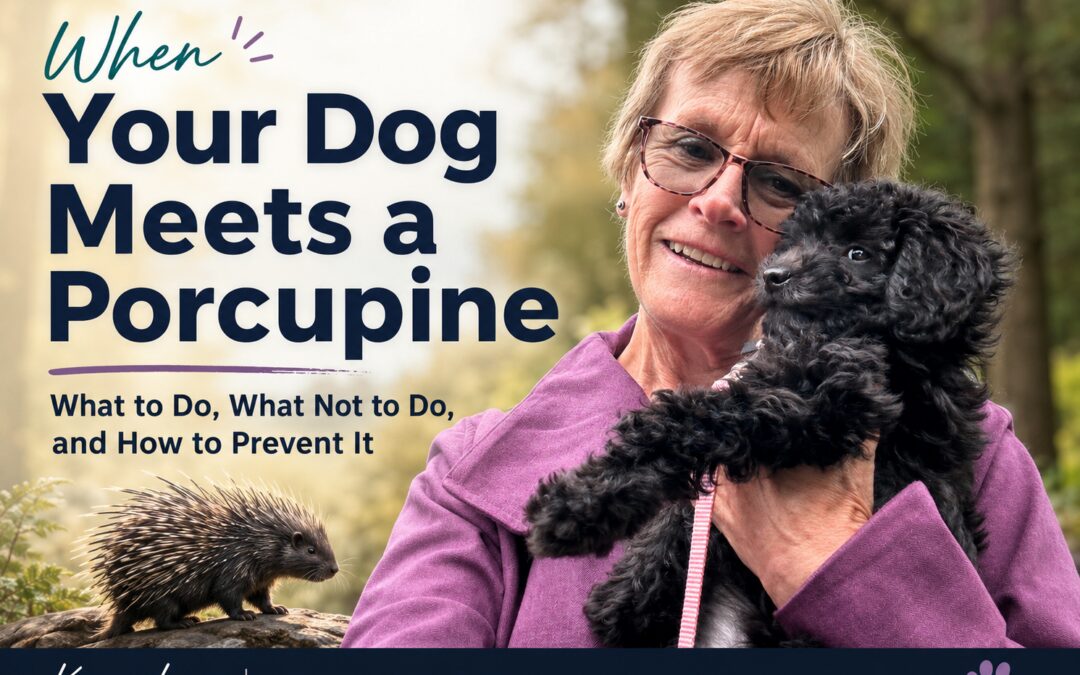
Porcupines are not looking for a fight.
Unfortunately, some dogs interpret a slow-moving woodland animal as an invitation to conduct a full investigation—with their face.
The porcupine usually objects.
The result can be dozens, or even hundreds, of quills embedded in a dog’s muzzle, mouth, chest, legs, or paws. It’s painful, frightening, and potentially much more serious than it first appears, which also means expensive.
A dog with porcupine quills needs prompt veterinary care. This is not the time for a pair of pliers, a YouTube tutorial, and misplaced confidence.
Porcupines Do Not Shoot Their Quills
Let’s clear up one of the most common myths first.
Porcupines cannot launch their quills through the air.
Their quills normally lie relatively flat against the body. When threatened, the porcupine raises them. The quills detach easily when another animal makes contact, particularly if the porcupine swings or presses its tail toward the threat.
In other words, the dog usually has to get close enough to touch the porcupine.
That may not take long.
A curious dog approaches. The porcupine turns its back or raises its tail. The dog lunges, sniffs, grabs, or bites. One poor decision later, everyone is heading to the emergency veterinary clinic.
The porcupine didn’t attack for sport. It defended itself using the equipment nature provided.
And nature was apparently having a particularly sharp day when it designed porcupines.
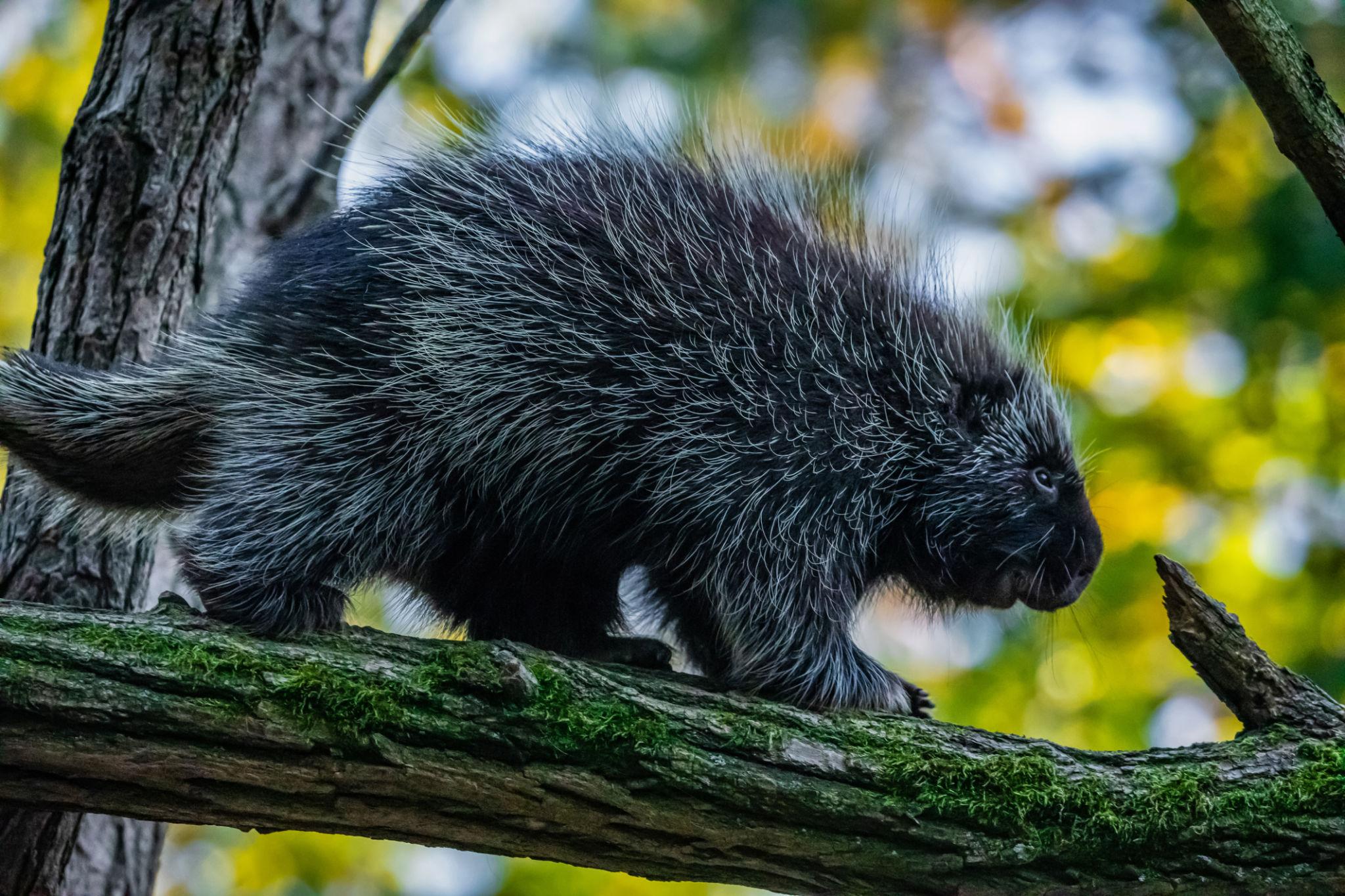
Porcupines are generally defensive animals. Trouble begins when a curious or prey-driven dog or other predator gets too close.
Why Porcupine Quills Are So Dangerous
Porcupine quills are not simply large splinters.
Their tips contain tiny backward-facing barbs that help them remain embedded in tissue. This makes them extremely painful to remove and allows them to work deeper as the dog moves, paws at its face, rubs against the ground, or struggles while someone tries to pull them out.
Quills may be visible around the:
- Muzzle
- Lips and gums
- Tongue and roof of the mouth
- Eyes
- Throat
- Chest
- Legs and paws
Some can break off below the skin or become buried so deeply that they are difficult to see or feel. Quills inside the mouth may also be missed without a thorough veterinary examination – ask me how I know!
Migration is another serious concern.
A retained quill can move through tissue and may eventually cause infection, joint problems, eye damage, or injury to internal organs. In rare cases, migrating quills can create a life-threatening emergency, or worse.
This is why “I pulled out the ones I could see” is not necessarily the end of the story.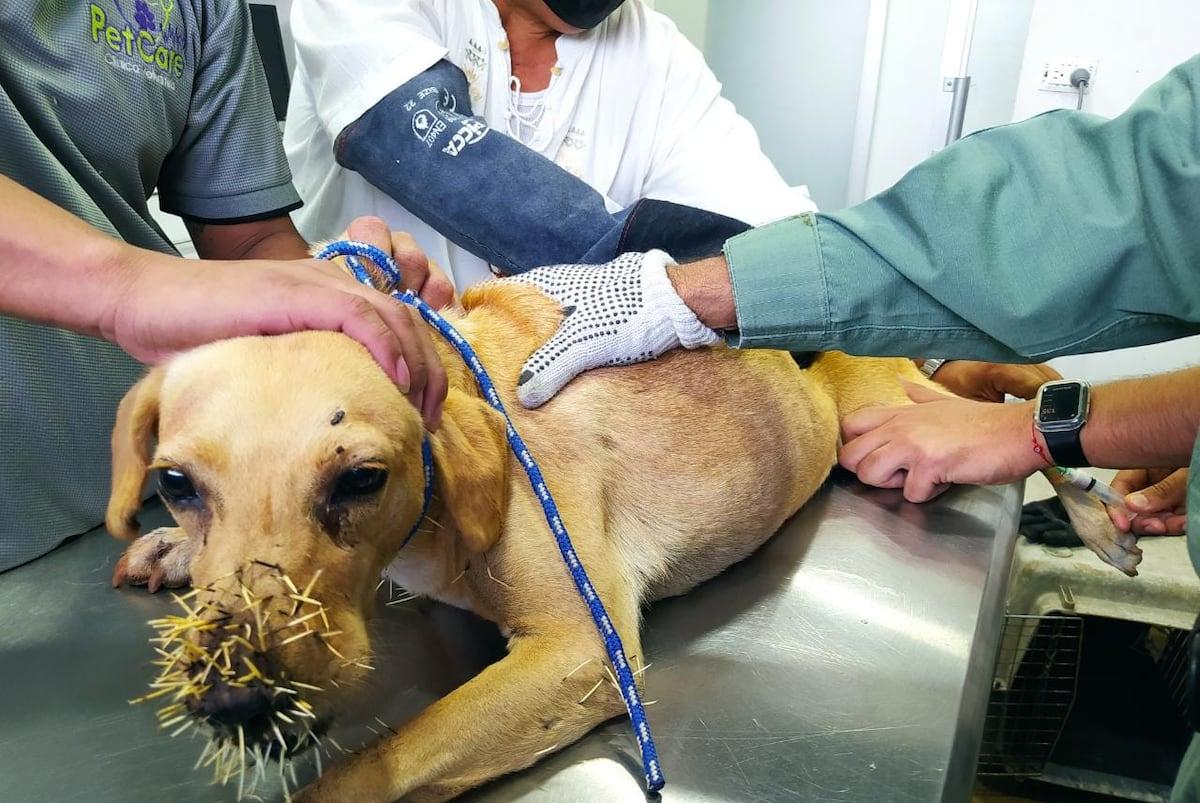
What to Do Immediately
The first few minutes matter.
Move Your Dog Away From the Porcupine
Do not allow a second approach.
Some dogs, in a magnificent demonstration of poor judgement, will try again—even with a face already full of quills.
Get your dog under control and move away calmly. Keep yourself out of reach of both the porcupine and your dog’s mouth.
A dog in severe pain may bite, including a dog that has never bitten before, and it’s not personal.
Stop Your Dog From Pawing or Rubbing
Try to limit movement and prevent your dog from pawing at its face or rubbing against the ground, furniture, or vehicle.
Rubbing and struggling can drive the quills deeper or break them beneath the skin.
Do NOT:
- Press on the quills.
- Cover them tightly.
- Attempt to examine deep inside the mouth while your dog is panicking.
Call a Veterinarian Immediately
Tell the clinic that your dog has been quilled by a porcupine.
Let them know:
- Approximately how many quills you can see
- Whether quills are near the eyes or inside the mouth
- Whether your dog is having difficulty breathing.
- How long ago the encounter happened.
- How far away you are.
Your veterinarian may direct you to an emergency clinic depending on the location and severity of the injuries.
Transport Your Dog Carefully
Keep your dog as still as reasonably possible.
Avoid allowing the dog to press its face against the back of a seat, a crate wall, a blanket, or your body. Drive directly to the clinic.
This is not the ideal moment to stop for coffee. Even I have limits.
Do Not Pull the Quills Out Yourself
It’s tempting.
Your dog is distressed. The quills look easy enough to grab. You want to help immediately.
But at home removal can make the situation worse.
Removing quills is intensely painful-it’s like pulling a fishing hook out against the barb! A struggling dog may cause the quills to break, bend, or penetrate farther. Your dog may also bite because of pain and fear. Veterinary professionals generally use deep sedation or general anesthesia so your dog can remain still while they thoroughly examine the mouth, eyes, skin, and other affected areas.
Do NOT:
- Cut the ends off the quills
- Crush or twist them
- Pull them with pliers
- Push them through the skin
- Attempt to remove quills near the eyes
- Reach into a distressed dog’s mouth
- Wait overnight to see whether the problem improves
Cutting the quills does not make them harmless. It may simply make the remaining portion more difficult to locate and remove.
The safest plan is remarkably unexciting: keep the dog quiet and go to the veterinarian.
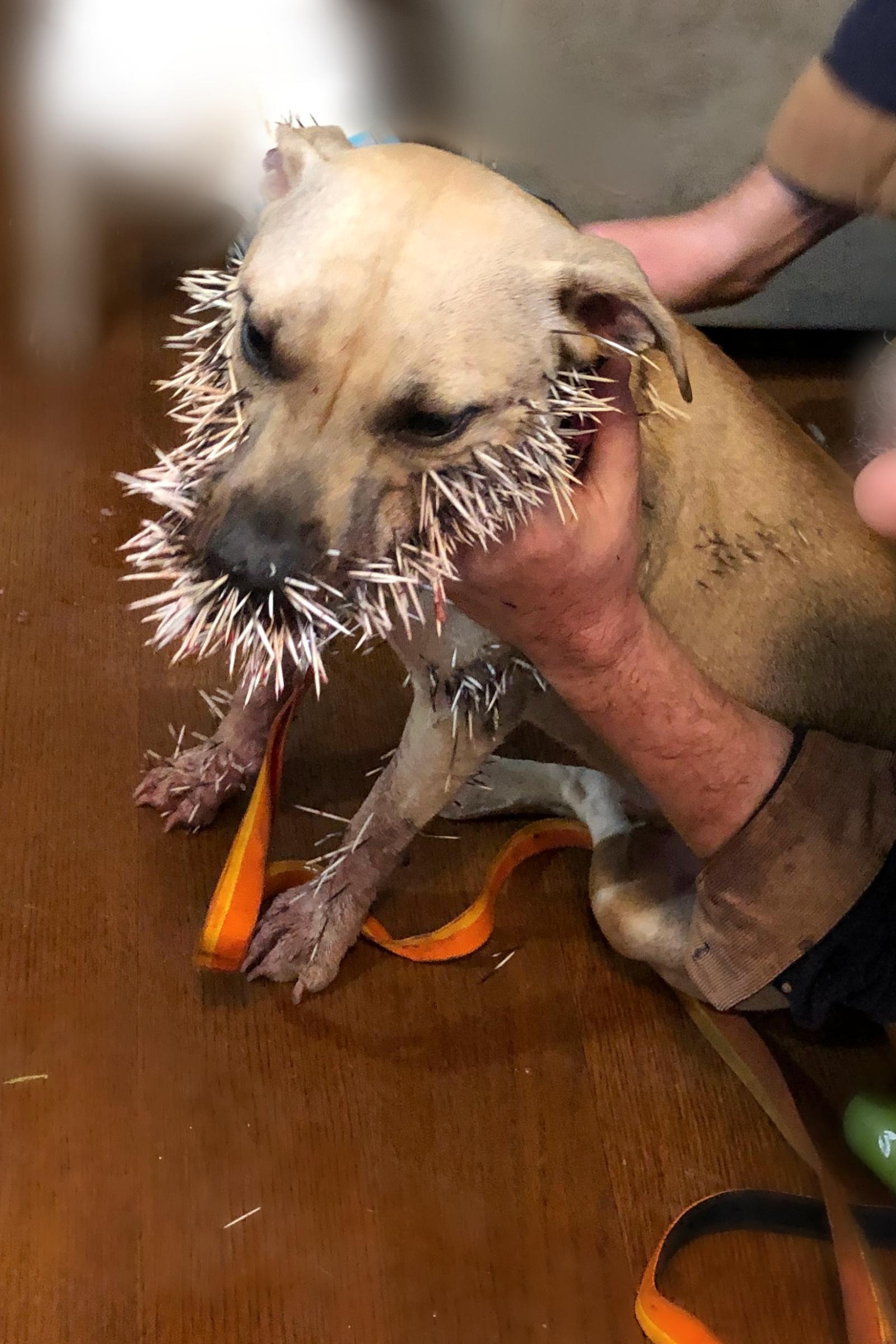
What the Veterinarian May Do
Treatment depends on the number and location of the quills.
Your veterinary team may:
- Sedate or anesthetize your dog
- Examine your dog’s mouth, tongue, throat, eyes, and skin
- Remove visible and accessible quills
- Treat wounds and manage pain
- Prescribe medication when appropriate
- Recommend follow-up monitoring
- Use imaging or further investigation if a migrated quill is suspected
Even with a careful examination, it may not be possible to guarantee that every quill has been found. Your veterinarian may ask you to watch for swelling, discharge, pain, lameness, reduced appetite, coughing, changes in breathing, or unusual behaviour afterward.
Follow those instructions closely.
A dog acting “mostly normal” is not proof that no quills remain.
Dogs are rather talented at doing something disastrous and then asking whether dinner is still on schedule.
Will Your Dog Learn to Avoid Porcupines?
Possibly.
I wouldn’t rely on it.
Some dogs learn from one painful encounter. Others repeat the behaviour because prey drive, curiosity, excitement, or impulsiveness overrides the previous consequence.
The pain alone doesn’t always teach the lesson we imagine it should.
This is something dog trainers see regularly. Dogs don’t necessarily connect an unpleasant outcome with the exact decision that caused it. A dog may remember the location, the smell, the sudden excitement, or very little at all.
Prevention still depends on the owner – that’s you.
How to Reduce the Risk of Another Encounter
You cannot control every wild animal in the environment, but you can reduce your dog’s chances of making a bad decision.
Strengthen Your Recall
A reliable recall gives you a chance to interrupt the approach before contact occurs.
Practise around gradually increasing distractions. Don’t wait until your dog is already six feet from a porcupine and emotionally committed to the project to see if your recall is working.
Recall training should include:
- Fast responses at home
- Practice on a long line
- Rewards that matter to your dog
- Gradual and controlled exposure to wildlife smells and movement
- A clear release after your dog complies.
A recall that works only when nothing interesting is happening is more of a polite suggestion.
Use a Long Line in Wildlife Areas
When walking near wooded trails, campgrounds, cottage properties, fence lines, brush piles, or rural areas, use a leash or long line if your dog’s recall is not dependable.
This is especially important around dawn, dusk, and at night, when visibility is reduced.
Carry a Proper Light
Use a strong flashlight or headlamp during evening walks.
Scan ahead rather than waiting for your dog to discover what’s beside the trail.
Check Your Property
Porcupines may shelter around hollow trees, rock piles, sheds, culverts, fallen logs, or other protected spaces. North American porcupines commonly occupy wooded areas and may use hollow trees, stumps, logs, caves, rocky crevices, or abandoned structures as shelter.
Look for signs of wildlife activity and restrict your dog’s access when necessary.
Teach a Strong “Leave It” and Emergency Turn
Your dog should understand how to disengage from something interesting and move away with you.
Teach this before you need it. That means practicing in areas of low to no distractions and gradually increasing the appeal of the distraction until both you and your dog are on auto pilot for ‘leave it’ and turning away from anything you don’t want your dog to have.
An emergency U-turn can be particularly useful when you spot wildlife ahead and need to leave without debate, negotiation, or a committee meeting.
Keep the Porcupine in Perspective
Porcupines are part of our wildlife landscape.
They are not villains, and they are not waiting in the woods plotting against your dog. They generally use their quills defensively when another animal gets close enough to threaten or touch them.
Our responsibility is to manage our dogs.
That means using a leash or long line when necessary, developing a dependable recall, watching the environment, and recognizing when curiosity is about to become an expensive veterinary adventure.
While dogs may be natural learners, some prefer practical demonstrations.
Unfortunately, porcupines provide memorable ones.
Final Reminder
When your dog connects with a porcupine:
Do not pull the quills yourself.
Keep your dog as still as possible, prevent rubbing or pawing, and contact a veterinarian immediately.
Prompt treatment gives the veterinary team the best chance of removing the quills safely and reducing the risk of hidden injuries, infection, and migration.
And after your dog has recovered, return to training.
Not because training can remove every risk from life, but because a reliable recall and good management may prevent the next face-first lesson.
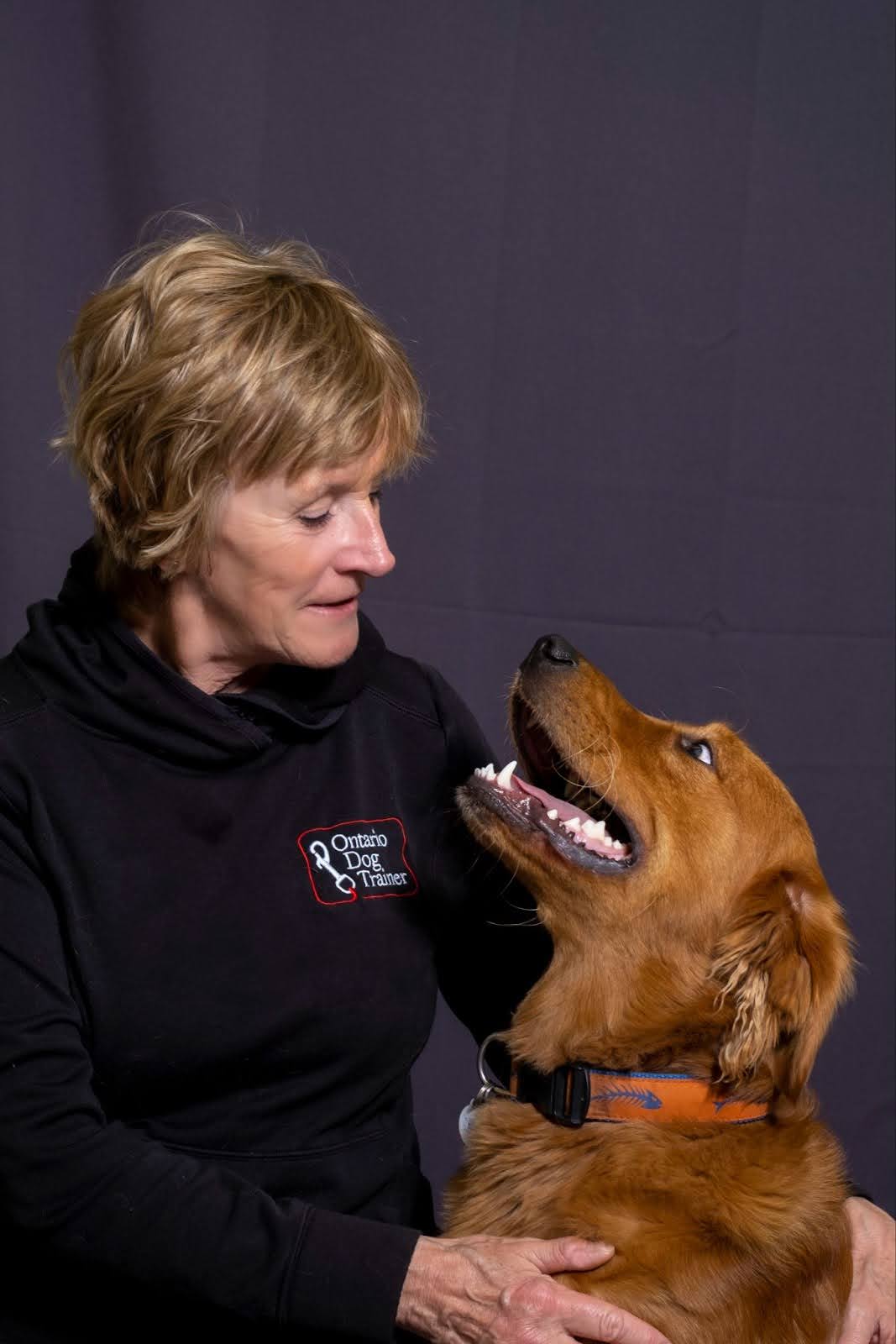 Karen Laws is a certified professional dog trainer, the founder of The Ontario Dog Trainer and the Dog Trainer TRIBE Training Academy. With decades of experience training dogs, educating people, and mentoring aspiring trainers, she is known for her practical, no-nonsense approach to helping both dogs and humans succeed.
Karen’s professional background includes education, public service, wildlife biology, competitive field dog work, and pet dog training. That combination gives her a unique perspective on behaviour, leadership, communication, and what it really takes to create lasting results.
Through her work with dog owners and developing trainers, Karen teaches far more than training exercises. She helps people understand the dog in front of them, improve their communication, and build the kind of confidence that leads to better outcomes in both training and business.
Karen is especially passionate about mentoring pet dog trainers who feel stuck and are ready to grow. Her message is clear, real, and grounded in experience: success in dog training comes from understanding behaviour, building trust, and being willing to do the work.
Follow Karen on Social Media: FaceBook, Instagram, LinkedIn, TikTok, YouTube,
Need personal help? Let’s chat! Click here to book a Virtual assessment!