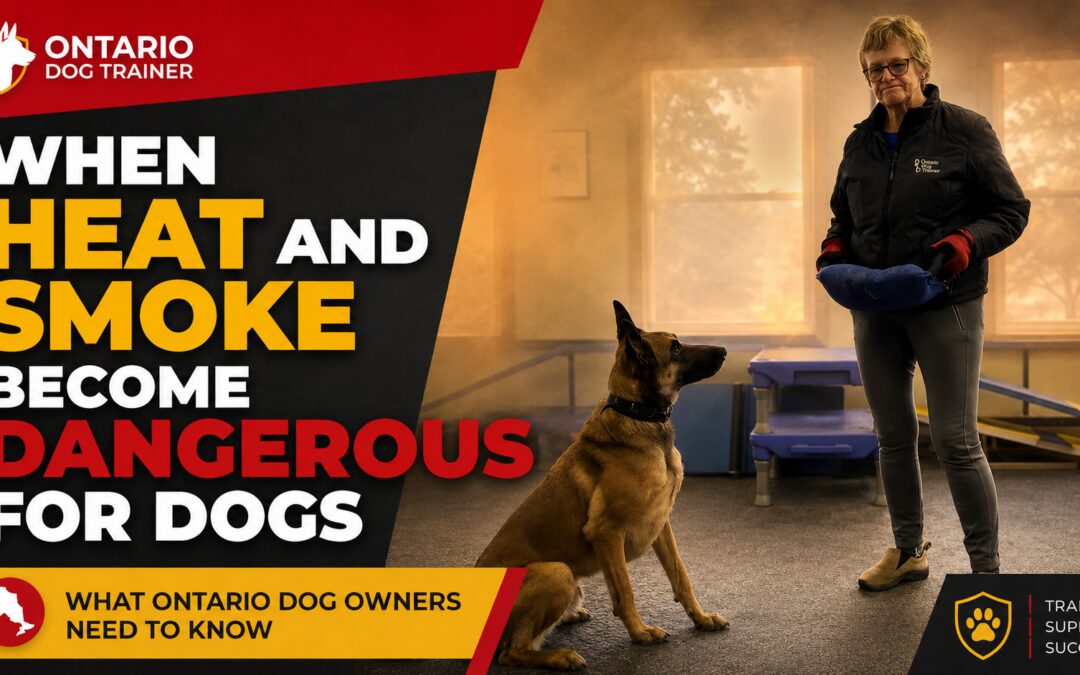
Ontario summers now bring more than heat. In July 2026, wildfire smoke once again spread across parts of the province, changing the air quality from hour to hour. The clear sky you see at breakfast might not match the smoky air by supper.
Most owners check the temperature before a walk. Fewer check the humidity or the Air Quality Health Index (AQHI). Both matter just as much.
I learned this the hard way with my dog, Prince, a Belgian Malinois. He is fit, strong, and always up for a game of tug. One hot, smoky day, he quit the game after just a few minutes. That is not like him at all. My eyes were already burning from the smoke outside, so I connected the dots fast. It turned out
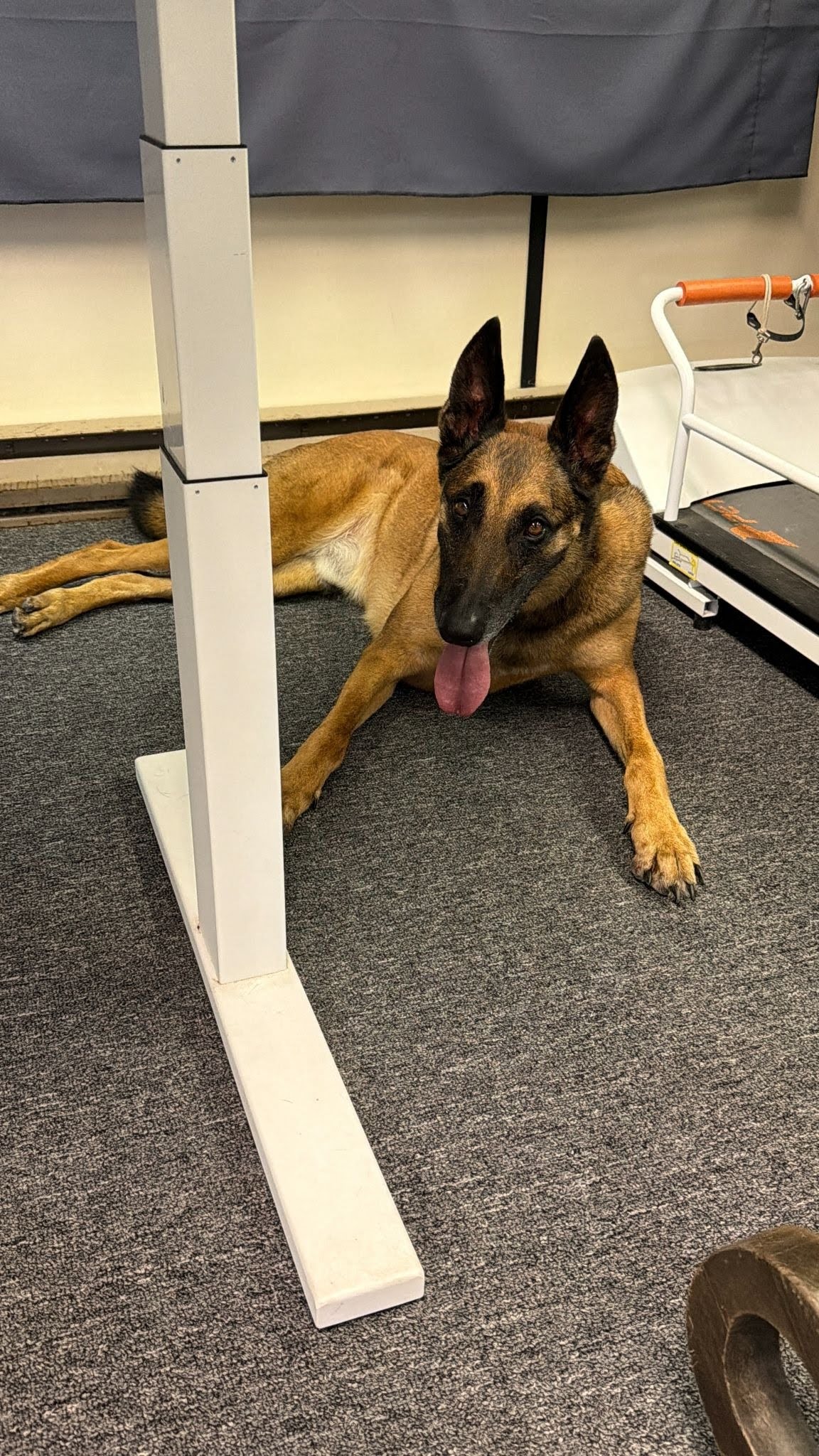 my old window air conditioner was pulling in that same smoky outdoor air.
If heat and smoke could slow down a dog as fit as Prince, they can affect any dog — especially older dogs, overweight dogs, flat-faced breeds, or dogs with heart or breathing problems. This post covers two things every Ontario dog owner should understand: heat stress and poor air quality from wildfire smoke. They often show up together, but they are not the same problem, so let’s look at each one clearly.
Part 1: Heat Stress and Heatstroke in Dogs
How dogs cool down
Dogs don’t cool off the way people do. We sweat all over our skin. Dogs only have a few sweat glands, in their paw pads. Their main way to cool down is panting. When a dog pants, air moves over the wet surfaces in its mouth and throat. As that moisture evaporates, it pulls heat away from the body.
This works well most of the time — until the air is too hot, too still, or too humid.
Why humidity makes it worse
Panting only works if moisture can evaporate easily. On humid days, the air is already full of moisture, so evaporation slows down. Your dog may pant harder and still cool down less. That’s why a warm, humid day can be more dangerous than a hotter, drier one.
Dogs that are excited, active, or determined to keep up with their owner often don’t stop on their own, even as their body heats up. Working dogs, sporting dogs, and high-energy dogs need extra caution for this reason.
Warning signs of overheating
Watch for:
- Heavy or constant panting
- Slowing down or lagging behind
- Seeking shade
- Drooling a lot
- Bright red gums
- Restlessness or trouble settling
- Ignoring commands your dog usually knows
- Taking a long time to recover after activity
- Refusing to keep walking or playing.
If your dog suddenly won’t listen or won’t continue, don’t push. This isn’t stubbornness — it can be a sign your dog is struggling. Stop, and head somewhere cool right away.
Heatstroke: an emergency
Heatstroke is a true medical emergency. Watch for:
- Weakness or stumbling
- Confusion or a dazed look
- Vomiting or diarrhea
- Pale, grey, blue, or very dark red gums
- Trouble breathing
- Collapse or seizures
If you see any of these signs, get your dog to a vet immediately, even if they seem to improve once inside. Heatstroke can damage the kidneys and other organs long after the outward symptoms fade.
What to do right away
- Stop the activity. Don’t finish the walk or ask for “one more.”
- Move to somewhere cool — shade, an air-conditioned building, or a cool car.
- Call a vet and describe what happened and how long your dog was out in the heat.
- Cool your dog gradually with cool (not ice-cold) water on the paws, belly, groin, armpits, and neck. Use a fan to help the water evaporate. Avoid wrapping your dog tightly in wet towels — they can trap heat if not changed often.
- Offer small sips of water, only if your dog is fully alert and swallowing normally.
- Keep watching your dog’s breathing, gum colour, and alertness on the way to the vet.
Part 2: Wildfire Smoke and Air Quality
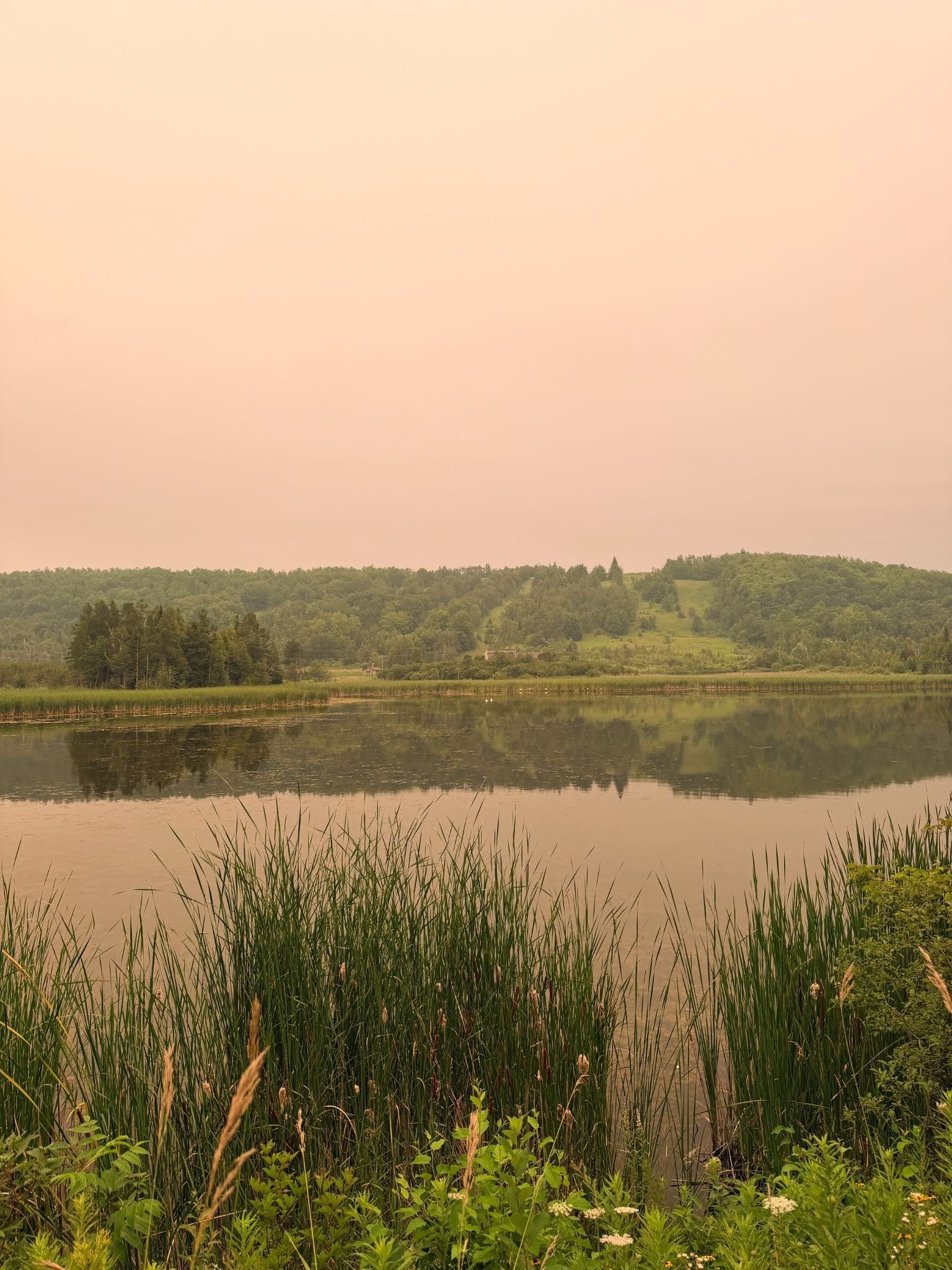
Early morning on my property, facing the sunrise, smoke in the air made it look and feel like dusk.
How smoke affects dogs
Wildfire smoke carries tiny particles that can travel deep into the lungs and even affect the heart. Dogs are not protected just because they aren’t outside for long. In fact, dogs breathe faster and inhale more air for their body size than people do, and their noses are closer to the ground, where smoke and pollution often settle. This means dogs may get a bigger dose of bad air than we do during the same walk.
Signs your dog is bothered by smoke
- Coughing or a dry, hacking cough
- Wheezing or noisy breathing
- Red, watery eyes
- Runny nose
- Tiring out faster than usual
- Not wanting to exercise
- Weakness
- Eating less
- Slow recovery after activity
Pale, grey, or blue gums are a sign of a real breathing emergency and need a vet right away.
Dogs at higher risk from smoke
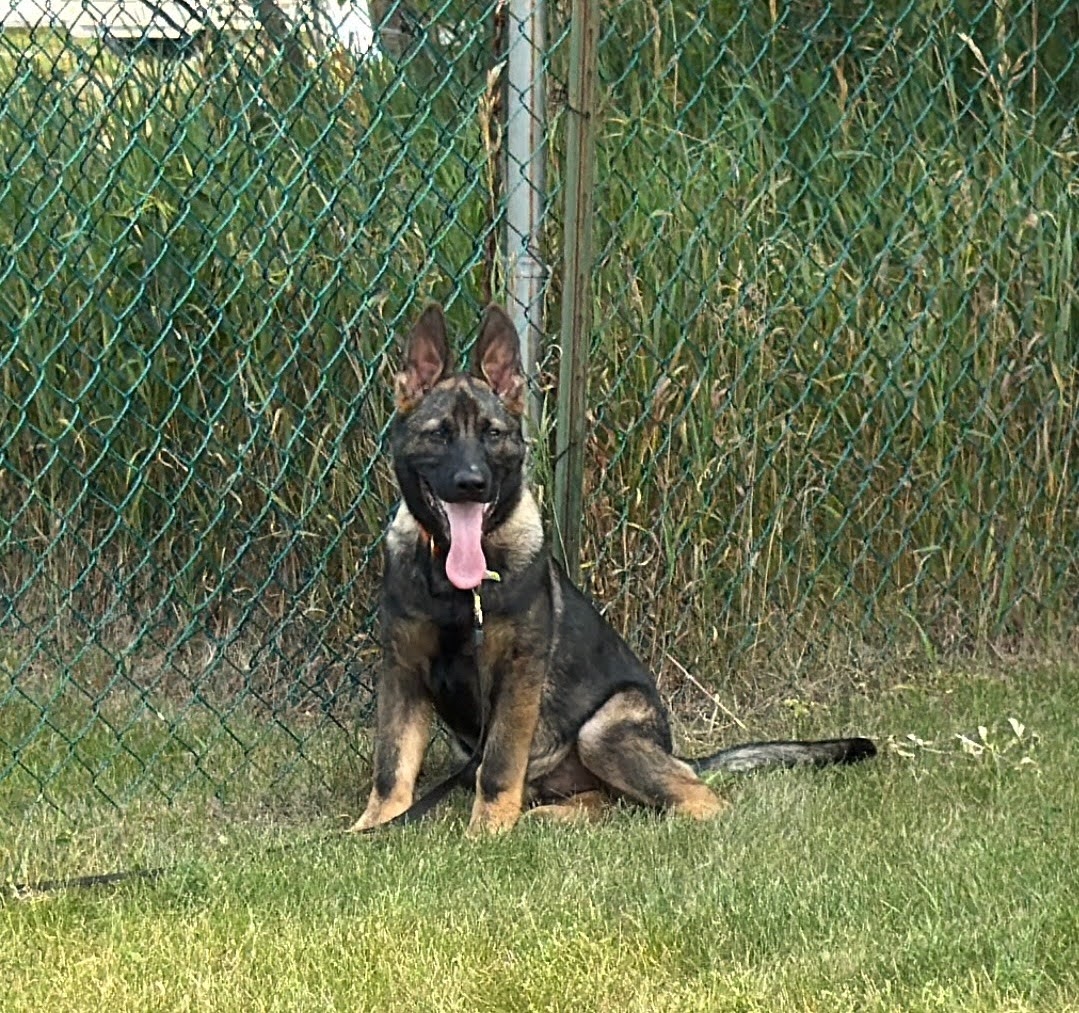
Ringo, Puppy Training and Play cut short because of Poor Air Quality and High Temperatures
- Senior dogs and puppies
- Flat-faced (brachycephalic) breeds, like Pugs, Bulldogs, and Boston Terriers
- Dogs with heart or lung conditions
- Overweight dogs
- Dogs recovering from illness
- Very active or high-energy dogs
You don’t need to see thick smoke or smell it strongly for the air to be unhealthy. Fine particles can be present even on days that don’t look smoky.
Reading the Air Quality Health Index (AQHI)
Canada’s AQHI is built for people, but it’s still a useful guide for dogs when you pair it with common sense:
| AQHI Reading | Risk Level | What to Do With Your Dog |
| 1–3 | Low | Normal walks and play are fine. |
| 4–6 | Moderate | Go easier on brachycephalic breeds, seniors, and dogs with health issues. Limit hard running or fetch. |
| 7–10 | High | Keep walks short — bathroom breaks only. Skip exercise for all dogs. |
| 10+ | Very High | Keep dogs indoors with clean, filtered air if possible. |
Check your local AQHI right before you head outside — it can look very different in Toronto, Ottawa, Thunder Bay, or a rural area on the same day, and can shift within hours.
Why Heat and Smoke Together Are More Dangerous
Heat makes your dog pant harder. Smoke irritates the same airways your dog needs for panting and cooling. Put them together, and your dog may be working harder to breathe and cool down at the same time. Add humidity, and panting becomes even less effective. This combination is why checking only the temperature isn’t enough during Ontario summers.
Before You Head Outside, Check All of This
- Temperature — a starting point, not the whole picture
- Humidity or Humidex — tells you how the heat will actually feel
- AQHI reading — check it locally and right before you go out
- Smoke advisories — look these up through Environment and Climate Change Canada or the WeatherCAN app
- Time of day — mornings are often (not always) better than late afternoon
- Surface heat — pavement and turf get much hotter than the air around them
- Your own dog — is the panting starting sooner than usual? Is recovery taking longer? Your dog’s normal behaviour is your best clue.
Simple Changes That Help
- Walk earlier in the day
- Keep walks shorter
- Stick to shade
- Swap long walks for quick bathroom breaks
- Cut back on fetch, running, and hard play
- Carry water
- Never leave a dog alone in a parked car
- Keep dogs inside on heavy smoke days, with windows closed
- Use air filtration indoors if you have it
- Watch your dog’s breathing after activity, not just during it
Rainy-day energy burners (without a long walk)
- Short obedience practice (2–3 minutes)
- Food puzzles
- Scent games
- Calm retrieving in the house
- Grooming and handling practice
A quiet day indoors is not a failure — it’s a smart call on a bad-air day.
Travelling or RVing This Summer?
- Check temperature, Humidex, and AQHI along your whole route
- Look for smoke advisories, not just at your destination
- Confirm your RV’s air conditioning is working before you leave
- Keep bathroom breaks short on smoky days
- Carry extra water and basic first-aid supplies
- Save the phone number for a vet clinic near where you’re staying
Never assume a parked RV or car will stay cool. Power can fail, breakers can trip, and air conditioners can stop working without warning.
The Walk Can Wait
Your dog doesn’t need to finish the walk, complete the training session, or prove it can handle the heat. If something looks off — slower pace, heavier panting, longer recovery — stop first and figure out the rest after.
Prince’s collapse that day taught me something I won’t forget: fitness doesn’t make a dog immune to heat or smoke. Check the conditions. Watch your dog. Be ready to change the plan.
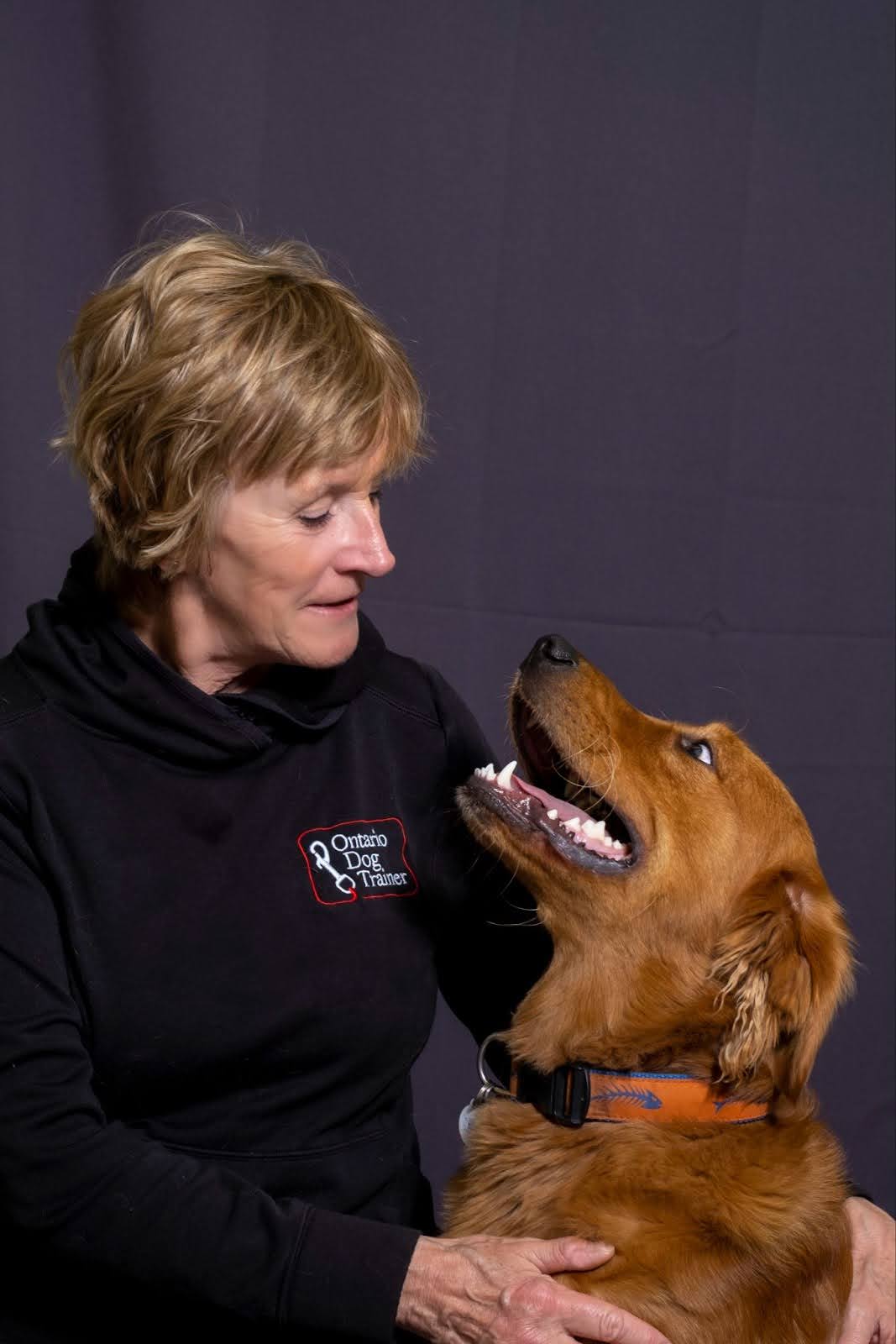 Karen Laws is a certified professional dog trainer, the founder of The Ontario Dog Trainer and the Dog Trainer TRIBE Training Academy. With decades of experience training dogs, educating people, and mentoring aspiring trainers, she is known for her practical, no-nonsense approach to helping both dogs and humans succeed.
Karen’s professional background includes education, public service, wildlife biology, competitive field dog work, and pet dog training. That combination gives her a unique perspective on behaviour, leadership, communication, and what it really takes to create lasting results.
Through her work with dog owners and developing trainers, Karen teaches far more than training exercises. She helps people understand the dog in front of them, improve their communication, and build the kind of confidence that leads to better outcomes in both training and business.
Karen is especially passionate about mentoring pet dog trainers who feel stuck and are ready to grow. Her message is clear, real, and grounded in experience: success in dog training comes from understanding behaviour, building trust, and being willing to do the work.
Follow Karen on Social Media: FaceBook, Instagram, LinkedIn, TikTok, YouTube,
Need personal help? Let’s chat! Click here to book a Virtual assessment!