

Quick answer: Real puppy training progress isn’t a puppy that knows 20 commands — it’s a puppy that waits at doors, doesn’t jump up when excited, settles without a fuss, sleeps through the night in a crate, and can recover after getting overstimulated. This is what that actually looks like, day and night, introducing Tala, a female Golden Retriever puppy currently in training, as the example.
Puppy training progress rarely looks dramatic.
Most of the time, it looks like a puppy being shown how to wait at a door instead of barging through it, until one day they ‘just do it’. It looks like walking on a loose leash for a little longer than yesterday until one day, you walk around the block without chaos. It looks like going into a crate without a protest — and staying asleep in it until morning. And sometimes, the biggest accomplishment of the day is simply lying down and doing absolutely nothing.
For Tala, that last one has been particularly important, and challenging.
Tala is a bright, busy Golden Retriever puppy who came to training with plenty of enthusiasm for life. Settling herself? That was a different matter. She’s the kind of puppy who can make you wonder whether someone quietly installed an extra motor when you weren’t looking.
Over her first couple of weeks of training, Tala has been making steady progress toward the bigger goal: becoming a calm, confident, well-mannered dog who understands how to live successfully with her family. That requires much more than teaching a puppy to sit — it requires a routine that holds up around the clock, including overnight, regardless of who is moving around the house and when they are roaming.
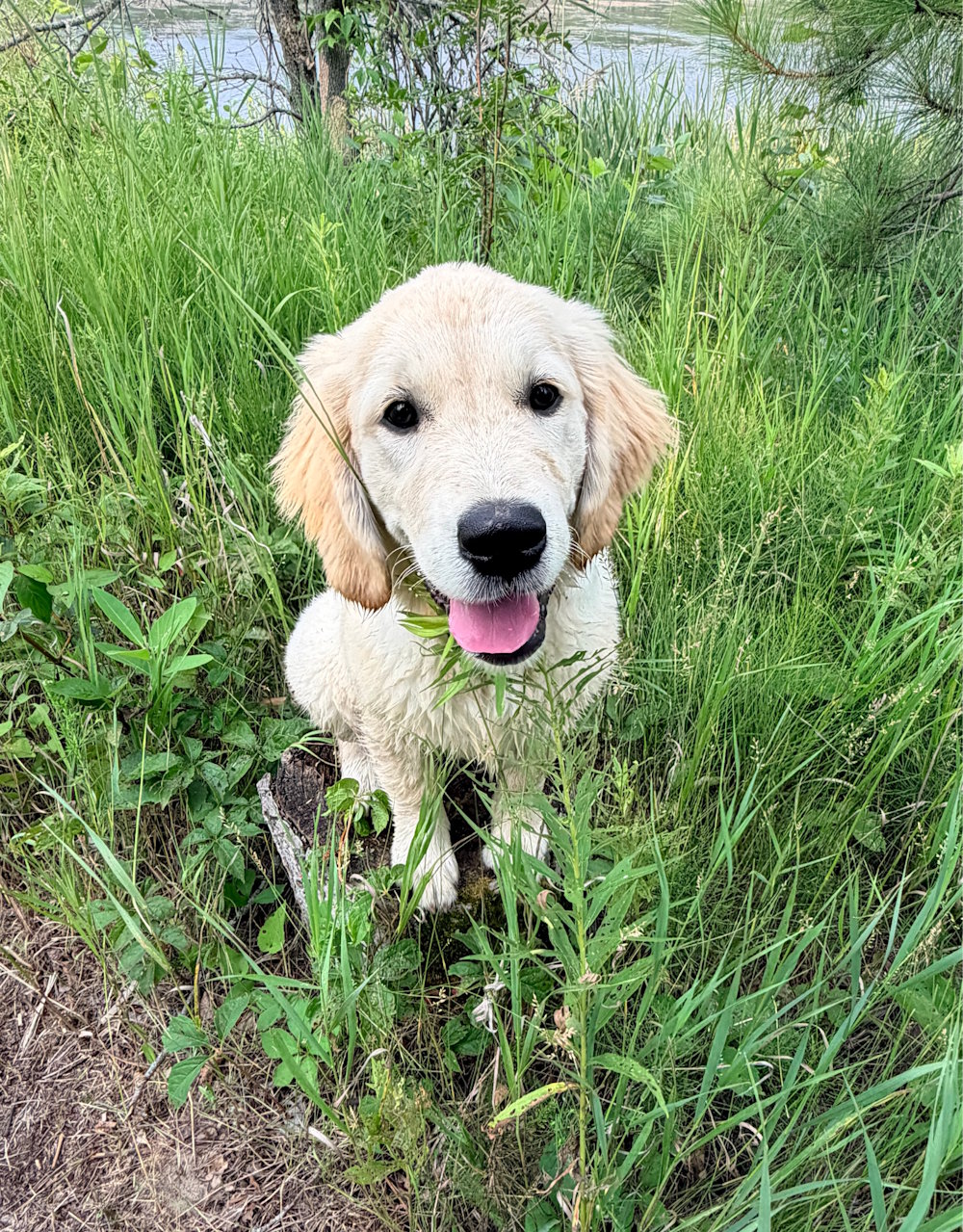
What Does Puppy Training Progress Actually Look Like?
Puppy training progress shows up as small, repeatable behaviours rather than big milestones: calm door exits, longer settles, sleeping through the night in the crate, better recovery after excitement, and consistent responses to cues like “Come”, “Place”, “Stay” and “Leave It”, practiced and tracked daily rather than judged in a single session.
We Started with Structure, Not More Commands
One of the most important parts of Tala’s training has been establishing a predictable Work–Rest–Play balance.
Her days include short focus sessions, walks and sniffing opportunities, recall practice, leash work, food games, play, supervised time with people and, very importantly, scheduled rest.
That last part gets overlooked with puppies all the time. People see an energetic puppy and assume “she needs more exercise.” Sometimes she does. Sometimes she needs a nap.
Tala is no different than most puppies. She can become overstimulated very quickly. Because she’s naturally busy, tiredness doesn’t necessarily look like a sleepy puppy curling up on the floor. It can look like more movement, more grabbing, more biting, more pacing and more general puppy nonsense.
Puppies, like adult dogs, thrive on a predictable routine. Tala’s routine includes intentional crate periods throughout the day, particularly after activity and before situations where she’s likely to become overstimulated. We’re not waiting for her to completely lose the plot before giving her a chance to rest. We’re trying to stay ahead of it. That same principle getting ahead of overstimulation instead of reacting to it- is what makes the overnight routine described below work too.
Crate Training Progress: From Daytime Naps to Sleeping Through the Night
Crate training has become one of Tala’s stronger skills. She’s now well established in her crate, goes in willingly with the help of a kibble-stuffed Kong, and rests quietly when left alone — day or night.
That’s not simply about convenience for the humans. Crate training is part of teaching self-regulation.
The daytime crate routine is simple:
- Calm entry
- Calm rest
- Calm exit
No drama when she goes in. No celebration worthy of a returning astronaut when she comes out. Just a normal part of her day.
Getting a puppy to sleep through the night in a crate runs on the same principle, just stretched across a full night. There’s no single trick that makes it happen — it’s a routine, repeated consistently, on both ends of the night.
Setting up for the night. One simple tool is background noise — a radio left on low in the room. It’s not about drowning out silence; it’s about giving a puppy a consistent, unchanging sound so that ordinary household noises don’t each register as something new to react to. The same low, steady sound every night becomes part of “this is what nighttime sounds like,” rather than something the puppy has to process.
The morning release matters as much as the night. How a puppy comes out of the crate in the morning sets the tone for the whole day. Instead of the door opening straight into a full-speed exit, we ask for a calm moment first — not a performed sit-stay, just a beat of settling before the latch moves. If the first thing that happens every morning is a sprint out the door, the crate door becomes a starting gun, and puppies learn that pattern fast. A calm release teaches the opposite lesson: coming out of the crate doesn’t require maximum excitement to be worth it.
Potty comes first, every time, no exceptions. Straight from the crate to outside, before greetings, before breakfast, before anything else. Making this automatic — same door, same path, same order — removes decision-making from a still-half-asleep puppy and prevents accidents that would otherwise get unfairly blamed on “the crate isn’t working,” when really it’s the routine around the crate that needs tightening.
Praise the calm moments, not just the cute ones. During the outdoor portion of the morning routine, most of the feedback is quiet and matter-of-fact — “good girl,” “easy,” “good” — timed to moments when a dog is simply behaving well, not performing a trick. Marking calm behaviour teaches a puppy that being easygoing gets noticed. If the only time a puppy hears praise is during high-energy play, that’s the behaviour that gets reinforced.
Reward the routine, then let them be dogs. After the potty and settle portion, a reward comes for the sequence that came before it — not as a random treat. Only then does supervised group play happen. Structure first, freedom second. It’s the same “earn it” principle that applies to leash walks, doorways, and crate time generally.
That ability to switch from activity to rest — and to hold that pattern for eight hours overnight — is one of the most useful life skills we can give a puppy.
The Harder Skill: Teaching a Puppy to Settle
This has been a particularly important area for Tala. Like many puppies, she finds settling outside the crate much more challenging than settling inside it.
That’s why we’ve been working on what I call Settle the Dog. This exercise involves setting a boundary in a way that teaches her to hang out near a person without expecting constant entertainment, touching, talking or activity.
For a busy puppy, “doing nothing” is often challenging and is actually a valuable skill for them to learn. Tala needs to discover that being with her person doesn’t mean someone must constantly pet her, talk to her, throw something, feed her, or otherwise organize the next item on her social calendar. Sometimes you just exist together.
We’ve been using tethered settling and quiet time with her family as an alternative to always relying on the crate. The goal is for Tala, as it should be for every puppy, is to eventually regulate herself and relax while remaining part of normal household life.
Door Manners: A Small Exercise That Teaches a Big Skill
One of Tala’s successes has been calm behaviour at doors. Instead of assuming every open door is an invitation to launch herself through it, she’s learning to “wait” and let her handler decide when she moves through.
This sounds like a small exercise. It isn’t. Doorways are opportunities to teach impulse control, communication, awareness of, and respect for the handler — and you don’t need a 30-minute training session to work on it. You’re already walking through the door. Train the moment you have and before long, you will have several successful repetitions of a desired skill or behaviour. That’s how good manners become habits — the crate door is really just another doorway with the same rule.
Puppy Leash Training: Staying Connected, Not Just Walking Nicely
Walking a puppy on a leash can be a huge challenge because many owners expect their puppy to “heel” and “stay close” before the puppy understands any rules of engagement. Tala is working on building her ‘following’ mindset by walking politely using a longer line and connecting with light leash communication.
The goal isn’t a puppy marching beside your knee staring at you for an entire walk. She gets opportunities to sniff and explore — she’s a dog, she should. But exploration doesn’t mean completely disconnecting from the person on the other end of the leash.
We’re teaching her that she can investigate the environment while still checking in, responding to communication, and remembering she didn’t come on the walk alone. Her outings also include random recalls, leash manners, and simple exercises built into the environment — practising “Place” on something along the trail, or asking for a recall during a sniffing session. Training becomes part of the walk instead of a separate event.
Building Useful Skills, Not Just Collecting Commands
Tala’s developing skill set includes:
- Come when called
- Sit with duration
- Down with duration
- Place
- Leave It
- Out/Drop It
- Crate (including sleeping through the night)
- Loose-leash walking
- Door manners
But what matters just as much, if not more, is what happens between those commands:
- Can she accept calm and purposeful direction without getting frustrated?
- Can she recover immediately after being calmly interrupted?
- Can she spend supervised time loose in the house without grabbing everything she sees?
- Can she settle near her family, and stay settled all night in her crate?
- Can she make a better decision even when nobody has food in hand?
Those are the behaviours that determine what living with the dog will actually be like.
Addressing Normal Puppy Behaviour (Ankle Biting, Jumping, Grabbing)
Tala is still a puppy. That means we’re also addressing things like ankle biting, jumping, pant tugging, and grabbing.
When those behaviours happen, they’re interrupted calmly and immediately — no yelling, no extended lecture, no emotional negotiation with a puppy. We interrupt the unwanted behaviour, provide clear direction for the behaviour we want, and move on. The goal isn’t to turn every mistake into an event. It’s to make the right answer clearer.
Freedom Comes with Responsibility
Tala is getting supervised freedom indoors, but she isn’t simply being turned loose and expected to make great decisions all day. She is attached to a house line that she drags indoors when appropriate and a longer line outdoors so we can supervise, communicate, and prevent her from rehearsing unwanted behaviours.
As her ability to make good choices improves, so does her freedom. That’s how I prefer to look at puppy freedom: it’s earned through demonstrated responsibility, not because the calendar says the puppy is now six months old.
How to Track Puppy Training Progress at Home
One reason I created a daily and weekly success tracker for Tala is that puppy owners often underestimate how much progress is happening. They notice the things that still aren’t working — of course they do, the puppy just attached herself to their pant leg again. It’s hard to overlook.
But when we deliberately track behaviours such as calm door exits, recalls, loose-leash walking, crate naps, duration of overnight sleep, Place, settling, and appropriate free time, we start seeing the pattern.
The tracker also asks Tala’s family to identify three daily wins and choose one priority for the following day. Training becomes much less overwhelming this way — you don’t need to fix everything today, you need to notice what worked, decide what needs attention next, and keep going.
Putting the Overnight Routine Together
If you take nothing else from Tala’s crate progress, take this sequence — it works the same way whether it’s a midday nap or a full night’s sleep:
- Set up for the night — same crate, same steady background sound, same wind-down beforehand.
- Calm release in the morning — a settled moment before the door opens, not an excited scramble.
- Straight outside for potty — same path, same door, every single time.
- Praise the calm behaviour you see along the way, not just the exciting moments.
- Reward the routine, then allow supervised free time or play as the “prize” at the end.
None of these steps are complicated on their own. What makes them work is repeating them in the same order, at the same times, until the puppy stops needing to think about what happens next — because they already know.
FAQ: Puppy Training Progress, Crate Training and Overnight Sleep
How long does it take to see puppy training progress? Most puppies show noticeable progress in specific skills — like calm door exits, short settles and checking in with you — within the first couple of weeks of consistent, structured daily routines. Sleeping through the night in a crate often follows a similar timeline once the daytime and overnight routine is consistent. Full self-regulation and reliable behaviour around distractions typically take several months of ongoing practice.
Why won’t my puppy sleep through the night in the crate? Usually it’s inconsistency somewhere in the routine — a different bedtime setup each night, an overly excited release in the morning, or a puppy that’s overstimulated rather than tired at bedtime. Fix the routine around the crate before assuming the crate itself is the problem.
Does background noise actually help a puppy sleep in a crate? A steady, low, unchanging sound (a radio, a fan, white noise) can help a puppy stop startling at every small household noise overnight, because it gives them one consistent baseline sound instead of unpredictable silence.
Why does my puppy get worse before naps or crate time? Overstimulated puppies often show more activity, biting, and running frantically (Zoomies) or pacing rather than obvious sleepiness. Scheduling rest before a puppy melts down — rather than after — prevents this cycle, day or night.
What’s the difference between obedience training and self-regulation? Obedience training teaches a puppy specific cues like Sit or Come. Self-regulation teaches a puppy to manage its own excitement and settle without being told — including staying settled overnight — a skill that determines how easy the dog is to live with day to day.
What’s the first thing I should do after opening the crate in the morning? Go straight outside for a potty break, using the same route every time. Skip greetings, breakfast, and play until after this step.
How do I track my puppy’s training progress at home? Track specific behaviours daily (crate naps, overnight sleep, recalls, loose-leash walking, calm door exits) and note three wins and one priority for the next day. Patterns become visible over days and weeks, even when day-to-day progress feels slow.
This Is What Puppy Training Progress Really Looks Like
Tala isn’t finished. She shouldn’t be, she’s a puppy. There will still be days when her brain temporarily leaves the building, and moments when something she did perfectly yesterday suddenly appears to have become classified information. That’s puppy training.
But underneath all those individual exercises, the daytime ones and the overnight ones, Tala is learning to listen, think, settle, accept direction, stay connected, manage excitement, and understand what’s expected of her. Those skills will matter far more throughout her life than whether she learned 25 commands before her first birthday.
The objective has never been to create a perfect puppy. The objective is to help puppies like Tala become a dog her family genuinely enjoys living with. And that happens one calm door, one good recall, one quiet crate rest, one full night’s sleep, and one successful “do absolutely nothing” session at a time.
Those small moments are the training. And that’s how puppies like Tala are making progress, day and night.
Working through similar puppy challenges?
Good puppy training isn’t just about teaching commands; it’s about creating structure, communication, and everyday habits that make living together easier, around the clock. If your puppy is struggling with biting, jumping, settling, leash walking, or sleeping through the night in the crate, learn more about puppy training programs at Ontario Dog Trainer.
For Trainers: You Already Have the Skill. Let’s Build the Business Around It.
If you got this far and the “for the trainer” notes hit closer to home than the puppy advice, that’s not an accident.
You didn’t learn what you know from a weekend seminar. You learned it from doing it, over and over, until it became instinct. The gap isn’t your skill. It’s that you’re running a five-star operation with no sign, no menu, and no prices on the board — and people are starting to notice you deserve better than that, even if you haven’t said it out loud yet.
The Dog Trainer TRIBE Academy is where that gets fixed. It’s coaching built specifically for trainers who already have the hands-on ability and need the business, pricing and positioning to finally match it — starting with TRIBE Foundations at $697
If you’ve been doing the work without the recognition, this is where that gap closes.
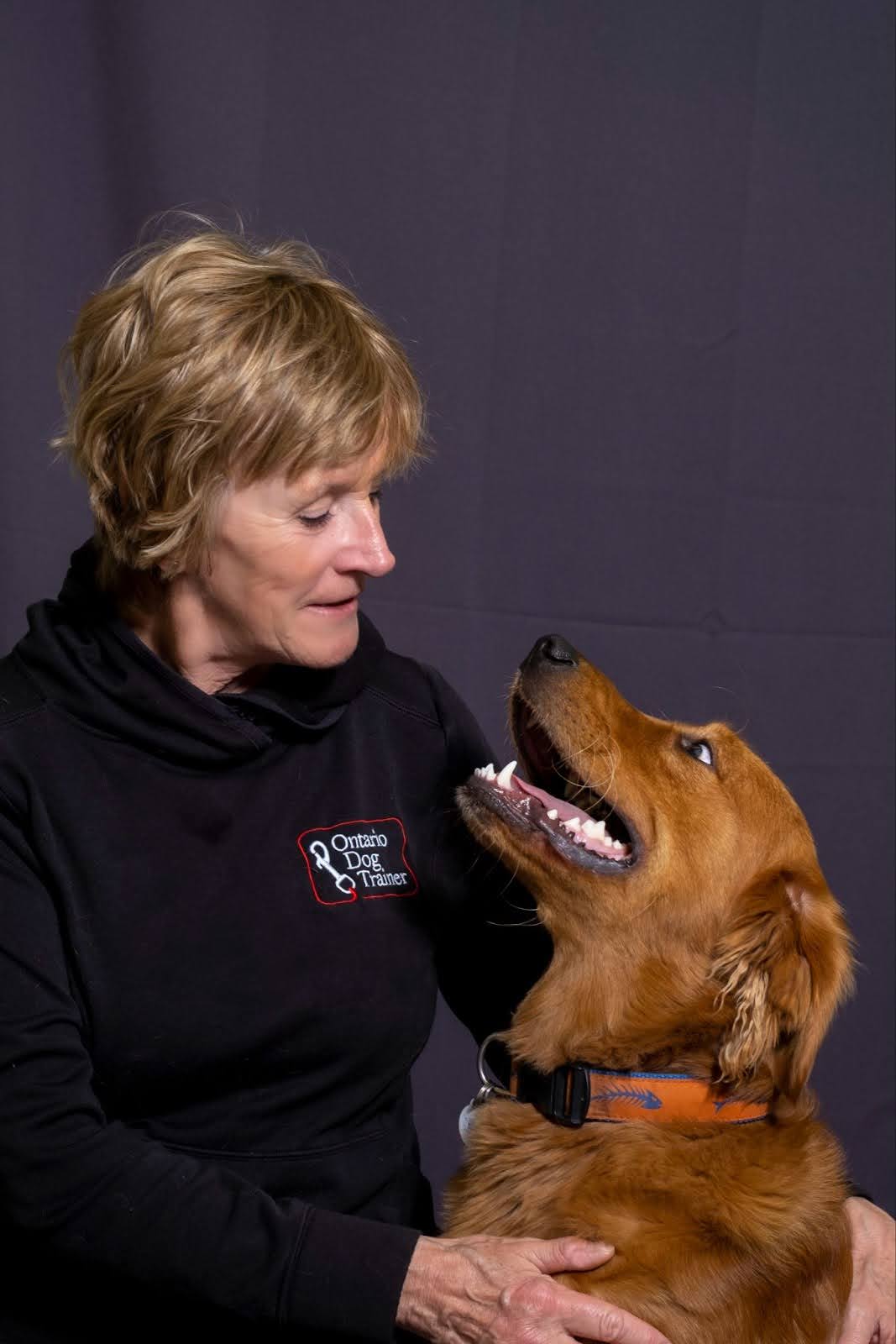 Karen Laws is a certified professional dog trainer, the founder of The Ontario Dog Trainer and the Dog Trainer TRIBE Training Academy. With decades of experience training dogs, educating people, and mentoring aspiring trainers, she is known for her practical, no-nonsense approach to helping both dogs and humans succeed.
Karen’s professional background includes education, public service, wildlife biology, competitive field dog work, and pet dog training. That combination gives her a unique perspective on behaviour, leadership, communication, and what it really takes to create lasting results.
Through her work with dog owners and developing trainers, Karen teaches far more than training exercises. She helps people understand the dog in front of them, improve their communication, and build the kind of confidence that leads to better outcomes in both training and business.
Karen is especially passionate about mentoring pet dog trainers who feel stuck and are ready to grow. Her message is clear, real, and grounded in experience: success in dog training comes from understanding behaviour, building trust, and being willing to do the work.
Follow Karen on Social Media: FaceBook, Instagram, LinkedIn, TikTok, YouTube,
Need personal help? Let’s chat! Click here to book a Virtual assessment!