
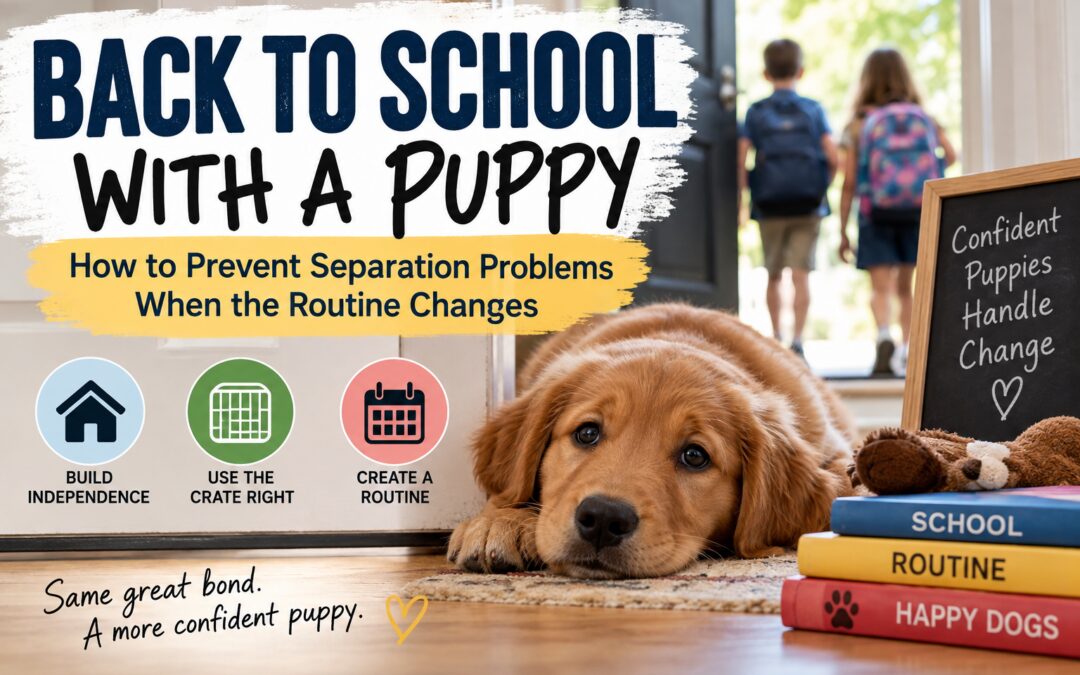
If you brought home a puppy this summer, September can come as a bit of a shock.
Not necessarily for you.
For the puppy.
During June, July and August, life may have been pretty wonderful from your puppy’s point of view. Kids were home. Vacations happened. People came and went. There was activity throughout the day, somebody was usually available for a potty break, and your puppy rarely had to spend much time completely alone.
Then September arrives.
School starts. Work schedules become more structured. Vacations end. The house that was busy all summer suddenly becomes very quiet.
And the puppy who seemed perfectly happy and confident a few weeks ago may suddenly start barking, whining, chewing, scratching doors, struggling in the crate or following you everywhere when you are home.
Owners understandably wonder:
What happened to my puppy?
Quite often, nothing “happened.”
The puppy simply wasn’t prepared for the change.
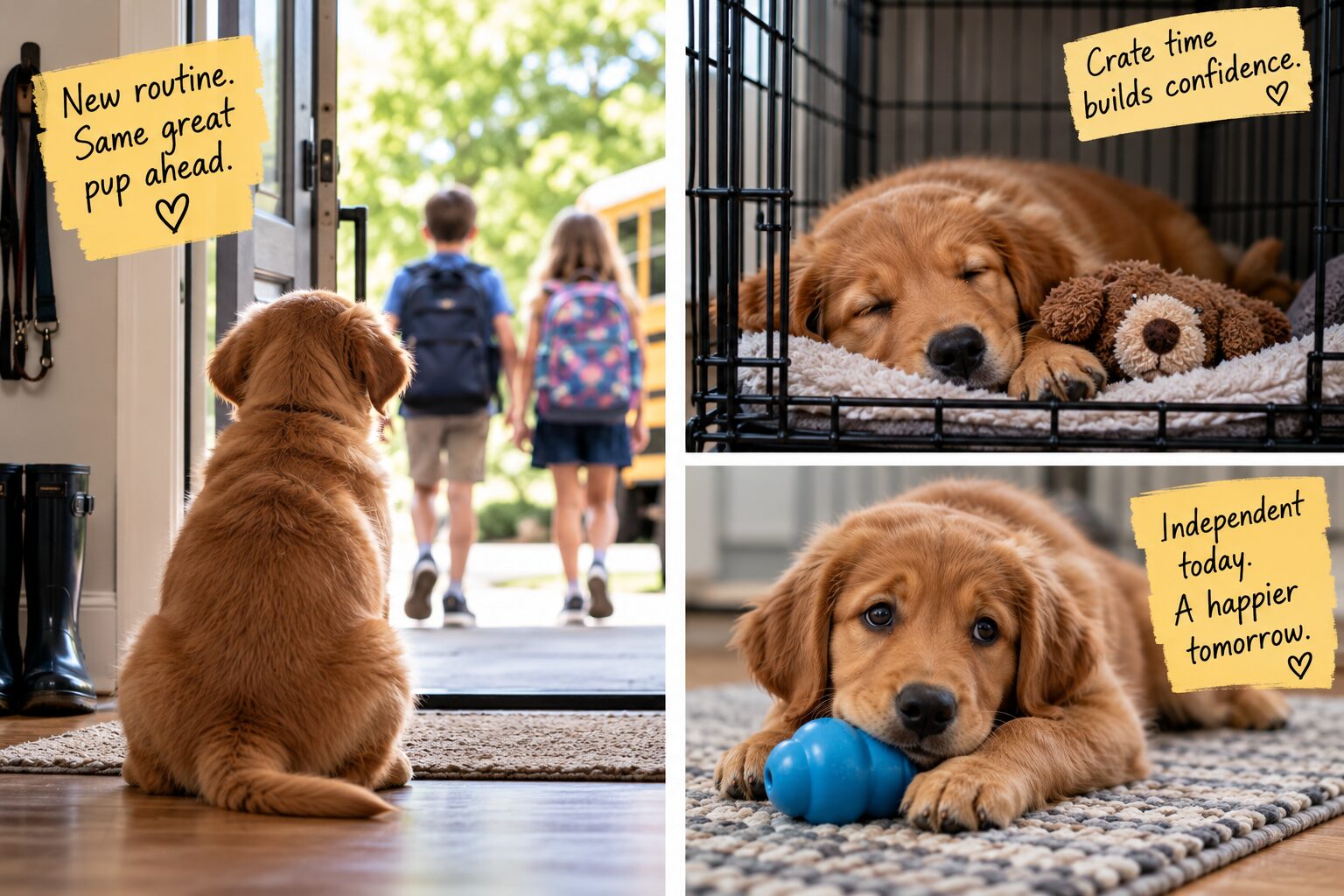
Why September Can Be Difficult for Summer Puppies
Puppies learn from the environment and routines we give them.
If your puppy spent the summer with someone nearby most of the time, that becomes normal.
Think about what a typical summer might look like:
- kids coming and going throughout the day
- frequent trips into the backyard, to the beach, cottage, or park
- walks at different times
- somebody available to play
- afternoon naps with people nearby
- plenty of attention
- very little genuine alone time
Then school starts, and everything changes almost overnight.
The household may go from constant activity to several hours of silence.
That’s a significant adjustment for a young dog.
We tend to think, He’ll get used to it.
Some puppies do.
Others struggle badly.
That’s why one of the most important things you can teach a puppy has nothing to do with sit, down or shake-a-paw.
Teach your puppy that being alone is normal and safe.
Can a Puppy Develop Separation Problems When School Starts?
Yes. A sudden household schedule change can expose or contribute to separation-related problems, particularly if a puppy has had very little practice being alone.
That doesn’t mean every puppy that whines when you leave has clinical separation anxiety.
There is an important distinction between a puppy protesting a change in routine and a dog experiencing genuine panic when left alone.
However, waiting until your puppy is seriously distressed before teaching independence makes absolutely no sense, and is harmful to the puppy and to your relationship.
Independence should be part of puppy training from the beginning, so that your puppy can cope with life in your human world.
Being Calm Beside You Isn’t the Same as Being Independent
This is one of the biggest misunderstandings I see.
An owner tells me:
“My puppy is really good while I’m working. He sleeps beside my desk for hours.”
That’s great.
But what happens when you leave?
Can your puppy remain settled while you disappear to another room?
Can you close the bathroom door without a committee meeting taking place outside it?
Can your puppy rest in the crate while you’re cooking dinner?
Can you walk outside for ten minutes without your puppy becoming distressed?
There is a considerable difference between a puppy who can relax beside you and a puppy who can relax without you.
If your puppy follows you from the kitchen to the bathroom, bathroom to bedroom, bedroom back to kitchen and apparently believes you should never undertake a household task without canine supervision, you don’t necessarily have a wonderfully devoted puppy, although that may be how it seems … at first.
You may have a puppy who hasn’t learned how to be alone yet.
And September has a rather efficient way of exposing that.
How Do I Teach My Puppy to Be Alone?
The best way to build puppy independence is through short, successful periods of separation that gradually become longer.
Don’t make the first major independence lesson an eight-hour workday.
Start small.
Here are four things I recommend.
1. Practise Short Departures
Leave your puppy alone for short periods even when you don’t actually need to go anywhere.
Set your puppy up safely in their crate, pen or puppy-safe area.
Then leave.
Go outside for ten minutes.
Walk around the block.
Sit in the car and answer an email.
Yes, sitting in your driveway may look slightly ridiculous to the neighbours. They’ll cope.
Come back calmly.
As your puppy becomes comfortable, gradually increase the amount of time you’re gone.
Ten minutes can become 20.
Twenty becomes 30.
Eventually you can practise an hour or two.
The objective isn’t simply to disappear.
You are teaching:
People leave. I rest. People return. Life continues.
That’s an important lesson.
2. Use the Crate When You’re Home
One of the most common mistakes I see is owners using the crate only when they leave.
Think about what the puppy learns.
People put me in here.
People disappear.
Therefore:
Crate = everybody leaves me.
Instead, make crate time part of everyday life.
Your puppy can nap in the crate while you’re working.
They can rest there while you’re cooking.
They can have quiet time while the kids are elsewhere in the house.
You don’t need to entertain a puppy every waking minute.
In fact, you shouldn’t.
Puppies need enormous amounts of sleep, and learning how to switch off is an important life skill.
The crate should represent rest, not abandonment.
3. Stop Encouraging Constant Shadowing
Following you everywhere may seem cute when your puppy fits in the palm of your hand.
It becomes somewhat less charming when you’re unable to walk to the bathroom without an escort.
Build small amounts of separation into everyday life.
Use:
- a crate
- a puppy pen
- baby gates
- tethering where appropriate
- a designated bed or place
- structured rest periods
You aren’t rejecting your puppy.
You’re teaching your puppy:
You don’t need access to me every second in order to be safe.
That lesson becomes increasingly important as your puppy matures to an adult dog.
4. Keep Arrivals and Departures Boring
You don’t need to give your puppy a farewell speech every time you leave.
“Mommy has to go now. I’m so sorry. You’re going to be okay. I’ll be back soon…”
Meanwhile, your puppy is thinking:
Good grief. Apparently something terrible is about to happen.
Just leave.
And when you return, keep that relatively uneventful too.
That doesn’t mean you can’t be happy to see your dog. Of course you can.
But if every departure feels like a tragedy and every reunion resembles the return of a sailor lost at sea for seven years, we’re creating unnecessary emotional intensity around something that should be completely ordinary.
What Should a Back-to-School Puppy Routine Look Like?
Once school and work schedules return, predictability becomes extremely useful.
Your puppy doesn’t need every day scheduled to the minute, but a reasonably consistent rhythm helps them understand when activity happens and when it’s time to rest.
Before Everyone Leaves
Give yourself enough time that the morning doesn’t become frantic.
Take your puppy outside to potty, then provide approximately 15–20 minutes of appropriate physical activity and mental engagement.
Depending on your puppy’s age and abilities, that could include:
- a short walk
- leash work
- recall games
- food-based training
- engagement exercises
- appropriate play
This doesn’t mean exhausting your puppy.
We’re looking for appropriate fulfillment, not running a puppy into the ground so they’ll hopefully pass out when you leave.
Build in a Settle Period
Don’t go directly from high-energy play to stuffing your puppy into a crate and racing out the door.
Give them a chance to come back down, mentally and physically.
Ten or fifteen minutes of quiet time before you leave can help establish the transition:
Activity is finished. Now we rest.
Plan for Midday
A young puppy should not automatically be expected to manage an entire school or workday without a bathroom break.
Age, individual development and previous training matter.
If you’re going to be away for an extended period, consider arranging for a trusted family member, neighbour, dog walker or pet professional to provide a midday potty break.
Keep it practical.
We’re building independence, not testing bladder capacity.
Keep the Evening Structured Too
The kids come through the door.
The adults arrive home.
Backpacks hit the floor.
Everyone wants to see the puppy.
The puppy hasn’t seen everyone for hours and suddenly goes from zero to 100.
It’s very easy for evenings to become chaotic.
Instead, take the puppy outside, meet their immediate needs and then return to your normal household expectations.
Excitement is fine.
Complete mayhem doesn’t have to be.
How Long Can a Puppy Be Left Alone?
There isn’t one correct number for every puppy.
Age matters. House-training matters. Crate experience matters. Temperament matters. The individual dog’s ability to settle matters.
Very young puppies require frequent bathroom breaks and should not simply be left alone for a full workday because the calendar says September.
As your puppy matures and develops better bladder control, confidence and experience being alone, you can gradually extend those periods.
The important word is gradually.
Going from almost constant summer companionship to six or eight hours alone isn’t gradual.
It’s a cliff.
What If My Puppy Is Already Struggling?
If school has already started and you’re seeing problems, don’t panic, but don’t ignore them either.
Go back to shorter periods your puppy can successfully handle.
Use your crate or safe containment area while you’re home.
Practise brief departures.
Create predictable periods of activity and rest – just like you would schedule nap time for a toddler.
And pay attention to what is actually happening when you leave.
A monitoring camera can be extremely useful.
Does your puppy fuss for two minutes and then fall asleep?
Or are they pacing, panting, drooling, barking continuously, trying desperately to escape or becoming increasingly distressed?
Those are very different situations.
If your puppy is showing significant or escalating distress when left alone, talk with a qualified trainer or behaviour professional rather than simply assuming they’ll eventually “cry it out.”
Puppy Independence Is Part of Raising a Confident Dog
I’ve noticed the enormous amount of conflicting information posted on social media has made independence sound almost negative in recent years.
My puppy clients often tell me that they “read on social media” or “watched a video on YouTube” that said using a crate, setting boundaries or expecting a puppy to spend some time alone will somehow damage their relationship or weaken their bond.
I see it differently.
A dog who trusts you shouldn’t need to physically see you every second of the day to feel safe.
Teaching independence gives your puppy another form of confidence:
I can handle this.
You leave.
They rest.
You return.
Nothing terrible happened.
Repeat that lesson enough times and being alone becomes part of ordinary life rather than a crisis.
And that’s exactly what we’re trying to create.
Don’t Wait Until the Routine Changes
Ideally, independence training starts before the first backpack heads out the door.
But if September has already arrived at your house, start now.
Give your puppy short periods away from you.
Use the crate when you’re home.
Create boundaries that prevent constant shadowing.
Practise leaving for short periods.
Build a predictable daily rhythm.
And remember that your job isn’t to keep your puppy entertained every waking minute.
Your job is to help them develop the skills they’ll need to live comfortably in the real world.
Sometimes that means teaching your puppy how to walk nicely on a leash.
Sometimes it means teaching them to come when they’re called.
And sometimes it means teaching them that you can go to the grocery store without civilization collapsing.
That’s a pretty useful life skill.
Frequently Asked Questions
Should I crate my puppy when I’m home?
Yes. Using the crate for appropriate rest periods while you’re home can help prevent the puppy from associating the crate exclusively with your departure. The goal is for the crate to become a familiar place to settle and rest.
How can I stop my puppy from following me everywhere?
Start by creating short, manageable periods when your puppy cannot follow you. Baby gates, pens, crates, tethering and designated resting areas can all help. Build duration gradually rather than suddenly isolating the puppy for hours.
Why does my puppy cry when I leave but settle when I’m home?
Your presence may have become part of what allows the puppy to feel comfortable. Independence training teaches the puppy to settle even when you’re out of sight. If the behaviour involves significant distress or panic, seek professional help.
Should I tire my puppy out before leaving for work?
Give your puppy appropriate physical exercise and mental engagement, but don’t try to exhaust them. A better option is to provide a consistent, predictable daily routine that combines activity with a deliberate settling period before you leave.
Can changing the family routine affect a puppy’s behaviour?
Absolutely. Puppies become accustomed to patterns in their environment. Major changes in when people leave, return, feed, exercise or interact with them can temporarily affect behaviour. Preparing the puppy for those changes makes the transition considerably easier.
Need Help Building a Better Routine for Your Puppy?
If September has exposed a few holes in your puppy’s training, that’s useful information.
You don’t need to wait until the barking, chewing, crate struggles or inability to settle become bigger problems.
Need help building a puppy plan that creates the lifelong companion you actually want to live with? We’ve got you.
Click here to discover the Art of Puppy Parenting
 About Karen Laws
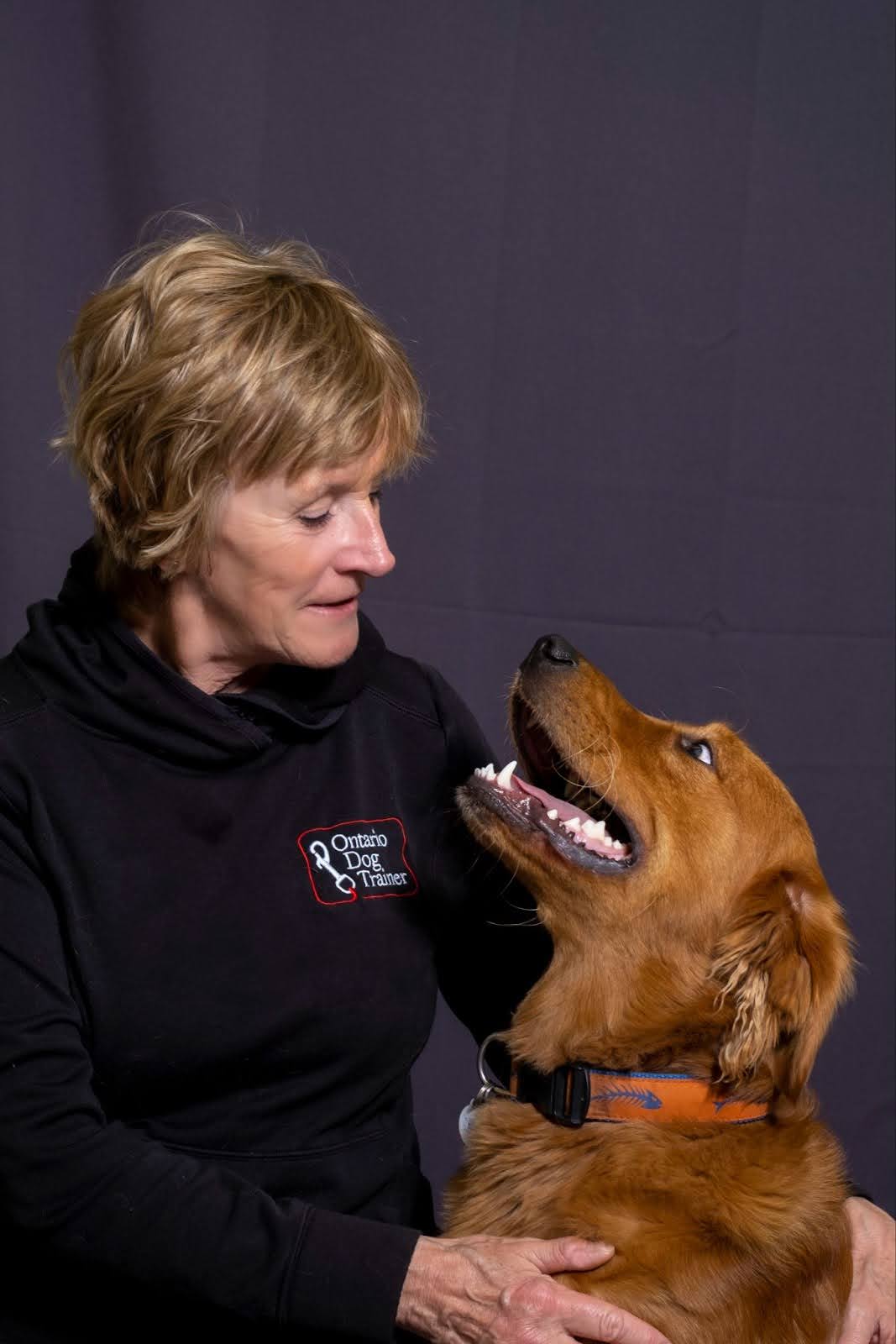
Karen Laws is a certified professional dog trainer, founder of The Ontario Dog Trainer and founder of the Dog Trainer TRIBE Training Academy.
With more than four decades of experience training dogs and 20 years working professionally with pet dog owners, Karen is known for her practical, no-nonsense approach to improving communication, behaviour and quality of life for dogs and the people who live with them.
A multiple-year Readers’ Choice Diamond Award winner for Best Dog Trainer, recognized repeatedly from 2020 through 2026, Karen also mentors aspiring and professional dog trainers through her Dog Trainer TRIBE Training Academy.
Her mission is simple: help people understand the dog in front of them so they can create better behaviour, greater freedom and a better life together.
Follow Karen on Social Media: FaceBook, Instagram, LinkedIn, TikTok, YouTube,
Need personal help? Let’s chat! Click here to book a Virtual assessment!