

Taking your puppy for a walk isn’t just about exercise.
In fact, with a young puppy, exercise is probably one of the least interesting things happening.
The street is an entire classroom.
Cars go past. People appear from driveways. Garbage cans weren’t there yesterday. A bicycle comes around the corner. Somebody starts a lawn mower. A dog barks behind a fence. The wind blows a plastic bag across the road.
To us, it’s Tuesday.
To a puppy, this is all new information.
Socializing your puppy on the street means giving them safe, manageable opportunities to experience everyday life while learning that they don’t need to react to everything around them.
That’s exactly what I’m working on with the puppy in these videos.
I’m not trying to march the puppy around the block.
I’m teaching the puppy how to handle the world.
Why Street Walks Are So Important for Puppy Socialization
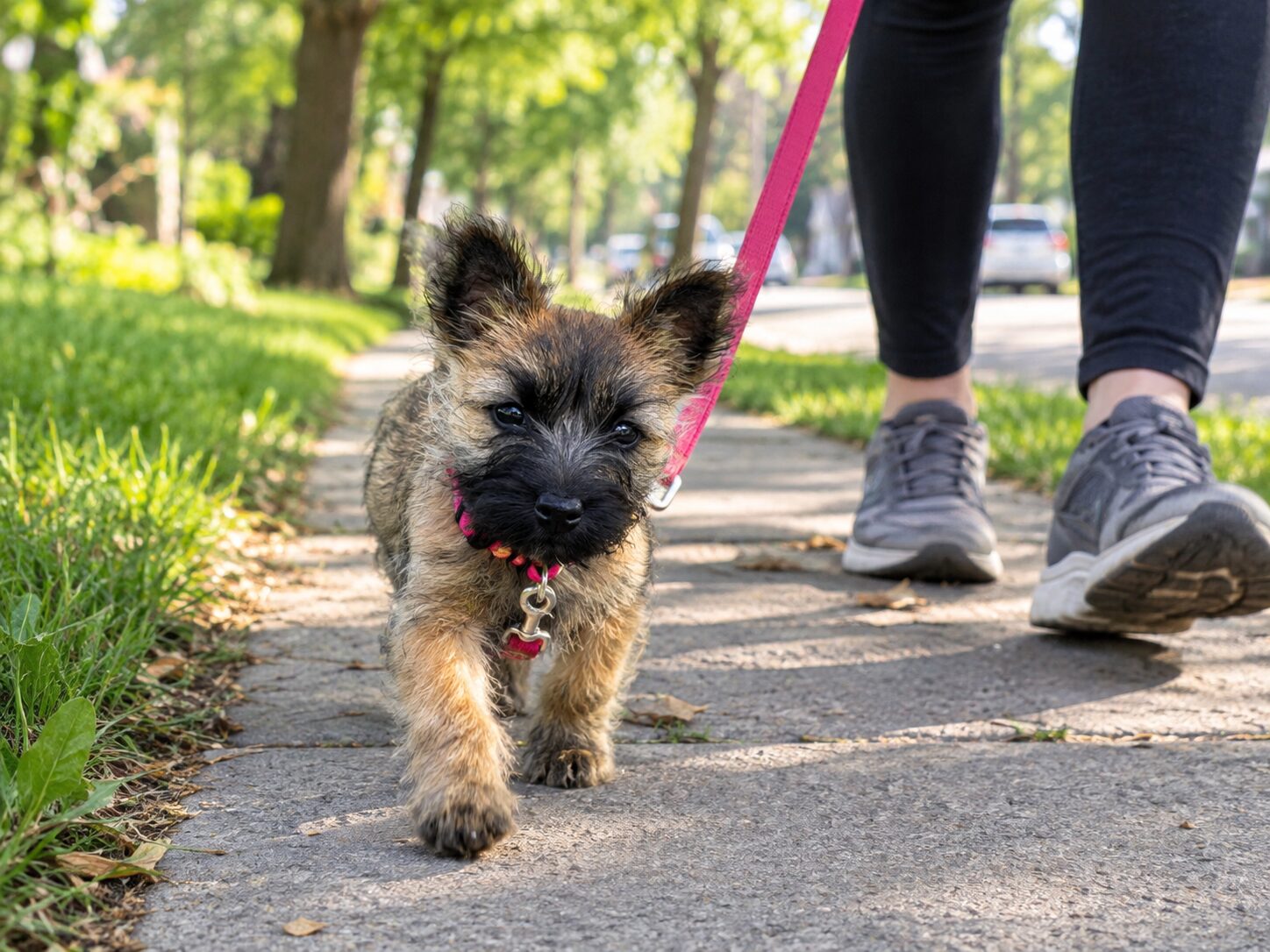
When people hear “puppy socialization”, they often immediately think about meeting other dogs and people.
That’s only a small part of it.
Socialization is really about preparing your puppy for the life they’re going to live.
And if your dog is going to live in a neighbourhood, walk on public streets, visit parks, travel with you or accompany you into town, they need to learn how those environments work.
A simple walk on the street can expose a puppy to dozens of things:
- Cars, trucks and motorcycles
- People walking and jogging
- Children
- Bicycles and strollers
- Other dogs
- Garbage and recycling bins
- Mailboxes
- Construction equipment
- Lawnmowers and landscaping equipment
- Different surfaces
- Unexpected noises
- Wildlife
- New smells
- Moving objects
- And so much more …
Your puppy doesn’t have to interact with all of these things.
They need to learn how to exist calmly around them.
That’s a very different goal.
Socialization Doesn’t Mean Saying Hello to Everyone
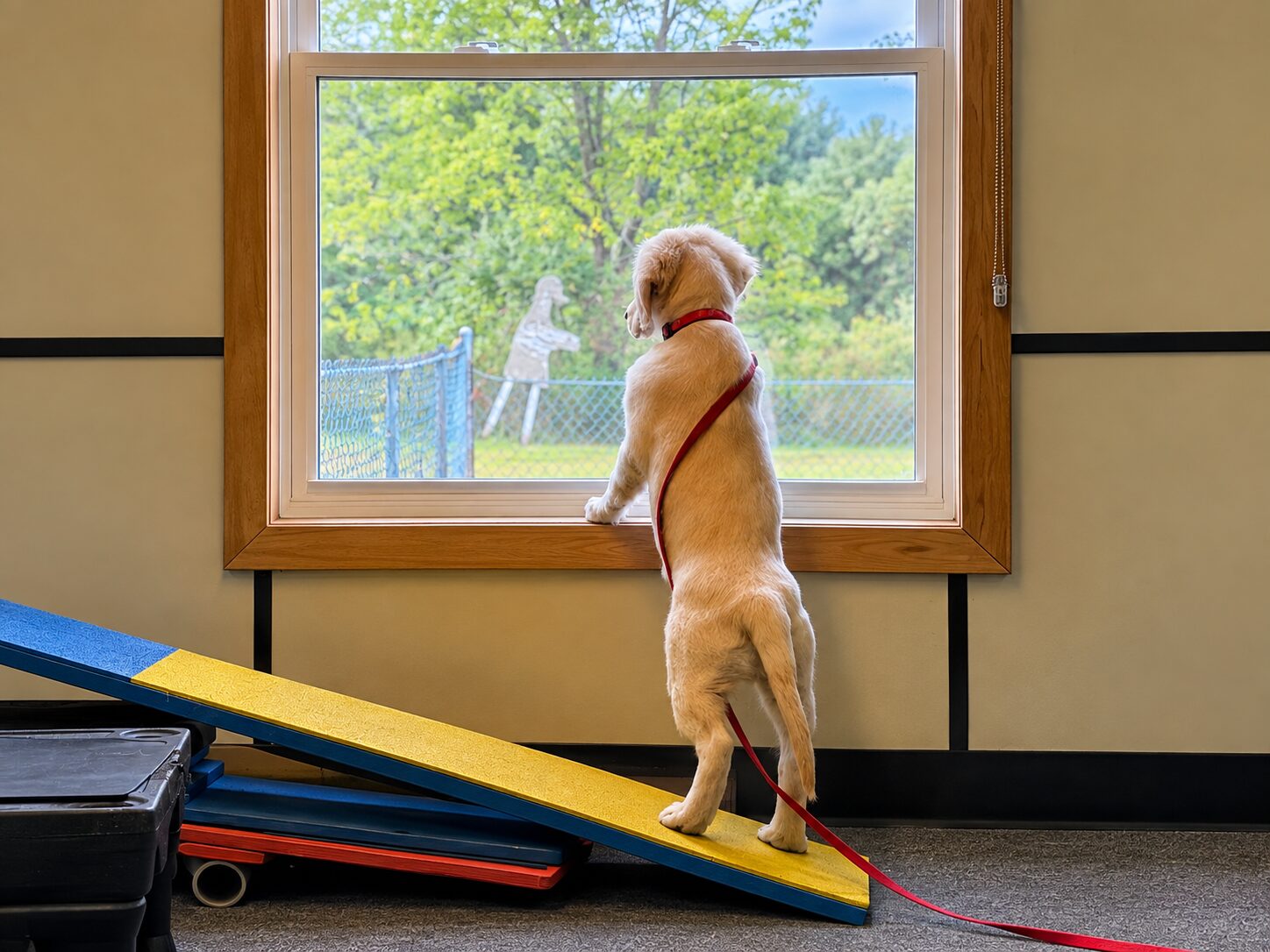
This is one of the biggest puppy socialization mistakes I see.
A puppy sees someone.
“Would you like to say hello?”
A puppy sees another dog.
“Go say hi!”
Another person appears.
Another greeting.
Another dog.
Another greeting.
Pretty soon we’ve taught the puppy something we didn’t necessarily intend to teach:
Everything I see is my business.
Then, six months later, that puppy has grown to a much larger size, and you’re the owner is wondering why your dog pulls toward every person and dog they see.
The reality is that your dog learned exactly what you unintentionally teaching.
Instead, I want puppies to learn to notice something without interacting with it.
See the person.
Keep walking.
Notice the dog.
Keep walking.
Hear the truck or funny noise.
Look at it.
Process it.
Move along.
That’s socialization too.
And it helps build something extremely valuable:
Neutrality.
Let Your Puppy Look at the World
Watch a puppy when they are first discovering a street walk, and you’ll often see them stop.
That’s okay.
They may stare at something.
They may sniff.
Their ears may move forward.
They may step toward something and then back away.
They’re gathering information.
This is one reason I don’t believe walks with your puppy should become a military operation where the objective is covering 2.7 kilometres before dinner.
Sometimes the most productive thing you can do is stand there for 20 seconds.
Let your puppy look.
Let them sniff.
Let them process.
Then continue.
You’re not wasting training time.
That is the training.
Don’t Force a Puppy Toward Something They’re Worried About
Suppose your puppy sees a garbage bin at the curb and suddenly stops.
You know it’s a garbage bin.
Your puppy doesn’t.
From their perspective, a large, mysterious object appeared overnight and apparently, everyone else is behaving as though this is perfectly reasonable.
Don’t immediately drag your puppy toward it.
Give them some time.
Watch their body language.
Can they investigate?
Can they move closer voluntarily?
Can they sniff?
Can they look away again?
You can encourage curiosity without forcing interaction.
Confidence isn’t created by making a puppy confront everything that concerns them.
It’s built through successful experiences.
Watch for Recovery, Not Just the Initial Reaction
Puppies get startled.
That’s life.
A truck drops its tailgate.
A motorcycle goes past.
A dog suddenly barks behind a fence.
Your puppy jumps.
That initial reaction isn’t necessarily what should concern you most.
What you really want to know is:
What happens next?
Remain quiet and observe:
Does your puppy recover quickly?
Do they start sniffing again?
Can they reconnect with you?
Can they continue walking?
Or are they still worried several minutes later?
Recovery gives us valuable information about how the puppy is coping.
The goal isn’t to raise a dog who never reacts to anything unexpected.
Good luck with that.
The goal is a dog who can experience something unexpected and recover appropriately.
Your Puppy Doesn’t Need to Meet Every Dog
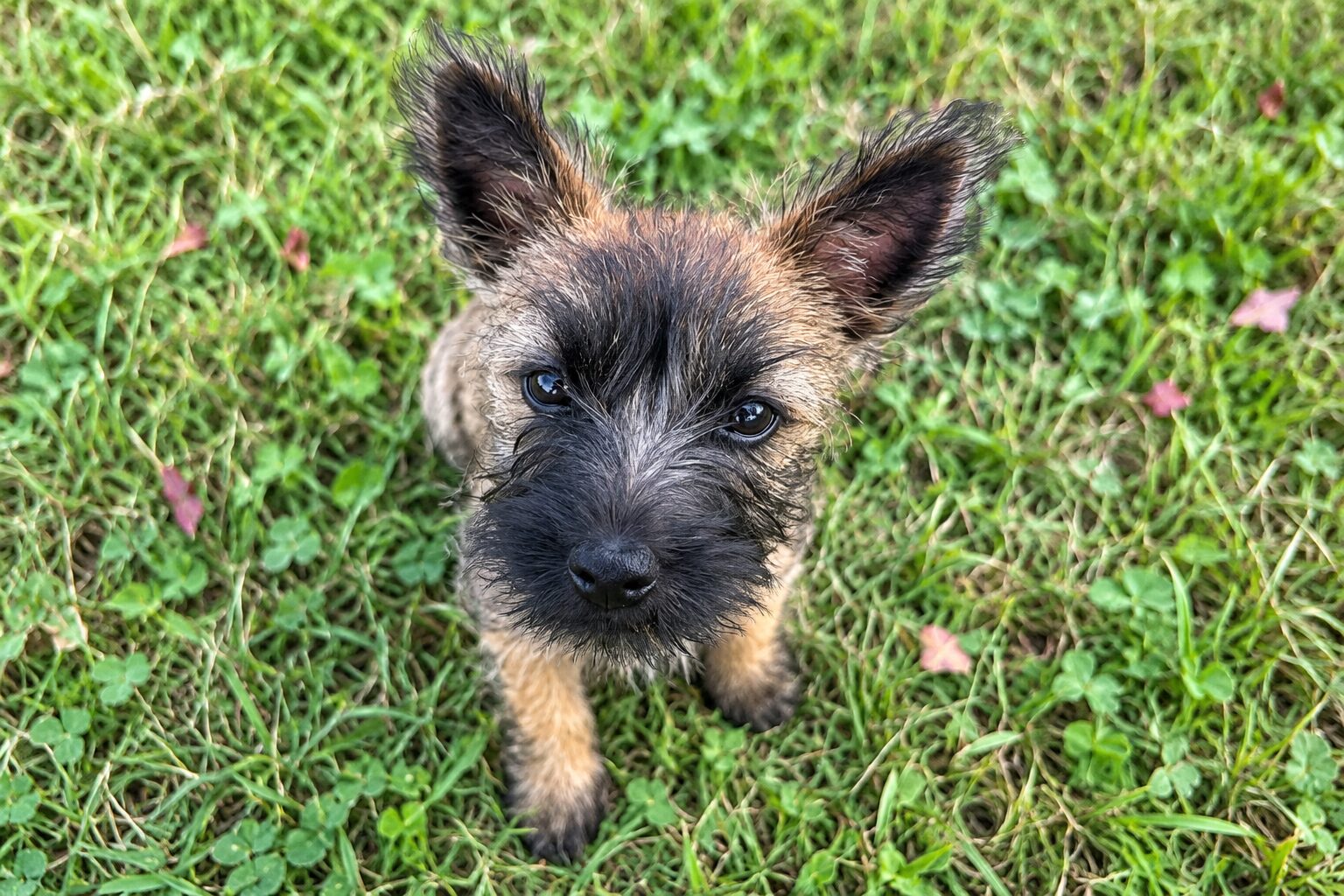
The street is also a wonderful place to teach one of the most useful lessons your puppy will ever learn:
You can see another dog without going to it.
This matters.
A lot.
If every dog becomes an opportunity for play, your puppy can begin expecting access to every dog they see.
When the leash prevents that access, frustration can develop.
That can look like pulling, whining, barking, lunging or eventually leash reactivity.
People sometimes assume the answer is more dog interaction.
Sometimes what the dog actually needs to learn is:
Dogs can exist around me without anything happening.
That’s a skill.
Use Distance to Help Your Puppy Succeed
If something is overwhelming your puppy, you don’t necessarily need to remove them from the experience completely.
Sometimes you simply need more distance.
Maybe your puppy isn’t comfortable watching a school bus from ten feet away.
What about 30 feet?
Can they observe it there?
Can they sniff?
Will they take a treat and stay focused on you?
Can they respond to you?
Great.
Start there.
As your puppy gains experience and confidence, you can gradually change the distance.
You’re not trying to prove how brave your puppy is.
We’re teaching them that they can cope.
Don’t Forget the Other End of the Leash
There’s another important part of street socialization that doesn’t get enough attention.
You.
Your puppy is learning about the environment, but they’re also learning about you.
What happens when something unexpected appears?
Do you panic?
Do you tighten the leash?
Do you start frantically repeating commands?
Do you pull them away?
Or do you remain calm, give them useful information and help them work through it?
Your puppy should gradually learn:
When I’m unsure, I can look to this person for information.
That’s where socialization and relationship-building come together.
How Long Should a Puppy Socialization Walk Be?
A puppy socialization walk doesn’t need to be long to be valuable.
Quality matters much more than distance.
Ten productive minutes of observing, sniffing, exploring and engaging with you may teach your puppy far more than a long walk where they’re overwhelmed and exhausted.
Remember that young puppies need a tremendous amount of sleep and recovery time.
More exposure isn’t automatically better.
A tired puppy isn’t necessarily a well-socialized puppy.
Sometimes it’s just a tired puppy.
What Does a Confident Puppy Look Like on the Street?
A confident puppy doesn’t necessarily march down the sidewalk ignoring everything.
Confidence may look much quieter than that.
You may see a puppy who:
Notices something new and investigates it.
Startles and quickly recovers.
Sniffs unfamiliar objects.
Looks at passing people without pulling toward them.
Observes another dog without demanding interaction.
Checks in with their handler.
Moves comfortably between exploration and engagement.
And becomes increasingly comfortable in familiar environments.
That’s progress.
Frequently Asked Questions About Socializing Your Puppy
When should I start socializing my puppy outside?
Puppy socialization begins very early, but appropriate outdoor exposure should consider your puppy’s vaccination status and local disease risks. Keeping them isolated at home is not the best option for your puppy’s long-term well-being. Talk with your veterinarian about safe ways to introduce your puppy to public environments while their vaccination series is being completed.
Should I let everyone pet my puppy?
No. Socializing your puppy does not require strangers to touch them. Learning to calmly observe people without interacting can be just as valuable—and sometimes more valuable. Think of it this way – would you allow a stranger on the street to touch your child?
Should my puppy meet dogs while we’re walking?
Occasional interactions with appropriate, known dogs can be useful, but your puppy does not need to greet every dog. Learning to remain neutral around dogs is an important life skill. Beware of the owner being dragged by their dog toward your puppy while yelling “It’s OK, he’s friendly.” These encounters rarely end well and can create lasting trauma for your puppy.
What if my puppy is afraid of traffic?
Increase your distance until your puppy can observe traffic without becoming overwhelmed. Let them watch from a safe distance away and process the experience, and gradually work closer as their confidence improves.
What should I do if my puppy stops during a walk?
Immediately look around to find out why. They may be tired, uncertain, distracted or simply investigating something unfamiliar. Don’t automatically pull them forward. Give your puppy an opportunity to process what’s happening before asking them to continue moving with you.
How do I know if puppy socialization is working?
Look for increasing confidence, curiosity, engagement and recovery. Your puppy should gradually become better able to experience ordinary sights, sounds and movement without becoming overwhelmed or excessively excited.
The Walk Isn’t Really About the Walk
When I take a young puppy onto the street, my goal isn’t to see how far we can go.
I’m looking at the puppy in front of me.
What are they noticing?
What concerns them?
What are they curious about?
How quickly do they recover?
Can they investigate?
Can they disengage?
Can they come back to me?
Every garbage bin, passing car, barking dog, person walking by, and strange noise presents an opportunity.
Training time is all the time.
And nowhere is that more obvious than when you’re socializing a puppy.
Don’t measure a successful puppy walk by kilometres.
Measure it by what your puppy learned along the way.
Because eventually, the little puppy standing there trying to figure out why someone left a terrifying blue recycling bin at the curb is going to become an adult dog.
The experiences you give them now help determine how confidently that adult dog moves through the world.
Need Help Raising a Confident Puppy?
Puppy training isn’t just about teaching sit, down and come. It’s about building the habits, confidence, communication and relationship that will shape the dog you’ll live with for years.
If you want help creating a puppy training plan that builds the lifelong companion you actually want, Ontario Dog Trainer can help.
Start with the puppy in front of you. Build confidence one experience at a time.
Click here to discover the Art of Puppy Parenting
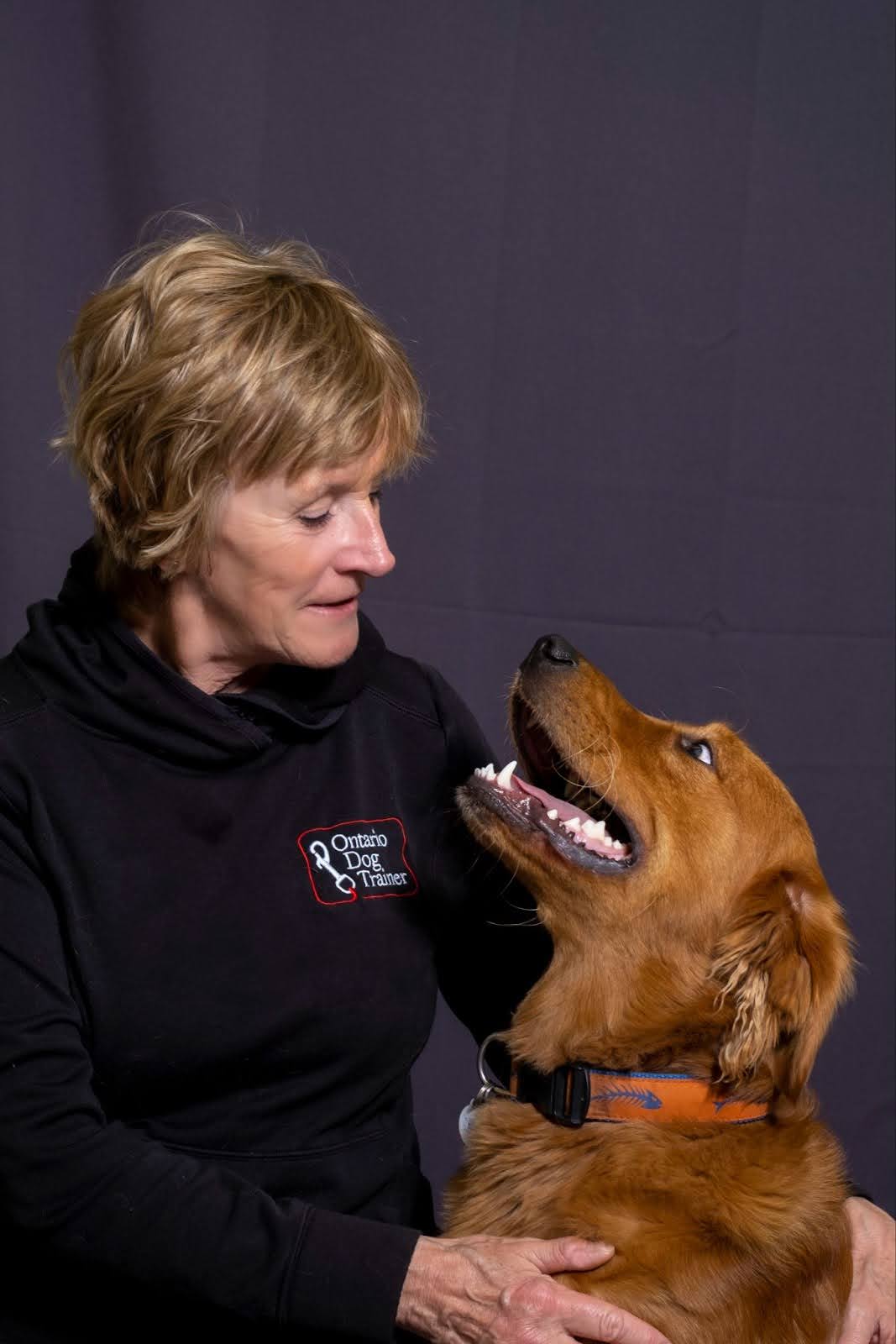 About Karen Laws
Karen Laws is a certified professional dog trainer, founder of The Ontario Dog Trainer and founder of the Dog Trainer TRIBE Training Academy.
With more than four decades of experience training dogs and 20 years working professionally with pet dog owners, Karen is known for her practical, no-nonsense approach to improving communication, behaviour and quality of life for dogs and the people who live with them.
A multiple-year Readers’ Choice Diamond Award winner for Best Dog Trainer, recognized repeatedly from 2020 through 2026, Karen also mentors aspiring and professional dog trainers through her Dog Trainer TRIBE Training Academy.
Her mission is simple: help people understand the dog in front of them so they can create better behaviour, greater freedom and a better life together.
Follow Karen on Social Media: FaceBook, Instagram, LinkedIn, TikTok, YouTube,
Need personal help? Let’s chat! Click here to book a Virtual assessment!