
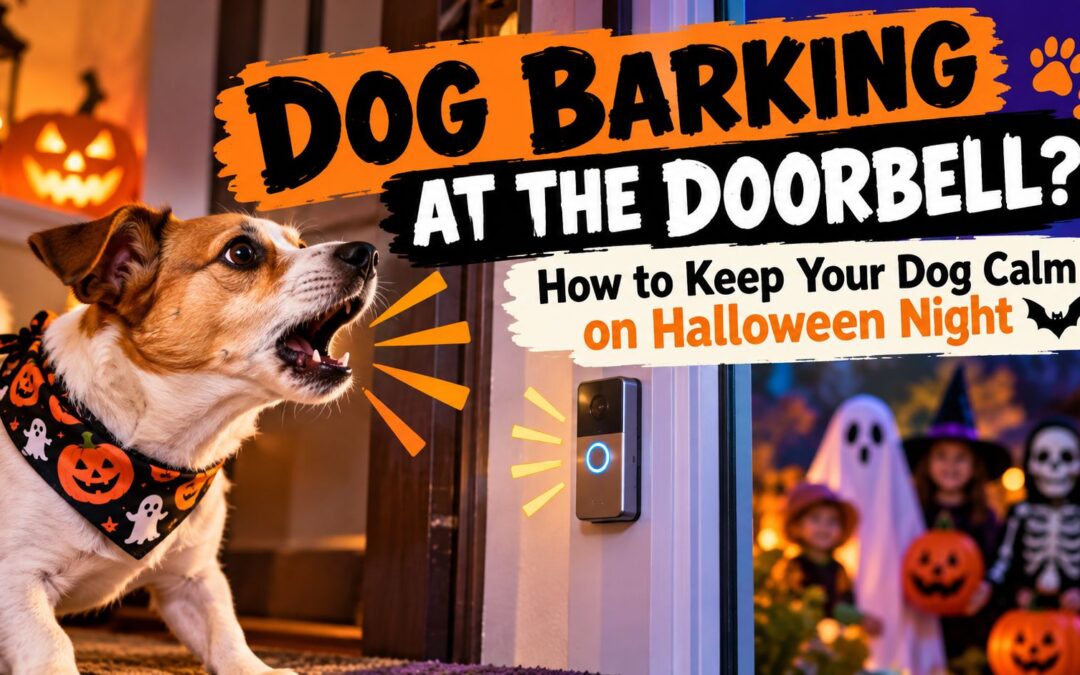
Quick answer: Dogs bark at the doorbell because they’ve learned it means someone is arriving, or something exciting is about to happen (like pizza delivery!). Halloween turns one ring into dozens, with strangers in costumes added. To reduce the barking, start weeks ahead:
- Pair a recorded doorbell sound with treats.
- Teach a “place” behaviour away from, but within sight of the door.
- Introduce costume pieces gradually.
On the night itself, keep your dog in a quiet room away from the door.
Why Do Dogs Bark at the Doorbell?
Dogs bark at the doorbell because the sound predicts something important: a person at the edge of their territory. Over time, the ring alone sets off the alert, much like your hand reaching for your phone when you hear its text tone. Nothing has happened yet, but your body is already reacting.
On Halloween, that alert fires again and again for hours. Several triggers stack together:
- Repeated doorbell rings. Each ring restarts the alarm before your dog has settled from the last one.
- Costumes. Dogs recognize people by shape, movement, and scent. A child in a ghost sheet or mask looks like a stranger, even if it’s the neighbour’s kid. Imagine a friend walking up to you in a full motorcycle helmet, face shielded, without saying a word.
- A steady stream of strangers. Constant visitors approaching the home trigger protective barking.
- Excitement or anxiety. Some dogs bark because the activity thrills them. Others bark because it overwhelms them. The training below helps both, but anxious dogs need more distance from the door.
How to Stop Your Dog Barking at the Doorbell Before Halloween
Preparation does most of the work. Start two to four weeks ahead if you can, and keep practicing year-round.
1. Desensitize your dog to the doorbell sound
Desensitizing means changing what the doorbell predicts. Instead of “intruder,” the sound comes to mean “treat.”
- Play a doorbell recording at low volume. Reward your dog with a high-value treat while they stay calm.
- Raise the volume and frequency gradually. Only move up when your dog stays relaxed at the current level. Think of getting into a cold pool one step at a time instead of jumping in.
- Switch to the real doorbell. Have a helper ring it while you practice answering the door with your dog calm.
If your dog starts barking, you’ve gone too fast. Go back a step.
2. Teach a “place” behaviour at the door
A “place” cue sends your dog to a set spot, like a bed, mat, or crate, when the doorbell rings.
- Teach the cue first with no distractions, then add the doorbell recording.
- Reward your dog for staying on their spot while you open the door.
- Use high-value treats like cheese or chicken. The reward needs to beat the excitement of the door.
A dog lying on their mat can’t also be charging the door. You’re giving them a job that replaces the barking.
3. Introduce costumes gradually
- In the days before Halloween, wear one costume piece around your dog, such as a hat or mask. Let them sniff it, and reward calm behaviour.
- Add more costume elements over several sessions, rewarding calm each time.
By Halloween, odd shapes and faces will feel more familiar, which reduces fear-based barking.
Related: For ongoing training support, see my subscription course, Your Dog Thinks, with monthly or yearly plans. Got a new puppy? Start with The Ultimate Guide to Puppy Parenting – Preschool. (NOTE: I believe I also have a YouTube video for teaching the “place” command – if you can find it, add the link)
How to Manage Doorbell Barking on Halloween Night
Even a well-prepared dog benefits from fewer triggers on the night.
Keep your dog away from the front door
- Use a baby gate, or keep your dog in a back room where they can’t see or hear the door.
- Play calming music or white noise to mask knocking, doorbells, and voices.
Set up a safe space
- A den-like spot: a crate covered with a blanket, or a familiar room with their bedding.
- Something to do: a stuffed Kong or puzzle toy keeps them busy, and chewing helps many dogs settle.
- Familiar items: a favourite blanket or toy.
Watch for separation anxiety
If you move your dog away from the action, being apart from you can create its own stress, especially in dogs prone to separation anxiety. Practice leaving them in that room for short periods in the weeks beforehand, and build up the time gradually until they’re calm alone. Don’t introduce a brand-new room on Halloween night.
What to Do When Your Dog Barks at the Doorbell Anyway
Reward quiet, not the bark
Timing matters most here. If your dog barks, pauses for half a second, and gets a treat, they learn “bark, then get paid.”
- Wait for real quiet. Wait a few seconds of silence, then mark it (“Yes, good quiet!”) and reward.
- Teach “quiet” when your dog is already calm. Then the word means something before you need it in a busy moment.
- Use your “quiet” cue if your dog already knows it, and reward when they respond.
Whatever you reward, you’ll get more of. Keep rewarding calm consistently.
Don’t punish barking
Yelling at a barking dog usually backfires. To your dog, you’re not correcting them, you’re barking along. They may treat it as attention, which keeps the behaviour going. Reward quiet instead.
Other Ways to Reduce Doorbell Barking on Halloween
- Skip the doorbell. Leave a candy bowl outside with a sign, or sit outside and hand out treats yourself. Fewer rings means less barking.
- Book overnight boarding. If Halloween is very stressful for your dog, a boarding kennel removes the triggers entirely.
Keep Doorbell Training Going After Halloween
The same training helps with deliveries, guests, and holidays all year.
- Keep up short doorbell sessions so the sound stays a non-event.
- Practice calm greetings using the “place” cue whenever visitors arrive.
- Let your dog see seasonal decorations in stores and around the neighbourhood so new objects stop being alarming.
Frequently Asked Questions
Why does my dog bark every time the doorbell rings?
The doorbell has become a predictor of a visitor, and your dog has learned to alert you to anyone approaching. The ring alone triggers the response, even before anyone appears.
How long does it take to stop a dog barking at the doorbell?
Most dogs improve noticeably within two to four weeks of short daily sessions. Results depend on how long the habit has been in place and how consistently you practice.
Should I let my dog greet trick-or-treaters?
Usually not. Most dogs do better away from the door on Halloween. Constant visitors in costumes are overwhelming, and an excited dog can slip out an open door.
Is it bad to yell at my dog for barking at the door?
Yes. Yelling tends to increase barking because your dog may hear it as joining in or as attention. Reward quiet behaviour instead.
What’s the fastest way to stop doorbell barking on Halloween night itself?
Remove the trigger. Keep your dog in a back room with white noise and a chew toy, and leave candy outside so visitors don’t ring.
Need Help With Your Dog’s Manners?
If you’re dealing with jumping, door manners, leash pulling, settling, reactivity or a dog who only listens when you’re holding a treat, I can help.
Through Ontario Dog Trainer, I offer practical virtual and in-person dog training and personal coaching built around your real life, not an empty room.
Book a consultation and let’s build a training plan for the dog standing in front of you.
For regular training advice, join my email list for tips, new articles, videos and free resources.
Happy Thanksgiving to you and yours, from my dogs, my family and me.
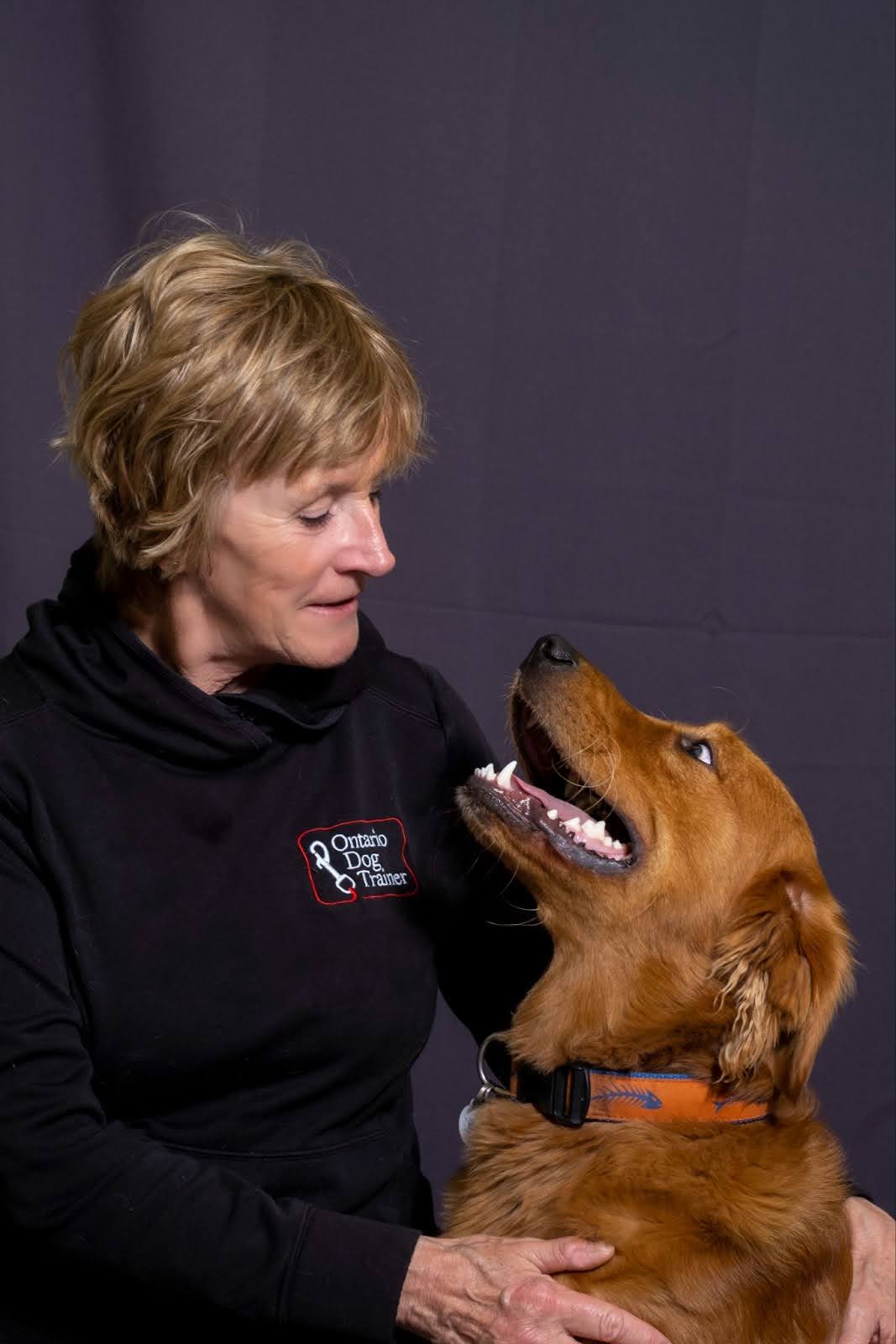 About Karen Laws
Karen Laws is a certified professional dog trainer, founder of The Ontario Dog Trainer and founder of the Dog Trainer TRIBE Training Academy.
With more than four decades of experience training dogs and 20 years working professionally with pet dog owners, Karen is known for her practical, no-nonsense approach to improving communication, behaviour and quality of life for dogs and the people who live with them.
A multiple-year Readers’ Choice Diamond Award winner for Best Dog Trainer, recognized repeatedly from 2020 through 2026, Karen also mentors aspiring and professional dog trainers through her Dog Trainer TRIBE Training Academy.
Her mission is simple: help people understand the dog in front of them so they can create better behaviour, greater freedom and a better life together.
Follow Karen on Social Media: FaceBook, Instagram, LinkedIn, TikTok, YouTube,
Need personal help? Let’s chat! Click here to book a Virtual assessment!