
What Are Connection Games, and Why Do They Matter?
Connection games are structured activities that help dogs and people develop communication, trust, confidence, cooperation and useful skills through shared experiences.
For dogs, these activities can improve attention, responsiveness, emotional regulation and engagement with their owners.
For dog trainers, connection games provide opportunities to practise observation, instruction, coaching, problem-solving and professional communication.
And for aspiring professional dog trainers, these same skills are essential to building a business where clients trust your knowledge, follow your guidance and achieve meaningful results.
At our Dog Trainer T.R.I.B.E. Training Academy SUMMIT 2026, Connection Games brought these ideas together through a day of practical learning with dogs, owners, trainers and mentors.
There was learning. There was laughter. There were challenges.
And, as always when dogs are involved, there were probably a few moments when the dogs had their own ideas about how things should proceed.
That’s part of the learning.
[INSERT SUMMIT 2026 CONNECTION GAMES VIDEO]
Why We Chose Connection Games for SUMMIT 2026
After more than 40 years of training dogs, I’ve learned that good training doesn’t begin with an impressive collection of commands.
It begins with the relationship.
A dog needs to understand how to work with its owner. An owner needs to understand how to communicate clearly with their dog. And a professional trainer needs to understand how to help both succeed.
That’s why the Connection Games were designed around several important principles:
- Relationship First: Build a cooperative working relationship before expecting reliable performance.
- Training Time Is All the Time: Everyday interactions are opportunities for learning.
- Be Present: Observe what’s happening instead of simply going through the motions.
- Energy Matters: Human behaviour, movement and emotional state can influence how dogs respond.
- Fulfillment Matters: Give dogs appropriate opportunities to use their natural abilities.
- Leadership Matters: Provide clear, consistent guidance that helps dogs understand expectations.
These principles are not separate from professional dog training.
They are the foundation of it.
And each activity at SUMMIT gave participants another opportunity to apply them.
1. The Get Acquainted Walk: Connection Starts Before the Training Session
Our day began with a Get Acquainted Walk, led by me.
It may seem like a simple way to start an event, but there is a good reason for beginning with movement rather than immediately gathering everyone into a classroom.
Dogs arriving at a new location are taking in information.
New smells.
Unfamiliar people.
Other dogs.
Different sounds and surroundings.
A dog may be excited, curious, cautious or distracted.
Owners are processing their own information, too.
The walk creates an opportunity to observe how each team responds to a new environment and begin settling into the day’s routine.
What can dog trainers learn from an introductory walk?
A great deal.
Watch the dog.
Does it check in with its owner? Is it constantly pulling toward distractions? Can it move calmly without needing to investigate every person or dog?
Watch the owner.
Are they aware of what their dog is doing? Are they providing clear guidance? Are they anticipating challenges or reacting after the fact?
This is valuable information for a professional trainer.
The first lesson is simple: Observation comes before intervention.
That same principle applies to a new client consultation. Before deciding what the dog needs, spend time understanding the dog-owner team in front of you.
2. Door Passage and Sit on the Dog: Building Calm Through Everyday Routines
After the introductory walk, the agenda included door passage practice and our Sit on the Dog exercise.
These activities demonstrate an important point:
Calm behaviour is a skill that can be developed through consistent expectations and appropriate practice.
Doorways are often exciting places for dogs.
A door opening can mean a walk, a visitor, an opportunity to race outside or something interesting waiting on the other side.
Without clear expectations, dogs may rush, jump or push past people.
Door passage training helps owners practise managing movement and teaching their dogs how to navigate transitions more thoughtfully.
Why teach calm behaviour around doors?
Because everyday routines are where training either becomes useful or falls apart.
A dog that understands how to wait, follow guidance and move through a doorway without charging ahead is developing skills that apply far beyond the entrance to a building.
Our Sit on the Dog exercise provides another opportunity for dogs to practise settling while their people become more aware of their own behaviour.
It isn’t about physically forcing a dog to remain still. It’s about creating a managed learning situation where the dog can practise becoming comfortable with periods of inactivity.
Dogs should have enough space and support to settle without being pushed beyond their ability to cope.
For dog trainers, these exercises also offer opportunities to coach owners in real time.
And that is where professional development begins.
Knowing how to teach an exercise is one skill.
Helping another person understand and successfully repeat it is another.
3. Breathe and Blink for Calming: Why the Human End of the Leash Matters
One of our featured sessions was Breathe and Blink for Calming, led by Kelly Christian of Nature Calls Dog Training.
This activity focused attention on something that dog owners often overlook.
Themselves.
We spend considerable time discussing what dogs are doing.
But what about us?
Are we holding our breath?
Tightening the leash?
Moving quickly?
Anticipating something going wrong before it happens?
Dogs are highly responsive to environmental information, including human movement, body language and patterns of behaviour.
When owners become more aware of their own actions, they may find it easier to communicate clearly and respond thoughtfully.
Can your emotional state affect your dog’s behaviour?
Yes. Human behaviour and emotional cues can influence dogs, although the relationship is complex and every dog responds differently.
A tense owner does not automatically create a tense dog. But changes in leash tension, posture, movement and communication can affect an interaction.
The Breathe and Blink session encouraged participants to pay attention to their own state as part of the training process.
For aspiring dog trainers, this lesson is especially important.
Your clients won’t always arrive calm, confident and ready to learn.
Some will be frustrated.
Some will be embarrassed.
Some will feel overwhelmed.
Your job is not simply to give instructions.
It’s to create a learning environment where the owner can understand, practise and improve.
Sometimes the most useful training adjustment begins with the person holding the leash.
4. Introduction to Scent Detection: Giving Dogs a Job They Enjoy
Another major part of our Connection Games day was an Introduction to Scent Detection.
The agenda included two scent detection sessions, with Anna Marie Stewart of Instinct Canine Training identified in the supporting resources.
Scent work provides a wonderful example of training that builds engagement while giving dogs an appropriate outlet for a natural ability.
Dogs experience much of their world through smell.
Yet in everyday life, we often expect them to ignore interesting scents and focus exclusively on what we want.
Scent detection gives the dog’s nose a productive job.
What are the benefits of scent detection for dogs?
When introduced and adapted appropriately, scent detection activities can:
- Provide mental enrichment.
- Encourage independent problem-solving.
- Build confidence through achievable tasks.
- Give dogs an outlet for natural investigative behaviour.
- Create shared activities for dogs and owners.
- Offer an alternative form of exercise and engagement.
Scent work can be particularly useful for owners looking for activities beyond traditional obedience.
Not every dog needs to become a competitive scent detection champion.
Sometimes the goal is simply to give a dog something interesting and satisfying to do.
What can professional dog trainers learn from scent work?
For trainers, scent detection reinforces the importance of understanding the individual dog.
Different dogs may approach the same challenge differently.
Some work quickly.
Some investigate carefully.
Some require additional support.
Others surprise their owners with abilities they didn’t realize were there.
A good trainer observes these differences and adjusts the learning process.
That skill is essential when developing individual training programs.
The goal isn’t to make every dog perform exactly the same way. The goal is to help each dog learn and succeed.
5. Pack Walking and Socialization: Connection Does Not Mean Constant Interaction
Our afternoon agenda included a pack walk to the large field and a socialization session, depending on the dynamics of the participating dogs.
The planned rain alternative was an introduction to treadmill walking.
That flexibility reflects an important principle of responsible dog training.
We adapt activities to the needs and abilities of the dogs, not the other way around.
Does socialization mean dogs must meet and play with every other dog?
No.
One of the biggest misconceptions about dog socialization is the belief that dogs need to greet, sniff or play with every dog they encounter.
They don’t.
Dogs can learn valuable social skills simply by being around other dogs without needing direct interaction.
A structured group walk can provide opportunities to practise:
- Walking in the presence of other dogs.
- Maintaining appropriate space.
- Responding to owner guidance.
- Moving past distractions.
- Recognizing when another dog needs more distance.
- Remaining engaged without needing to interact.
Not every dog is suited to every group activity. Careful assessment, adequate distance and appropriate supervision are essential.
Why does this matter for professional dog trainers?
Because socialization is not a one-size-fits-all exercise.
A professional trainer must be able to observe individual behaviour, recognize stress or discomfort and adjust the environment.
They must also explain those decisions to owners.
Sometimes the best training decision is to allow dogs to interact.
Sometimes it’s to increase distance.
And sometimes it’s to finish the session before things become difficult.
Knowing when not to do something is an important professional skill.
6. Puppy Skills for Success: Building the Foundation Early
The afternoon included Puppy Skills for Success, led by Angele Lacroix, Angolly’s Dog Training.
Puppies are learning from the moment they enter their new homes.
Every interaction provides information about how their world works.
Unfortunately, many owners focus heavily on teaching commands while overlooking the everyday skills that make a puppy easier to live with.
What skills should puppies learn first?
Important early learning priorities include:
- Responding to their name.
- Engaging with their owner.
- Developing comfortable handling routines.
- Learning appropriate boundaries.
- Building confidence around new experiences.
- Practising age-appropriate impulse control.
- Learning to settle and rest.
- Developing independence.
- Beginning reliable recall and leash skills.
Puppy training is not about creating perfect behaviour in a few weeks.
It’s about building useful habits that can develop as the puppy matures.
Why are puppy training games effective?
Short, appropriately designed games allow puppies to practise useful skills without requiring long periods of concentration.
Games also provide owners with opportunities to develop timing, observation and consistency.
For aspiring trainers, puppy sessions are excellent opportunities to practise explaining exercises in simple language.
Remember, most puppy owners are not interested in technical discussions about learning theory.
They want to know how to stop their puppy from turning their trousers into a tug toy.
Professional knowledge is important.
But the ability to turn that knowledge into practical guidance is what makes it useful.
7. Trick Training: Learning Should Be Enjoyable
Our final practical session focused on teaching one trick, led by Selina.
Trick training sometimes gets dismissed as entertainment.
But don’t underestimate its value.
Teaching a trick creates opportunities to practise many of the same skills required in more traditional training exercises.
Dogs learn through clear information, repetition, appropriate reinforcement and feedback.
Owners learn how their own timing and communication affect the dog’s response.
Why is trick training useful for dogs and owners?
Trick training can help:
- Improve communication.
- Develop training timing.
- Increase engagement.
- Encourage problem-solving.
- Build confidence through small successes.
- Provide mental enrichment.
- Make training enjoyable for both ends of the leash.
A trick doesn’t need to have a serious practical purpose to be valuable.
Sometimes learning something new together is reason enough.
The professional lesson
Trick training also gives trainers an opportunity to practise a particularly important coaching skill.
Can you break a task into small enough steps for someone else to succeed?
If your client doesn’t understand your instructions, the solution isn’t necessarily to repeat them louder.
It’s to find a clearer way to teach.
What Do Connection Games Have to Do With Building a Dog Training Business?
Quite a lot.
The activities at SUMMIT focused on dogs and their owners, but the skills involved also apply directly to business.
A dog trainer needs more than technical ability to create a sustainable professional career.
They need to know how to build relationships, communicate value and help clients achieve results.
Here are five connections between successful dog training and successful business building.
1. Observation Comes Before Selling
Good training begins with understanding the dog and owner.
Good business begins with understanding the client.
Before recommending a program, ask questions.
What problem are they experiencing?
What have they already tried?
What outcome do they want?
What are they willing and able to do?
Selling an expensive training package before understanding the problem is rather like prescribing an exercise before looking at the dog.
It might work.
But it isn’t a particularly sound professional approach.
2. Clear Communication Builds Trust
Owners need to understand your recommendations.
Potential clients need to understand your services.
If you cannot explain what you do and why it matters, people may struggle to see your value.
Clarity is not about using impressive terminology.
It’s about making complex information understandable and useful.
3. Client Success Builds Your Reputation
A dog that performs beautifully for the trainer but remains unmanageable for the owner is not the result most clients are paying for.
Professional success means transferring skills to the owner.
When clients understand what to do and make meaningful progress, they have a stronger reason to continue training and recommend your services.
A good reputation is built through consistent experiences, not promises.
4. Professional Relationships Create Opportunities
Dog trainers can benefit from relationships with other trainers, veterinarians, groomers, breeders and other professionals.
These connections can create opportunities for referrals, collaboration and continued learning.
They also provide perspective when difficult cases arise.
A professional network should not simply be a collection of people you hope will send you business.
It’s a community of people with whom you can exchange knowledge, provide value and build mutual trust.
5. Confidence Comes From Experience and Feedback
Many aspiring trainers hesitate to start their businesses because they don’t feel ready.
They take another course.
Watch another video.
Attend another webinar.
And continue wondering whether they know enough.
Education is important.
But at some point, knowledge needs to become practical experience.
Confidence grows when you learn to assess situations, make thoughtful decisions, observe outcomes and refine your approach.
That’s one of the reasons professional mentorship and hands-on learning can be so valuable.
Why Hands-On Learning Matters for Aspiring Dog Trainers
I’ve spent decades working with dogs, and one thing has become abundantly clear.
There is always something else to learn.
That’s not a problem.
It’s part of being a professional.
But collecting information and developing professional judgment are not the same thing.
At the Dog Trainer T.R.I.B.E. Training Academy, our goal is to help students move from knowing training techniques to being able to apply them with real dogs and real people.
That includes learning how to:
- Observe and assess behaviour.
- Identify training priorities.
- Develop practical training plans.
- Coach owners effectively.
- Adjust when a plan needs changing.
- Communicate with confidence.
- Build professional relationships.
- Develop business systems and services.
- Recognize when additional support or referral is needed.
Our Summit experiences are one way we bring that learning into the real world.
Students don’t simply watch someone else work.
They have opportunities to practise, ask questions, collaborate and learn from each other.
And when they encounter something unexpected, they have experienced trainers and peers available for discussion and feedback.
That is a very different experience from watching another training video and hoping you’ll remember everything when you need it.
Training Time Is All the Time
One of my favourite principles is:
Training time is all the time.
That doesn’t mean every minute of the day must become a formal training session.
It means recognizing that learning happens through everyday interactions.
Walking through a door.
Waiting while people talk.
Passing another dog.
Investigating a new environment.
Playing a game.
Learning a trick.
Settling while the world continues around you.
These are all opportunities to develop useful skills.
The same applies to professional trainers.
Every consultation, client conversation, practical exercise and shared learning experience is an opportunity to develop professional competence.
You don’t become a better trainer only when you’re standing in front of a dog with a treat pouch.
You develop through the decisions you make and the lessons you take from those decisions.
What We Want Participants to Take Away From SUMMIT 2026
The Connection Games were designed to encourage learning on several levels.
For dogs, the focus was on appropriate engagement, enrichment, calm behaviour and practical skills.
For owners, the focus was on improving understanding, communication and confidence.
For trainers, the day provided opportunities to practise coaching, observation, teamwork and professional decision-making.
And for our Academy community, it was another opportunity to learn together and strengthen the professional relationships that support long-term growth.
There is no single game or exercise that magically creates a well-trained dog.
There is no weekend event that turns someone into a fully developed professional trainer.
What matters is what participants learn, how they apply that knowledge and what they continue doing afterward.
The value of a Summit is not measured only by what happens on the day. It’s measured by what people take home and put into practice.
Frequently Asked Questions About Dog Training Connection Games
What are the best connection games to play with your dog?
Useful connection activities include name-response games, recall games, scent searches, trick training, structured walks, settling exercises and other activities appropriate to the dog’s age, abilities and temperament.
The best game is one that develops a useful skill while remaining enjoyable and manageable for the dog.
Do connection games improve dog behaviour?
Connection games can support better behaviour by improving communication, engagement and appropriate responses to cues. However, they are not a substitute for assessing the causes of serious behaviour problems and creating an individual training plan.
Can scent detection build a dog’s confidence?
Scent detection can provide opportunities for independent exploration and successful problem-solving. When exercises are appropriately designed, these experiences may help dogs become more confident in their abilities.
Are group walks good for dog socialization?
Structured group walks can help suitable dogs learn to move calmly around other dogs without requiring direct interaction. Group composition, spacing, supervision and individual behaviour must all be considered.
Why do professional dog trainers need communication skills?
Professional trainers must communicate with owners, explain training methods, provide feedback, discuss problems and help clients practise effectively. Strong communication is essential for transferring training skills from the professional to the owner.
How can aspiring dog trainers gain practical experience?
Aspiring trainers can develop skills through supervised practical work, mentorship, workshops, working with different dog-owner teams, observing experienced professionals and receiving constructive feedback.
What is the Dog Trainer T.R.I.B.E. Training Academy?
The Dog Trainer T.R.I.B.E. Training Academy is a professional development program founded by Karen Laws of the Ontario Dog Trainer. It supports aspiring and developing trainers through structured education, practical training opportunities, professional community and mentorship focused on both dog-training competence and business development.
Ready to Build Your Skills and Your Dog Training Business?
If you’re an aspiring dog trainer, you probably already understand how rewarding working with dogs can be.
But knowing how to train a dog and knowing how to build a professional career are two different challenges.
You need the technical skills.
You need the practical experience.
You need to understand how to work with owners.
And you need the business knowledge to turn your expertise into a service people value.
That’s what the Dog Trainer T.R.I.B.E. Training Academy is designed to help you develop.
Our structured learning pathway begins with T.R.I.B.E. Core, with additional opportunities for community support and personal mentorship as your skills and professional goals develop.
You don’t have to know everything before you begin.
You do need to be willing to learn, practise, ask questions and apply what you’re learning.
Want to find out whether the Dog Trainer T.R.I.B.E. Training Academy is right for you?
Let’s talk about where you are, where you want to go and what kind of support will help you get there.
🎃 Get Your FREE Halloween Dog Safety Guide
CLICK HERE TO GET YOUR FREE GUIDE
Because a little preparation can make Halloween more enjoyable for everyone, including your dog.
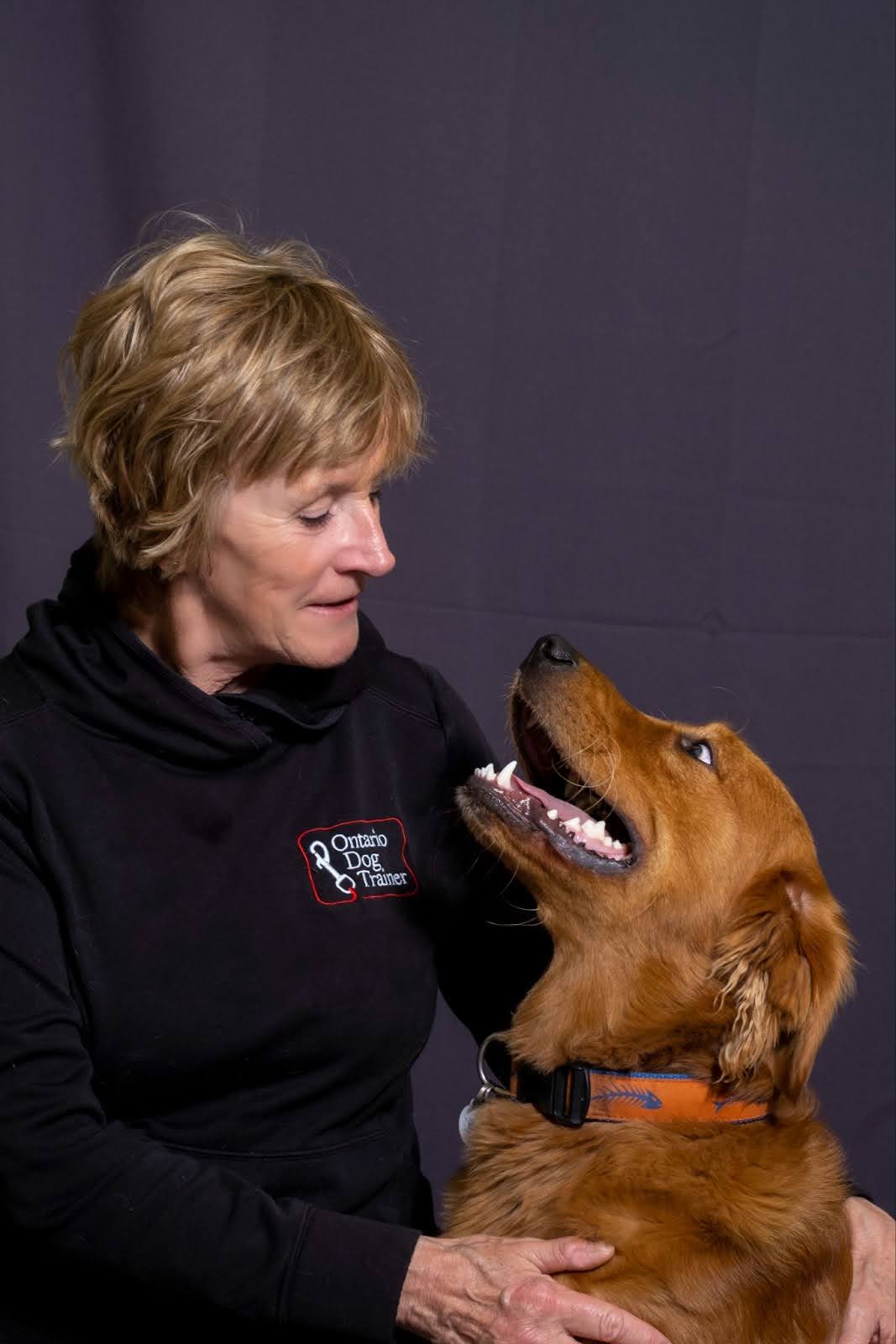 About Karen Laws
Karen Laws is a certified professional dog trainer, founder of The Ontario Dog Trainer and founder of the Dog Trainer TRIBE Training Academy.
With more than four decades of experience training dogs and 20 years working professionally with pet dog owners, Karen is known for her practical, no-nonsense approach to improving communication, behaviour and quality of life for dogs and the people who live with them.
A multiple-year Readers’ Choice Diamond Award winner for Best Dog Trainer, recognized repeatedly from 2020 through 2026, Karen also mentors aspiring and professional dog trainers through her Dog Trainer TRIBE Training Academy.
Her mission is simple: help people understand the dog in front of them so they can create better behaviour, greater freedom and a better life together.
Follow Karen on Social Media: FaceBook, Instagram, LinkedIn, TikTok, YouTube,
Need personal help? Let’s chat! Click here to book a Virtual assessment!