
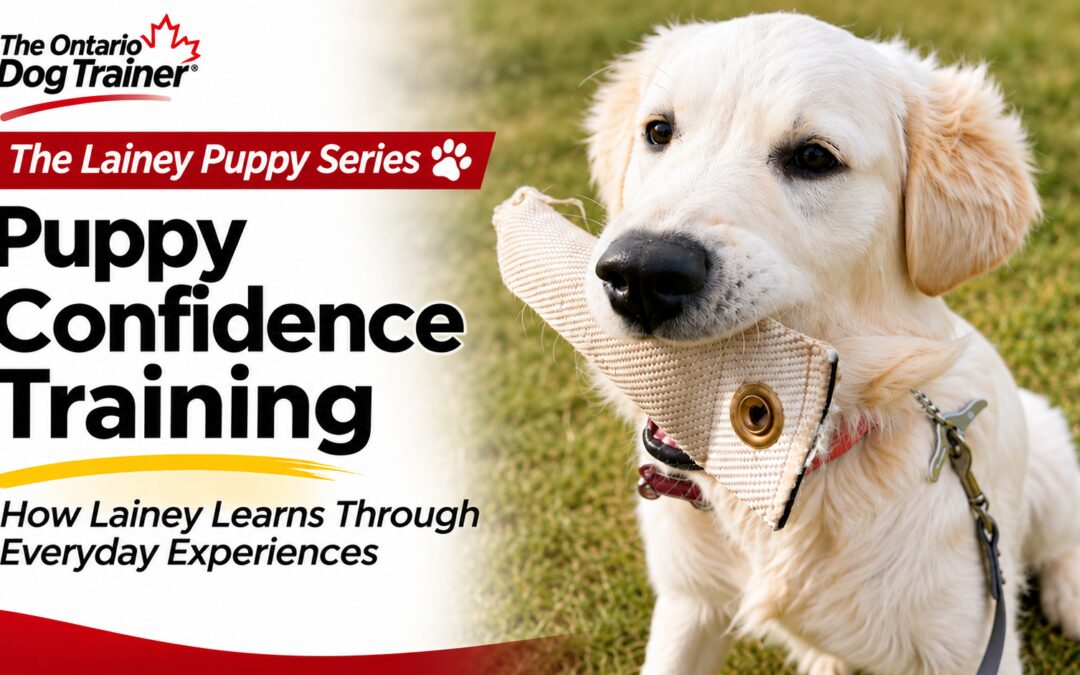
What does it take to raise a confident puppy?
It’s not just about teaching sit, stay, and come.
A confident puppy learns how to handle the world around them. That includes unfamiliar sounds, different surfaces, new environments, and everyday situations that we humans barely notice.
In this instalment of the Lainey Golden Retriever Puppy Training Series, we’re looking at two important parts of her development: exploring the outdoors and learning to be comfortable around normal household activities.
Neither involves complicated obedience exercises.
Both are important parts of raising a dog who can cope with everyday life.
And that’s the point of puppy training. We’re not just teaching behaviours. We’re preparing a puppy for the life we want to share with them.
What Is Puppy Confidence Training?
Puppy confidence training is the process of helping a puppy develop positive experiences, learn to manage unfamiliar situations, and become more comfortable with new experiences and everyday life. Confidence training is another way to define ‘sociaization.’
It involves gradually introducing puppies to different sights, sounds, surfaces, environments, and experiences at a level they can handle.
The goal isn’t to create a puppy who never gets startled or hesitates.
It’s to raise a dog who can notice something unfamiliar, assess what’s happening, and learn that not every new experience is a reason for concern.
Confidence develops through experience, not simply exposure. Confidence develops resilience, or the ability to cope.
And Lainey’s journey gives us some practical examples.
Lesson 1: Let Your Puppy Explore the World
One of the videos in Lainey’s series shows her outdoors, investigating an environment filled with interesting smells, rocks, leaves, water, and different surfaces.
To an inexperienced observer, it might look like she’s simply wandering around.
But there’s plenty of learning happening.
She’s using her senses to investigate the environment, gathering information and making choices about where to go next.
This type of exploration can help puppies develop:
- Environmental confidence: Becoming comfortable in different surroundings.
- Body awareness: Learning how to negotiate uneven surfaces and obstacles.
- Problem-solving skills: Figuring out how to approach unfamiliar objects and situations.
- Independence: Developing the ability to investigate without needing constant direction.
- Mental enrichment: Using natural behaviours such as sniffing, searching, and exploring.
These experiences provide opportunities for learning that can’t be recreated by practising obedience exercises in the living room.
Why Is Sniffing Important for Puppies?
Dogs experience much of their world through their sense of smell.
Allowing a puppy to sniff and investigate provides mental stimulation and opportunities to gather information about the environment.
Not every walk needs to be a structured heel exercise.
Sometimes the most useful thing you can do is give your puppy a little more time and space to explore.
Of course, that doesn’t mean allowing your puppy to drag you through the neighbourhood or investigate dangerous objects.
It means creating safe opportunities for exploration while maintaining appropriate boundaries that strengthen your connection with your pup.
My training philosophy is simple: Give your puppy enough freedom to learn, with enough guidance to succeed.
Lesson 2: Building Confidence Around Household Sounds
The second video takes us indoors, where Lainey encounters an ordinary household appliance: a vacuum cleaner.
For humans, vacuuming is just another chore.
For a puppy, that machine can present a rather interesting combination of movement, vibration, noise, and unfamiliar and potentially scary activity.
Some puppies are naturally curious about household equipment. Others are cautious or concerned and others may see it as an opportunity for a game of chase and grab.
Neither response tells us everything about the dog’s future behaviour.
What matters is how we introduce the experience and respond to the puppy’s behaviour.
How Do You Get a Puppy Used to a Vacuum Cleaner?
The best approach is gradual, controlled exposure that allows your puppy to remain comfortable.
Start with these five steps:
- Introduce the vacuum while it’s turned off. Allow your puppy to notice it from a comfortable distance.
- Reward calm behaviour. Reinforce relaxed observation, checking in with you, or choosing to disengage.
- Introduce movement separately. Move the unplugged vacuum a small amount if your puppy is comfortable.
- Introduce the sound gradually. Start with the vacuum running at a distance, ideally with someone helping you control the experience.
- Build tolerance over time. Gradually work toward normal vacuuming while monitoring your puppy’s response.
Watch your puppy’s body language.
If they become tense, retreat, bark repeatedly, freeze, or refuse food they would normally enjoy, the experience may be too difficult.
Increase the distance, reduce the intensity, or stop the session.
The objective is not to make your puppy tolerate something frightening. It’s to help them learn that ordinary household activities are safe and predictable.
And sometimes the smartest training decision is to put the vacuum away and try again another day.
The housework will still be there. Unfortunately.
Lesson 3: Puppy Socialization Is More Than Meeting People and Dogs
When people hear the word socialization, they often think about puppies playing with other dogs or greeting strangers.
But proper puppy socialization involves much more.
Puppy socialization is the process of helping puppies develop appropriate responses to the people, animals, environments, sounds, objects, and experiences they will encounter throughout life.
Think about what Lainey’s two videos represent.
Outdoors, she’s experiencing natural surfaces, scents, movement, and environmental changes.
Indoors, she’s learning about the activity and equipment that are part of living in a human household.
These experiences may seem unrelated, but they contribute to a common goal.
Helping Lainey develop the ability to adapt.
Does a Puppy Need to Experience Everything?
No.
And trying to expose a puppy to everything as quickly as possible can do more harm than good.
A puppy who is overwhelmed isn’t necessarily becoming more confident.
They may simply be learning that unfamiliar situations are unpredictable or frightening.
Effective socialization considers the puppy’s age, individual temperament, emotional state, and previous experiences.
Quality matters more than quantity.
Three comfortable, positive experiences are more useful than ten encounters that leave the puppy stressed or frightened.
Lesson 4: Confidence Grows When Puppies Have Choices
One of the most useful things we can give a developing puppy is the opportunity to make appropriate decisions.
When Lainey is exploring outdoors, the environment offers opportunities to approach, investigate, pause, or move away.
When she’s indoors, she can learn that everyday household activities don’t necessarily require a reaction.
We want puppies to learn how to think, not simply wait for instructions every second of the day.
That doesn’t mean abandoning structure or training.
Quite the opposite.
Freedom and structure work together.
We establish the boundaries, manage the environment, and provide guidance when necessary.
Within those boundaries, we allow the puppy to discover and learn.
Over time, this can help build confidence, communication, independence and resilience to the challenges of daily life.
Lesson 5: Training Time Is All the Time
Here’s something I tell dog owners regularly.
You don’t need to schedule an hour-long training session to teach your puppy something useful.
In fact, many of the most valuable lessons happen during ordinary daily activities.
Consider how many opportunities you have throughout the day:
- Preparing meals while your puppy learns to settle nearby.
- Walking on different safe surfaces.
- Ringing the doorbell or knocking on wood surfaces for no reason.
- Opening and closing doors.
- Running household appliances.
- Introducing new objects.
- Taking short outings to unfamiliar places.
- Practising calm behaviour when people come and go.
- Sitting quietly together to watch television or read a book.
- Click here for a list of quick ‘training’ and socialization lessons for your puppy.
Each experience provides an opportunity to reinforce useful behaviour.
And each gives your puppy information about how the world works.
Of course, not every moment needs to become a formal training exercise. Puppies also need appropriate rest, play, physical activity, and time to simply be puppies.
The important thing is recognizing that learning doesn’t stop when the training session ends.
How Can You Build Your Puppy’s Confidence at Home?
If you’re raising a puppy, here are five practical activities you can introduce.
1. Create a Safe Exploration Area
Provide supervised opportunities to investigate different puppy-safe objects, surfaces, and spaces.
Let your puppy explore at their own pace and make good choices, rather than continuously directing their movement.
2. Introduce Everyday Noises Gradually
Household appliances, doorbells, kitchen equipment, and outdoor sounds can all become part of your puppy’s learning.
Begin at a level your puppy can comfortably manage.
3. Encourage Problem-Solving
Use simple food searches, age-appropriate puzzle toys, or easy training games.
Start with challenges your puppy can solve successfully.
4. Practise Calm Observation
Not every passing person, dog, or moving object requires interaction.
Reward your puppy for observing the world calmly and returning their attention to you.
5. Recognize When Your Puppy Needs a Break
Young puppies need considerable sleep and recovery time – at least 18 hours per day up to six months of age!
An overtired puppy may struggle to concentrate, settle, or respond appropriately. And that shift in behaviour from calm, playful puppy to Tasmanian can happen in a flash.
Sometimes the best training plan involves doing less.
Common Questions About Puppy Confidence Training
At what age should you start confidence training with a puppy?
Confidence-building experiences can begin as soon as your puppy comes home, provided they are appropriate for the puppy’s age, health, vaccination status, and temperament. Early socialization is particularly important, but confidence development continues throughout adolescence and adulthood.
How do I know if my puppy is confident?
A confident puppy may investigate new environments, recover relatively quickly from mild surprises, engage in play, and show curiosity. However, confidence varies by situation. A puppy can be comfortable outdoors and cautious around household appliances, yet still be very self-confident.
Should I comfort my puppy when they’re scared?
You can absolutely offer reassurance and support, without coddling. Your calm presence without touch or talk, will help your pup to realize that you have the situation under control. Coddling, cooing or petting is not advised for fearful puppies because it may be perceived as a reward for their fearful behavour. The important thing is to recognize your puppy’s emotional state and adjust the situation rather than forcing them to remain close to something frightening.
Can too much socialization make a puppy fearful?
Yes. Repeated overwhelming or frightening experiences can increase fearful responses. Socialization should involve gradual, manageable introductions, not forced exposure to every possible stimulus.
Is obedience training enough to raise a well-behaved puppy?
No. Obedience skills are valuable, but puppies also need appropriate socialization, confidence-building experiences, emotional regulation, rest, enrichment, and consistent guidance.
What Lainey Is Teaching Us About Puppy Development
What I enjoy about working with puppies is watching them discover their world.
Lainey doesn’t need to perform a perfect sit or heel to demonstrate that learning is happening.
Sometimes progress looks like exploring unfamiliar terrain.
Sometimes it involves becoming comfortable around an appliance that moves and makes noise.
And sometimes it means discovering that nothing particularly exciting is happening, so there’s no need to react.
These everyday experiences are part of the foundation for a confident, adaptable companion.
We’re not raising puppies to be good at puppy class. We’re raising dogs to live successfully with their people.
That’s what the Lainey Puppy Training Series is all about.
And there will be plenty more learning ahead.
Need Help Raising a Confident, Well-Mannered Puppy?
Your puppy doesn’t arrive knowing how to live in your household.
That’s your job to teach them.
And you don’t have to figure it all out through trial and error.
Whether you’re working on socialization, confidence, household manners, leash walking, or building a strong relationship with your puppy, the right foundation makes a difference.
Need help building a puppy training plan that will create the lifelong companion you actually want to live with? We’ve got you.
Explore The Art of Puppy Parenting, my online puppy training course, for practical lessons and guidance you can start applying at home.
Explore The Art of Puppy Parenting
Or visit OntarioDogTrainer.com to learn more about our puppy training programs and coaching.
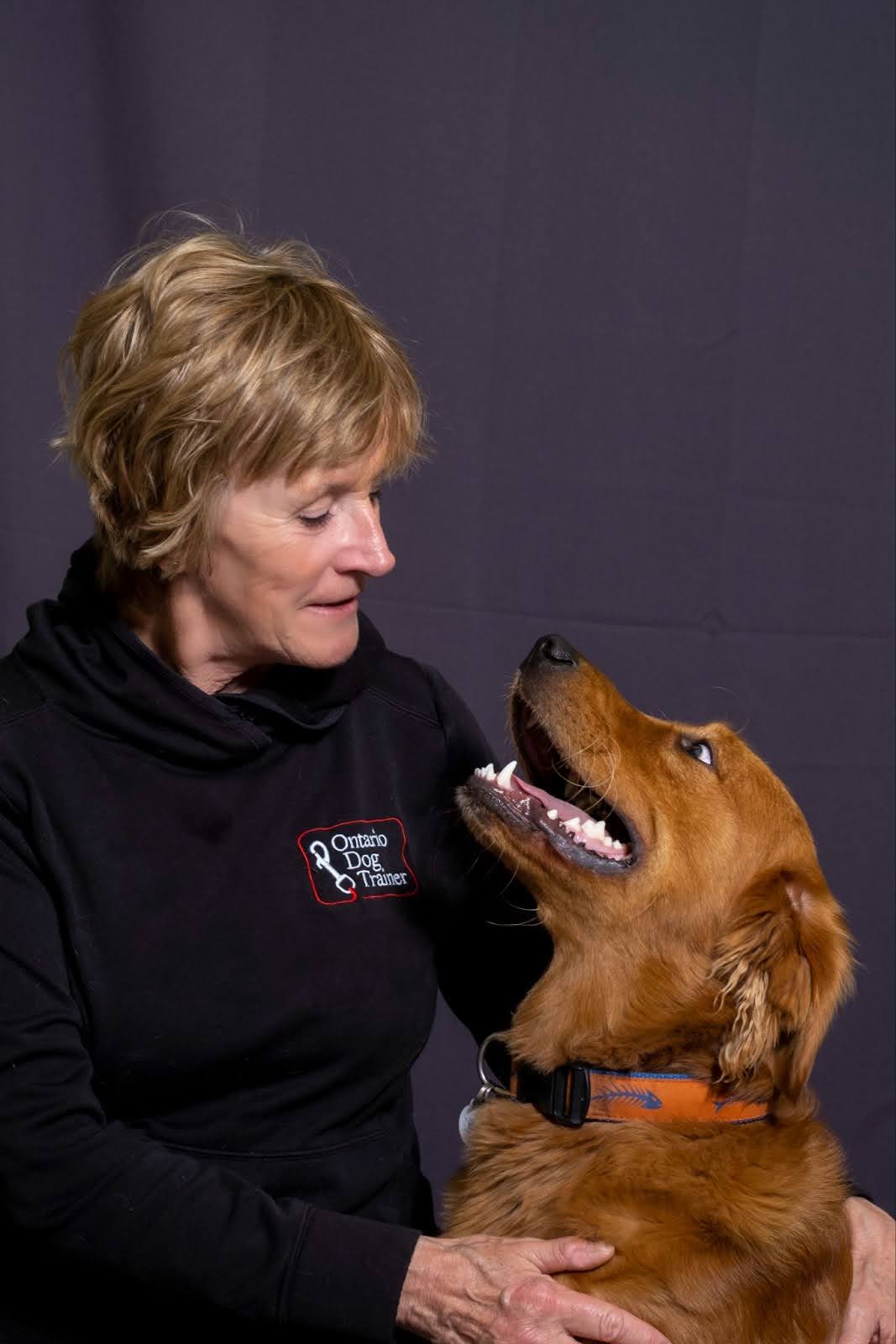 About Karen Laws
Karen Laws is a certified professional dog trainer, founder of The Ontario Dog Trainer and founder of the Dog Trainer TRIBE Training Academy.
With more than four decades of experience training dogs and 20 years working professionally with pet dog owners, Karen is known for her practical, no-nonsense approach to improving communication, behaviour and quality of life for dogs and the people who live with them.
A multiple-year Readers’ Choice Diamond Award winner for Best Dog Trainer, recognized repeatedly from 2020 through 2026, Karen also mentors aspiring and professional dog trainers through her Dog Trainer TRIBE Training Academy.
Her mission is simple: help people understand the dog in front of them so they can create better behaviour, greater freedom and a better life together.
Follow Karen on Social Media: FaceBook, Instagram, LinkedIn, TikTok, YouTube,
Need personal help? Let’s chat! Click here to book a Virtual assessment!