Does your dog launch themselves at you when you walk in the door? Jump on your kids when they run in the yard? Leap all over visitors like they’ve been gone for ten years?
Here’s the good news: you can fix it without yelling, pushing them off, or resorting to complicated training drills.
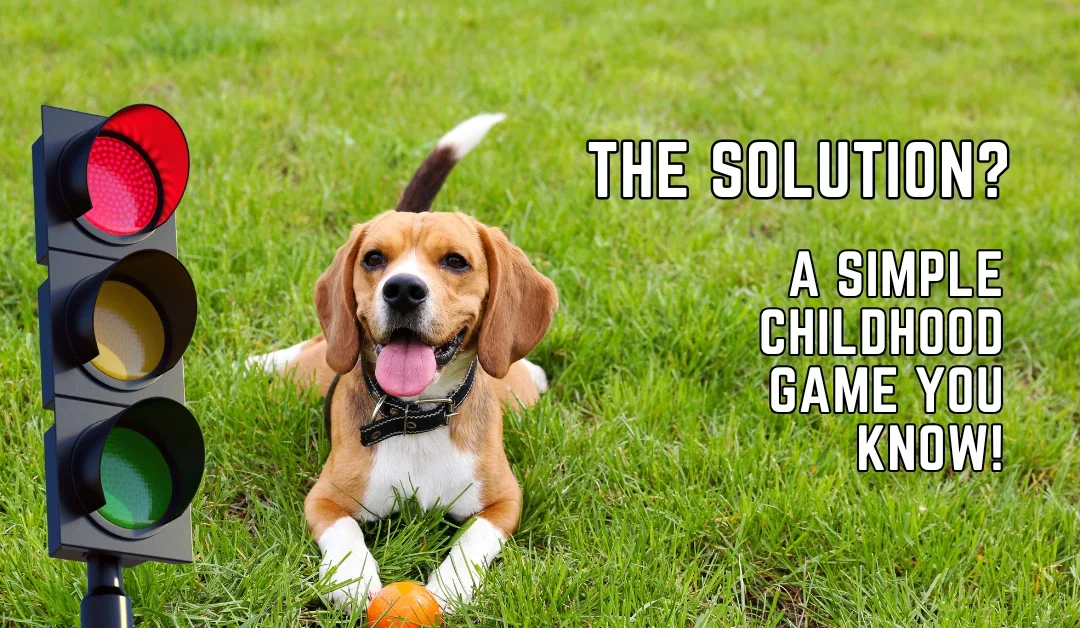
The solution? A simple childhood game you already know: The Traffic Light Game of Red Light, Green Light.
In this blog, we’ll cover:
- What the Traffic Light game is
- Why it works to stop jumping
- How to apply it with kids, visitors, and family
- The step-by-step rules for success
- How to apply it in your daily activities – like coming home from work!
Why Play is the Secret Weapon in Training
Dogs are natural players. Play captures their attention, sparks their curiosity, and makes them want to engage with you. When you use play as a training tool approach, you cut through the boredom and create instant buy-in from your dog.
The Traffic Light game taps into this by turning self-control into part of the fun. Instead of lecturing your dog about jumping, you make it clear — through action — that only calm behavior keeps the game going.
How the Traffic Light Game Works
The rules are simple:
- “Red Light” = all movement and interaction stops (this includes eye contact, talking too!)
- “Green Light” = play or approach continues.
As you as you see your dog getting excited and their feet about to come off the ground, you call “Red Light”, everyone stops moving, folds their hands under their arms and looks up at the sky, and the fun instantly freezes. Your dog will sniff the ground, sniff your clothes, or shoes and will quickly lose interest and move away. When they’re calm and have all four paws on the ground, you call “Green Light” and the fun resumes.
It’s black-and-white for your dog — jumping stops the party, staying grounded keeps it going.
Step-by-Step: Teaching the Traffic Light Game
- Prompt the kids to begin running around in the yard.
- Call “Red Light” When Needed
If As your dog’s energy ramps up and he or she rears up or jumps, say “Red Light,” and have everyone freeze and act like a tree – i.e., stand tall, fold their ‘branches’ (arms so hands are hidden) and look at the sky – i.e., No eye contact, no talking, no movement. - Resume running again with “Green Light”
When your dog loses interest in the people, say “Green Light” to start them running again.
Why It Works
Dogs are natural problem solvers – they figure this game out quickly. They are also energy conservers. If a behavior doesn’t get them any return for their effort – such as attention or reward, they stop doing it. Jumping loses its value when it never leads to the fun attention they want. Instead, keeping their feet on the ground does get them what they want – permission to leave the people and do something else they want, like sniffingAnd the best part? This method is:
- Emotion-free — no yelling or shoving your dog away.
- Clear — the rules never change.
- Engaging — kids and visitors can play a role in training.
Taking It Further
You can use the Traffic Light anytime:
- With kids in the yard, as described above.
- When guests arrive, (have them stand still and ignore your dog)
- Even when you come home from work, stand still, ignore your dog, and then walk through their space to another location.
The Traffic Light game teaches your dog that polite, calm behavior always wins. And once they (and your kids and guests) ‘get it’, you can let them interact freely without worrying about them jumping all over someone.
Bottom line: This is more than a game — it’s a simple, consistent, family-friendly way to teach appropriate behaviour when the people behaviour is exciting, that last a lifetime.
🎥 Watch the full video here to see the Traffic Light in action and try it with your dog and kids this week.
Need more help to curb your dog’s excitement? We’ve got you! Let’s chat!
Enjoyed this read? For more no-nonsense insights on dog training and behavior, check out my earlier blogs:
- Tick-Borne Diseases in Dogs: What Every Dog Owner Needs to Know
- Teaching Your Reactive Dog to Stay Calm: The Art of Doing Nothing
- Dog Dental Care: Why It’s More Important Than You Think
Let’s stay connected: