
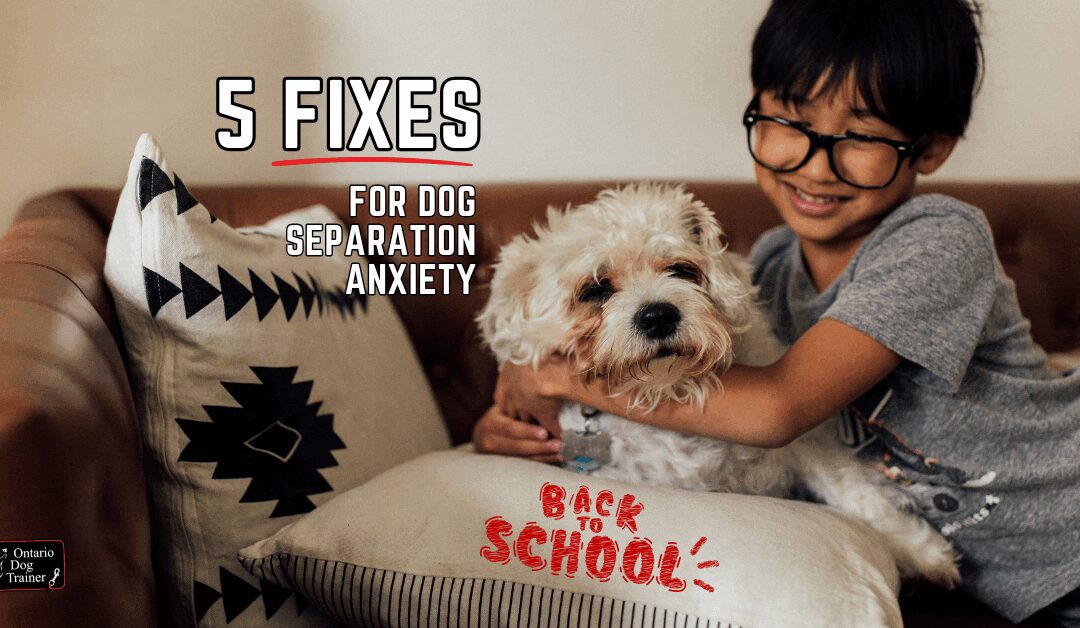
The lazy days of summer are wrapping up, and families everywhere are shifting gears into early mornings, school buses, and jam-packed schedules. For kids, that means new teachers and new routines. For parents, it’s the balancing act of lunches, drop-offs, and work. But for your dog? This sudden change often means something else entirely: the anxiety that comes with being alone for the first time since June – a condition known as dog separation anxiety.
Dogs who’ve had the family around all summer suddenly face empty houses and quiet yards. The abrupt shift can leave them stressed, vocal, or even destructive. The good news? With a bit of planning and structure, you can help your dog transition smoothly.
Here’s what we’ll cover today:
- What dog separation anxiety really is (and how to spot it)
- How to gradually build up your dog’s alone time
- Adjusting walks and routines around the new school schedule
- Mental workouts that keep your dog busy and fulfilled
Let’s dive in.
Understanding Dog Separation Anxiety
Dog separation anxiety is more than a little whining when you walk out the door. It’s genuine panic that can look like:
- Barking, whining, or howling
- Chewing and destruction
- Pacing or drooling
- Attempts to escape
For dogs who are tightly bonded with their people or who haven’t practiced being alone, it can feel overwhelming. And if left unaddressed, it doesn’t just affect your dog’s well-being; it affects the whole household.
How to Help Your Dog as School Starts
1. Gradually Build Up Alone Time
Don’t wait until the first day of school to practice. If you missed changing your dog’s holiday routine on the first day of school, that’s ok. It’s never too late. Start small now.
- Begin with minutes, not hours. Step outside for a few minutes, return calmly, ignore your dog’s excitement and continue your normal routine. After a few minutes of calm behaviour, reward your dog for staying relaxed.
- Increase gradually. Add time in small increments 5 minutes, then 10, then 20. The goal is to make being alone feel normal. This slow build-up is one of the best ways to prevent dog separation anxiety before it spirals.
2. Create a Predictable Routine
Dogs thrive on predictability. Start easing into the school-day schedule now:
- Meals at consistent times
- Walks before school (not mid-morning like in summer)
- Play or training after school
A steady rhythm reduces anxiety by making life feel safe and familiar.
3. Morning Exercise = Calm Dog
A tired, fulfilled dog is far less likely to panic while you’re gone. But here’s the key: exercise their body and their brain.
A structured leash walk where your dog has to think and focus (not just pull you down the street) burns more energy than letting them run wild. Add in some obedience drills or a short game of fetch, and you’ve set the stage for calmness once you leave.
4. Evening Wind-Down
After a busy day, your dog also needs a calming ritual. A slow walk, quiet training, or cuddle time helps them reset and reinforces that home is their safe space.
5. Consider an alternative
Consider enrolling your dog in a reputable doggy daycare for three days per week, or hiring a professional dog walker to break up your dog’s day. If it’s within your budget, your feeling of guilt and anxiety will be relieved and you will come to a relaxed and fulfilled pup rather than chaos and over-excitement.
Adjust Walk and Play Routines
When the school year kicks in, you’ll need to rework your dog’s daily schedule:
- Pre-School Walks: A brisk, focused walk before everyone leaves sets the tone for the day.
- After-School Play: When the kids return, make time for games or training. It’s a great release for your dog’s pent-up energy.
- Weekend Adventures: Use weekends for longer hikes or park time. Keeping up stimulation carries over into calmer weekdays.
The Secret to a Happy Dog? Mental Workouts
A tired brain = a happy dog. Mental work is just as important as physical exercise in preventing dog separation anxiety.
- Puzzle Feeders: Challenge your dog to work for their meal.
- Hide and Seek: Hide treats or toys and let them hunt.
- Frisbee: My favorite! If you follow me on Instagram, you’ve seen Prince flying high after a disc. It’s physical, mental, and fun and a perfect pre-school routine for high-energy dogs.
Even rotating toys every few days can keep your dog engaged without spending a dime.
DIY Enrichment on a Budget
Dogs don’t care if enrichment costs $5 or $50. A couple of my favorites:
- Frozen Treat Bones: Stuff a hollow bone with raw food, add salmon oil, and sprinkle with Smack Petfood powder. Freeze it. It keeps them busy and nourished..
- Rotating Toys: Put a few away, bring them back a week later. Instant excitement.
These simple tricks fight boredom and buy you peace of mind.
Safety in Busier Neighborhoods
Back-to-school means more cars, buses, and foot traffic. Don’t overlook safety:
- Always leash up even if your dog is reliable off-leash.
- Reflective gear for early mornings or late evenings.
- Quieter routes whenever possible. Avoid the chaos of school zones if your dog is anxious.
Extra Support for Struggling Dogs
Some dogs need more than enrichment and routine:
- Interactive toys while you’re gone keep minds busy.
- Dog walkers or neighbors can break up long days.
- Talk to your vet. If anxiety is severe, sometimes professional guidance is needed.
Back-to-school doesn’t have to spell trouble for your dog
With structure, enrichment, and patience, you can prevent dog separation anxiety and set everyone, including kids, parents, and pups up for a smoother transition.
I’m Karen Laws, The Ontario Dog Trainer. If you’re struggling, don’t wait until the chaos hits. Get support now.
👉 Need Dog Training Help? Fill out my assessment form for online or in-person training. Let’s get your dog on track.
👉 Need Immediate Help? Book a FREE 15-MINUTE CALL with me today. Your calmer, happier dog starts here.
👉 Dog Trainer? Book a free audit call with me and let’s discover the solution to growing your business the smart way.
Enjoyed this read? For more no-nonsense insights on dog training and behavior, check out my earlier blogs:
- Tick-Borne Diseases in Dogs: What Every Dog Owner Needs to Know
- Teaching Your Reactive Dog to Stay Calm: The Art of Doing Nothing
- Dog Dental Care: Why It’s More Important Than You Think
Let’s stay connected: