
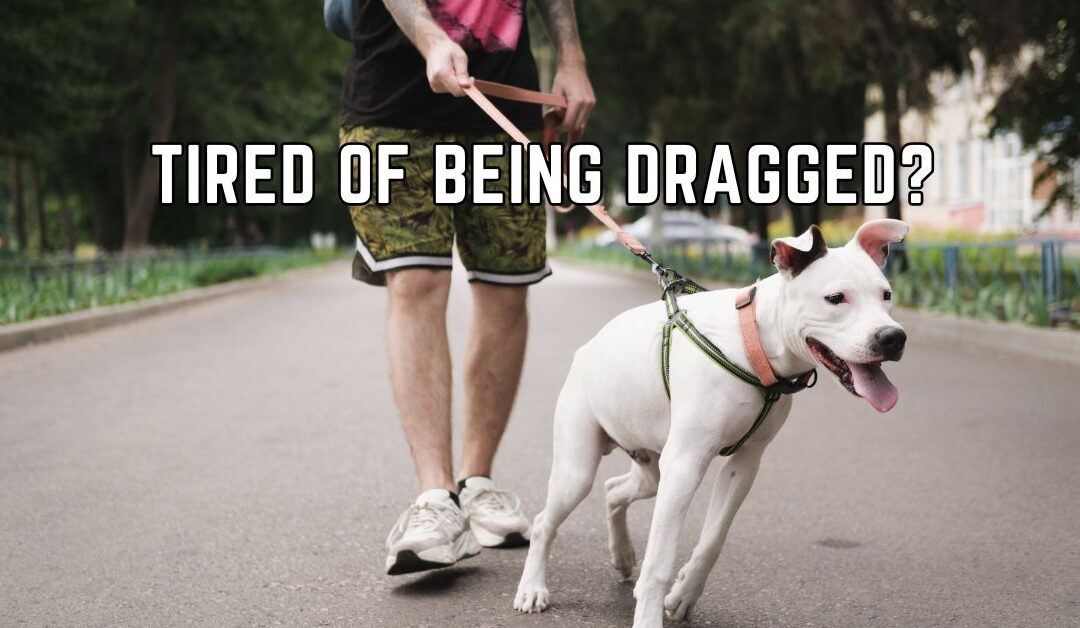
Have you ever thought, “My puppy pulls on the leash now, but he’ll grow out of it”? If that’s what you’re hoping, here’s the truth: dogs don’t magically stop leash pulling. In fact,
if nothing changes, the behavior usually gets worse with time. That means your “cute little tug” today can turn into a serious daily struggle six months from now.
So, let’s ask the big question: what happens if nothing changes in your dog’s leash walking behavior in the next six months?
Here’s a news flash: dogs don’t outgrow leash pulling. They only discover calm and comfort through connection with you.
In this blog, I’m going to break down why it matters to train your dog to walk on a leash without pulling and how you can get ahead of the problem before it takes over your walks.
The Myth of “Growing Out of It”
I can’t tell you how many times I’ve heard this: “He’s just a puppy. He’ll grow out of pulling.”
Here’s the reality—dogs don’t outgrow leash pulling. They grow into it. What starts as a playful bounce at 12 weeks old becomes a full-body drag by the time your dog hits 6 months.
Without skilled training, pulling while walking on a leash becomes a learned habit. The leash becomes a trigger for excitement, frustration, or even aggression. That’s not something your dog grows out of; it’s something that gets reinforced with every walk.
So, if you’ve been telling yourself it’ll pass, consider this your wake-up call. The earlier you step in, the easier it is for your dog to learn a calm connection.
1. Recognizing the Warning Signs
Leash pulling doesn’t start at full throttle. It sneaks up in stages. Here’s how to know things are heading in the wrong direction:
- Early stage: Puppy zig-zags, gets distracted easily, surges toward smells, and ignores you when the leash tightens.
- Middle stage: Dog starts lunging at squirrels, barking at other dogs, and pulling hard enough to make your shoulder ache.
- Advanced stage: Walking feels like a battle every single time. Your dog anticipates pulling the second the leash clips on.
If you’re noticing any of these, your dog is not “just being a puppy.” These are clear signs that leash walking training is overdue.
The truth? Every walk is a training session, whether you realize it or not. Either you’re training your dog to walk calmly, or your dog is training you to put up with pulling.
2. How Reactivity Builds Tension
One of the biggest leash walking problems I see is reactivity, when a dog barks, lunges, or spins at triggers like other dogs, bikes, or people.
Here’s why it matters: reactivity doesn’t just happen to your dog, it’s build in your dog through repetition.
- Each time your dog reacts, their brain links pulling with victory (they got to bark, they created distance, they felt powerful).
- Your tension on the leash adds fuel, because a tight leash tells your dog, “You’re right, there’s something to worry about.”
- Over time, the leash itself becomes a cue for reactivity.
That’s why leash walking training isn’t just about stopping and pulling. It’s about teaching your dog how to feel calm and connected with you, no matter what’s happening around them.
3. Why Fall Is the Best Time to Start Training for Walking on a Leash without Pulling
Timing matters. And the Fall season gives you the best opportunity to reset your dog’s leash skills before winter hits.
Here’s why:
- Milder weather. Neither you nor your dog is melting in the heat or freezing in the cold. Walks are more enjoyable, which means you’ll stick with the training.
- More predictable routines. With back-to-school schedules, your days are structured. That helps you build consistent leash walking sessions into your calendar.
- Lower distractions. Parks and sidewalks are quieter than the summer chaos, giving you space to focus on calm training.
When you wait until winter, two things happen: your dog gets less practice, and the pulling habits get stronger.
Fall is your sweet spot to make progress before the snow and ice make things harder.
4. Avoiding Winter and Rainy-Season Setbacks
If you live in Canada like I do, you know winter is no joke. Snow, ice, salt, bulky coats—you name it, it all adds up to less time on the leash.
Here’s the trap: if you don’t establish leash walking training now, winter becomes an excuse. And when spring rolls around, your dog hasn’t just “paused” training, they’ve lost ground.
Here are a few ways to avoid setbacks:
- Short, structured walks. Even five minutes of calm, focused leash walking beats 30 minutes of chaotic pulling.
- Indoor practice. Hallways, garages, or basements can be great places to reinforce leash manners when the weather is bad.
- Routine matters more than distance. In training for walking on a leash without pulling, consistency is king. It’s not about how far you walk, but how calmly you walk.
Think of winter as your “maintenance season.” If you’ve built a strong leash walking foundation in the fall, you’ll be able to hold onto that progress all winter long.
5. Building Habits That Last
The goal of training for no-pull leash walking isn’t just to stop pulling today. It’s to create a long-term walking partnership with your dog.
Here’s how you build habits that stick:
- Clarity. Your dog should always know loose leash earns comfort and freedom.
- Consistency. Every walk, every time. Calm walking is not an option. It’s the rule.
- Connection. Your dog should feel that walking with you is more rewarding than pulling away from you.
When you put these pieces together, your walks stop being a battle and start being a bonding experience.
What Could Change for You?
Close your eyes for a second and picture your next walk.
- Instead of bracing for impact, you clip on the leash with confidence.
- Instead of your dog dragging you down the street, you’re walking side by side.
- Instead of frustration, you feel calm, connected, and proud.
That’s the power of training for no-pull leash walking.
So Ask Yourself: Where Do You Want to Be in Six Months?
Six months from now, there are only two possibilities:
- Nothing changes. Your dog is bigger, stronger, and even more practiced at pulling. Walks are a daily battle, your patience is thin, and you’ve quietly started avoiding them altogether.
- Everything changes. Your dog walks beside you calmly, the leash stays loose, and walking your dog becomes the best part of your day.
Which one do you want?
Because here’s the truth: training your dog to walk on a leash without pulling isn’t about fixing one “bad behavior.” It’s about shaping the relationship you and your dog share for the rest of their life.
Leash Walking Without Pulling Is About Connection, Not Control
This is where so many owners get it wrong. They think walking their dog on a leash is about control. It’s not. It’s about communicating.
- A tight leash says, “I don’t trust you.”
- A loose leash says, “We’re in this together.”
When your dog learns that comfort comes from walking with you, not against you, everything changes.
It’s not about dominating. It’s not about bribing. It’s about building a calm, steady rhythm where your dog feels safe and connected. That’s the kind of training that lasts.
Ready to Change Your Walks?
You don’t have to figure this out alone. Sometimes just a short conversation can open your eyes to what’s really happening on the leash—and how to turn things around.
That’s why I offer a free 15-minute Focus Call. We’ll look at your biggest leash challenge, I’ll give you a clear next step, and you’ll walk away with a plan you can use right away.
Don’t wait for things to “get better on their own.” Let’s make your next walk the one where everything changes.