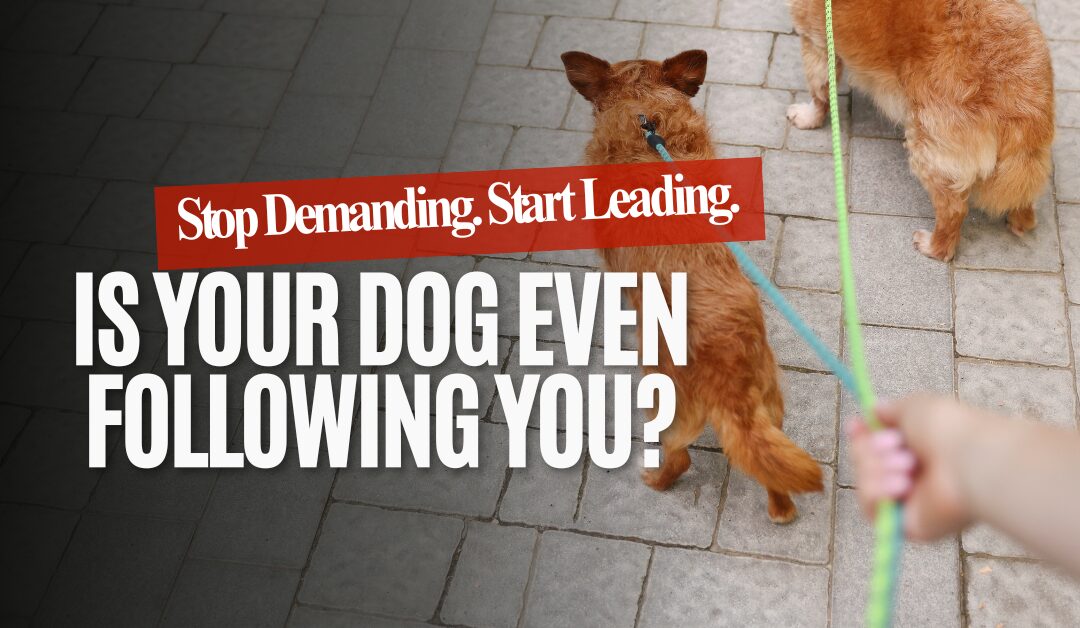
Every time you walk into a room, your puppy or rescue dog is deciding something.
Not whether they know how to sit.
Not whether they understand the word “stay.”
They’re deciding:
“Is this someone I should follow?”
If the answer is unclear, your dog will follow their own instincts instead. And that’s usually where the pulling, jumping, ignoring, and chaos begin.
The Hidden Problem in Most Puppy Training
Most new owners start with commands.
Sit.
Down.
Stay.
Come.
But dogs are not verbal creatures. Their first language is not English or French, any other. Their language is movement, space, energy, and timing.
When you demand behaviour before building a relationship, you are speaking a language they do not yet understand.
That gap creates frustration.
And frustration turns into labels like stubborn, dominant, or crazy.
Meet Cooper, the “Out of Control” Maltipoo
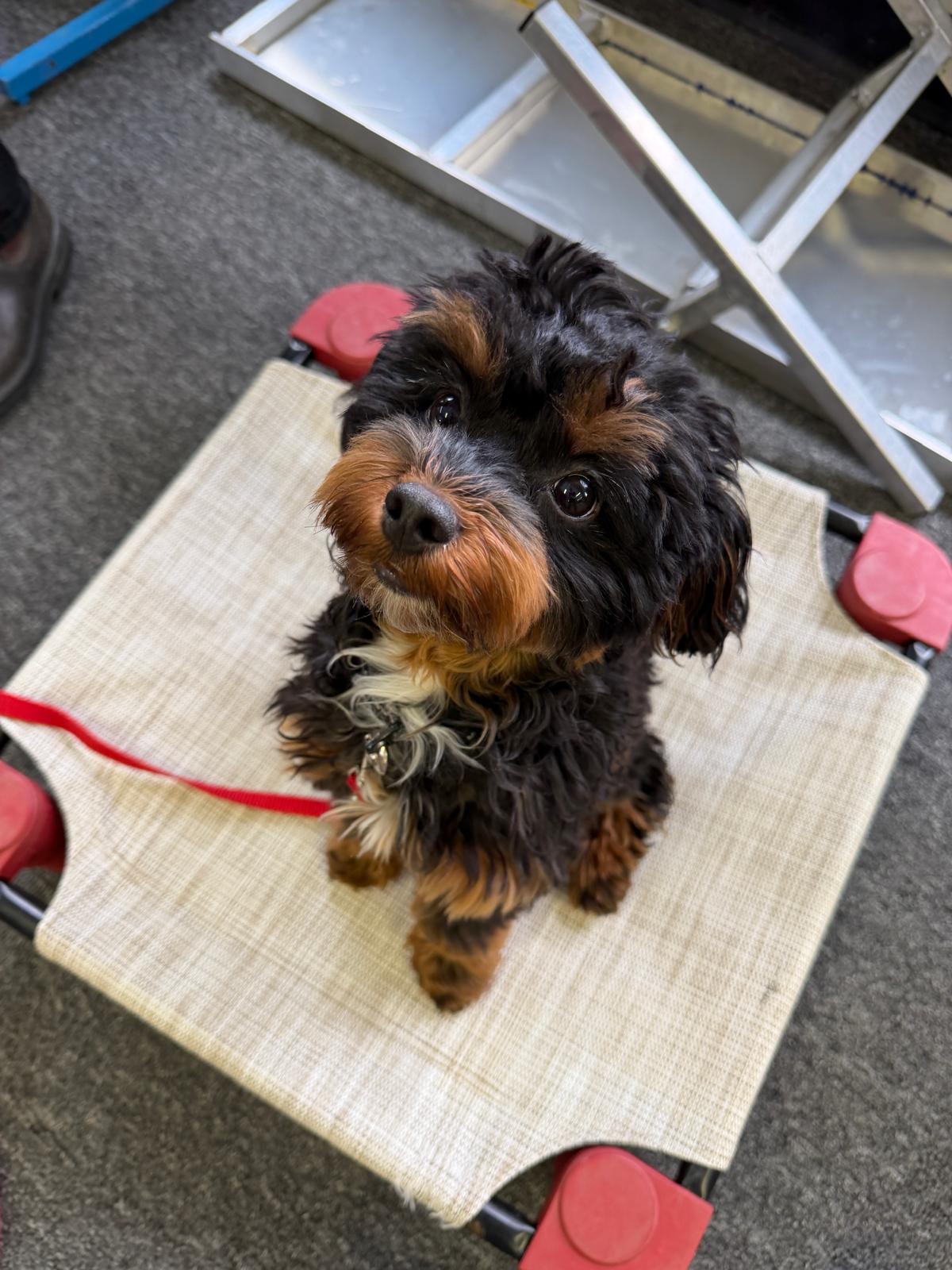
Cooper was seven months old when I met him.
A cute little Maltipoo. Bright eyes. Busy brain.
His owner met me at the door and said she was ready to rehome him. “I can’t take it anymore.”
The list was familiar:
- Constant jumping
- Pulling to the end of his flexi lead
- Ignoring them in the house
- Refusing to eat his food on schedule
“I won’t have a grazer in my house,” she told me.
Underneath the frustration was something deeper.
Cooper was living in a chaotic state of mind with three adults who expected him to know the rules from day one.
No one had taught him how to follow.
The Flexi Lead Problem No One Talks About
If you are wondering how to stop puppy pulling, we need to talk about equipment for a moment.
Flexi leads create constant tension.
Tension tells a dog to lean into it.
When a dog leans into pressure and the owner follows behind them, the dog learns something powerful:
“I control direction.”
That‘s not leadership from the human. That’s negotiation at best, chaos at worst.
If you want a dog who follows you, the leash cannot be a towing rope.
Session One: Teaching Cooper to Follow
In one session, Cooper learned something new.
Not sit.
Not stay.
Not heel.
He learned that staying close and checking in worked out well for him.
I clipped on a simple house line. No flexi lead. No food in my hand.
I walked with purpose. Changed direction. Paused. Moved again.
No pulling. No nagging. Hands anchored calmly at my waist.
When Cooper checked in with me, I marked it with a simple “yes” and calm praise.
Within minutes, he was watching me.
Following.
Choosing to stay close.
The chaos shifted.
Not because he was corrected.
Because he found clarity.
Session Two: The Real Test
Less than a week later, I returned.
The owner opened the door with the same level of frustration as session one.
“He jumped all over our guests.”
It was late afternoon.
I asked one question.
“How many walks has he had today?”
Her answer?
“None.”
I picked up his house line and we went outside.
Cooper was overjoyed. He sniffed everywhere. His body was relaxed. His tail was neutral.
And he checked in with me regularly.
No food. No force.
Just a calm “yes” every time he chose connection.
He was alert. Engaged. Easy to be with.
A pure joy.
The dog had not changed personalities.
He had changed states of mind.
The Real Issue Was Never Obedience
Cooper didn’t need louder commands.
He needed:
Clear direction
Movement with purpose
Consistency
Daily structure
He needed to learn that following a human was to his advantage.
When dogs live without structure, their nervous systems stay activated. They jump. They pull. They ignore. They graze. They make decisions.
When they feel guided, they settle.
This is especially true in rescue dog training, where uncertainty is already high.
How to Build a Following Mindset in Your Puppy
If you want to stop puppy pulling and stop puppy jumping, start here.
1. Control Movement Before Words
Use a simple line inside the house.
Walk with intention. Change direction. Pause.
Let your puppy discover that watching you makes life go more smoothly.
2. Stop Repeating Commands
Say it once.
Then follow through calmly.
Repeated commands teach delayed responses.
3. Reward Check Ins
Mark natural eye contact.
Reinforce connection, not just compliance.
4. Create Daily Structure
A puppy who has not moved, explored, or engaged that day will explode when guests arrive.
Exercise does not create chaos.
Lack of direction does.
What Happens When You Shift
When you stop trying to control behaviour
And start building influence
You’ll see:
Less pulling
Less jumping
More eye contact
More voluntary closeness
A calmer dog
Because now your puppy isn’t performing for food.
They’re choosing you.
The Bottom Line
Your puppy is always asking:
“Are you someone I should follow?”
If the answer is yes, obedience becomes easier.
If the answer is unclear, chaos fills the gap.
Cooper wasn’t a bad dog.
He was a confused one.
Once clarity replaced chaos, he became the little dog his owners hoped for.
Leadership isn’t loud.
It‘s steady.
And when you build a following mindset first, everything else builds on it.
If you found this helpful, you’ll love the deeper dives I share every week
🎧 Listen to my podcast, Paws and Profits — where I talk about the real work behind great dog training, share stories from the field, and help you understand the “why” behind calm, connected leadership.
📺 Watch my latest training videos on YouTube — real dogs, real people, real progress. You’ll see how small changes in structure and mindset transform daily life at the door and beyond.
Be sure to follow me on Instagram and join my weekly Live show to get your questions answered and more, every Tuesday at 7:00 p.m. Eastern time.
And if you’re ready to work directly with me, you can book a free online assessment. You’ll get a clear roadmap for moving forward toward your dream dog. Our virtual programs are tailored to your unique needs, and offer personalized support, clear structure, and practical solutions you can start using right away — all from the comfort of your home.
You can find everything — my podcast, YouTube channel, and online coaching options — at https://ontariodogtrainer.com. Contact Karen and let’s talk.
Start today. Teach calm, lead clearly, and keep your dog safe every time the door opens.
_________________________________________________________________________
About Karen
Karen M. Laws is a seasoned professional with decades of experience training dogs, educating people, and mentoring aspiring trainers. She has bred, raised, and successfully trained Labrador Retrievers for field competition. She has judged competitions across Canada and the United States. With a background as a Certified Elementary School Teacher and a career as a public servant, Karen brings a unique perspective to the dog training industry—combining hands-on expertise with a deep understanding of education and leadership.
As a former President and Director of the International Association of Canine Professionals (IACP), Karen holds multiple certifications in dog training and education and consistently advocates for higher standards in the profession.
She is the founder of The Ontario Dog Trainer (est. 2006), dedicated to helping pet owners create lasting, positive relationships with their dogs. She also leads the Dog Trainer TRIBE Training Online Academy, where she provides structured mentorship and education for trainers and dedicated pet dog owners looking to gain confidence, refine their skills, and create a successful, sustainable business and lifestyle with their dogs.
Karen’s approach goes beyond technique—she teaches trainers and pet dog owners how to understand the world from a dog’s perspective, foster strong client relationships, and develop their own unique style. Her blend of practical experience, straight-talking advice, and compassionate leadership makes her a trusted mentor for those looking to grow in the pet dog training industry.
Follow Karen on social media:
Instagram @karenlawslive
Facebook – https://www.facebook.com/KarenDogTrainer/
YouTube – https://www.youtube.com/@TheOntarioDogTrainer
LinkedIn https://www.linkedin.com/in/karenlawstheontariodogtrainer/