If your dog walks nicely until another dog shows up, you’re not alone. That’s where many owners discover whether they are truly leading the walk, or just enjoying a temporary stretch of peace.
In the first two articles in this leash walking series, I talked about creating a following mindset and building a working mindset before the walk starts. Those pieces matter because good leash walking begins long before you reach the street.
Now we move on to the next layer: distractions.
One of the most common distractions on a daily walk is another dog, even when that dog and its owner are on the other side of the street, or both are familiar to you and your dog. Owners often think the distance or familiarity should make the situation manageable. Sometimes it does. Sometimes it absolutely does not.
The issue is not only distance. The issue is whether the owner -that’s you- notices the picture early enough to do something useful with it.
The biggest mistake owners make
Most owners wait too long. Can you relate?
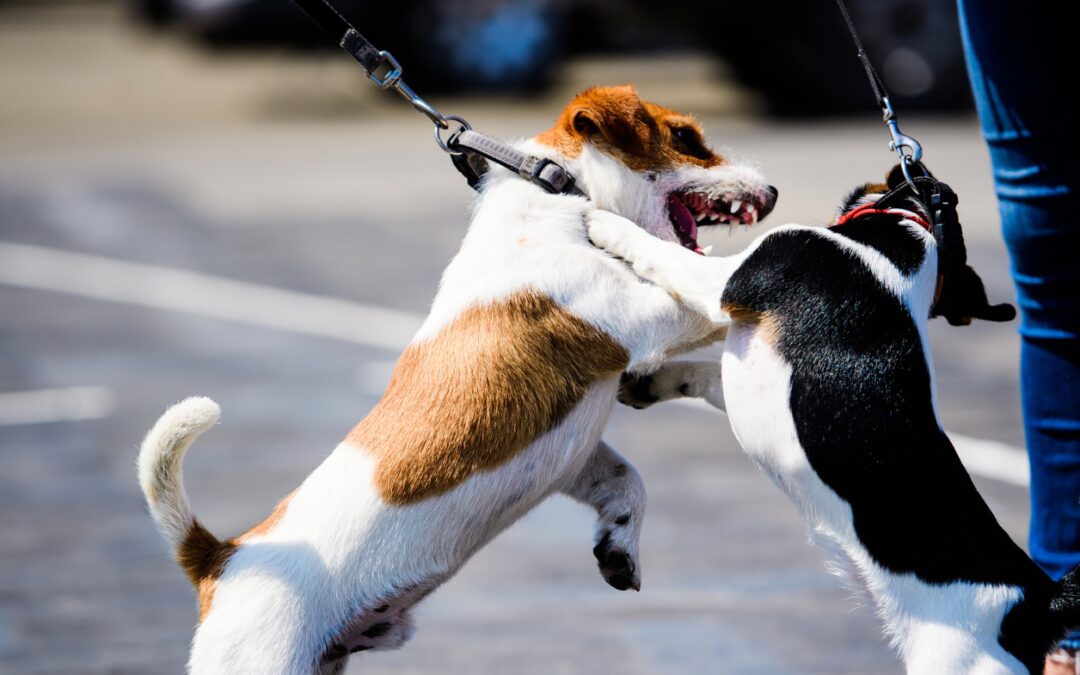
You see the other dog. You hope your dog will stay calm. You keep walking straight ahead, trying to look like you’re in control. But in reality, without realizing it, you tighten up internally, then physically. You don’t or can’t change position or alter your course. Either way, you don’t create space between your dog and the approaching dog. Then your dog starts staring, leaning, puffing up, forging ahead, whining, barking, or lunging.
At that point, you’re no longer leading the walk. You’re reacting to it.
Hope is not a leash handling plan.
Be proactive before the picture gets big
When you see another dog approaching, even if it’s on the other side of the street, your job is not to wait and see what your dog does. That’s the piece I want to help you to understand.
Your job is to shape the picture before your dog gets pulled into it.
That means calmly and intentionally moving yourself and, if needed, moving your dog so you are between your dog and the approaching dog. Your body becomes a safe barrier. That matters because dogs understand space and position far better than they understand a late verbal reminder, especially one that’s laced with emotion.
When you step between your dog and the distraction, you’re calmly telling your dog, in a language they actually understand, “I’ve got this. Stay with me.”
What to do when you have time to prepare
1. Notice early
Start by noticing early. Scan ahead. Look across the street. Watch corners, driveways, parked cars, and front yards. If you notice the other dog before your own dog fully locks on, you still have options.
2. Change your position
Next, move early. Don’t wait until your dog is staring hard or loading up. Reposition so that you are on the side closest to the approaching dog. Put yourself between your dog and the distraction. This can mean switching sides, stepping outward, or slightly changing your path. You’re creating a buffer with your body.
3. Keep moving
Then keep moving. Don’t stop and have a social committee meeting on the sidewalk (we’ll address that scenario in a future article). Forward movement helps to diffuse the tension. Standing still often turns into staring, tension, and escalation.
4. Face your dog and calmly sidestep if needed
If your dog is becoming overly interested, turn toward it and continue moving with your back to the other dog and your front facing your dog. Sidestep if needed. In other words, keep moving away from the other dog, while facing your dog and keeping their attention focused on your movement and space until you are safely past the distraction.
This isn’t elegant, but it’s effective. We’re not trying to win ballroom dancing awards here.
5. Return to normal once you are past the distraction
Once you are past the other dog and your dog softens again, return to your usual walking pattern. No lecture. No drama. No emotional post-game analysis on the sidewalk.
Just move on.
Why position matters
Too many owners rely on words when their dog’s brain is already somewhere else.
Dogs respond first to movement, space, and picture.
By changing your position, you interrupt your dog’s view of the distraction and give them a clearer job, which is to move with you rather than fixate on the other dog.
That’s leadership.
Not loud. Not angry. Not dramatic. Calm, timely, deliberate and useful leadership in language your dog understands.
Good dog handling is often less exciting than people expect, which is usually a sign that it’s working.
Don’t take the reaction personally
If your dog reacts to another dog, it’s easy to feel embarrassed, frustrated or annoyed. Owners often think, “After all this work, how dare you act like this in public?”
But your dog isn’t insulting or disrespecting you (although it may feel that way).
Your dog is simply being a dog.
That doesn’t mean you excuse the behaviour. It means you understand it accurately, so you can respond well. The emotional spiral helps no one.
Your job isn’t to be perfect. Your job is to stay useful and relevant in your dog’s mind.
Once you stop taking these moments personally, you’ll recover faster and lead better.
If you miss the moment
Sometimes you’ll be late.
Sometimes the other dog appears too quickly. Sometimes your dog sees it before you do. Sometimes your timing is just off.
Fine.
Don’t turn one mistake into five more by getting upset with yourself and your dog.
Missing the moment doesn’t mean the walk is ruined. It means the next skill matters even more: recovery.
Dogs live in the moment. Once the incident has passed, they’re ready to move on. You need to learn to do the same.
This is where two pieces of our TRIBE framework fit so well. Your dog needs you to Be the Leader, In the moment, and after it. Dogs are masters at reminding us that they carry very little emotional baggage once the moment is over. They move on. You need to as well.
Three ways to resume leadership after a reaction
1. Keep walking with purpose
Don’t freeze and analyze the wreckage on the sidewalk. Get your feet moving again with purpose. Forward motion helps reset both you and your dog.
2. Reclaim your posture and breathing
Fix your own posture. Exhale. Relax your shoulders. Stop carrying the reaction in your body. A rattled owner often creates a rattled dog. Your body tells the truth even when your mouth is saying, “it’s okay.”
3. Give your dog a clear, simple job
Give your dog a simple, clear job. That might mean moving beside you for a stretch, making a clean turn, or settling back into a smoother rhythm for the rest of your walk. Not punishment. Not chaos. Just a clear return to structure.
Final thought
A good walk isn’t one where your dog never notices anything. Handling an approaching dog isn’t about controlling every variable.
A good walk is one where you learn to proactively guide your dog through what they notice.
When you have time, be proactive. When you don’t, recover quickly. Either way, your dog needs your calm, assertive leadership more than they need your disappointment.
Success on your walk together is measured by whether you can guide your dog through what they notice and come out the other side still connected. When that happens – celebrate. Calmly praise your dog to let them know how proud you are of them, and of yourself, because you’ve earned it.
That’s real-life dog training.
Why this works
This approach helps you stop waiting for trouble and start managing the picture early, before trouble builds. It also teaches you that recovery is part of leash walking, not proof that you failed.
If this sounds like your walk and you want step-by-step help teaching your dog to move calmly with you before distractions take over, take a look at The Great Stroll. It’s my online leash walking program for dog owners who want more connection, more clarity, and a lot less nonsense at the end of the leash.
And if you’re a trainer who wants to get better at teaching these real-life mechanics to clients, that’s exactly the kind of work we do inside the TRIBE Academy.