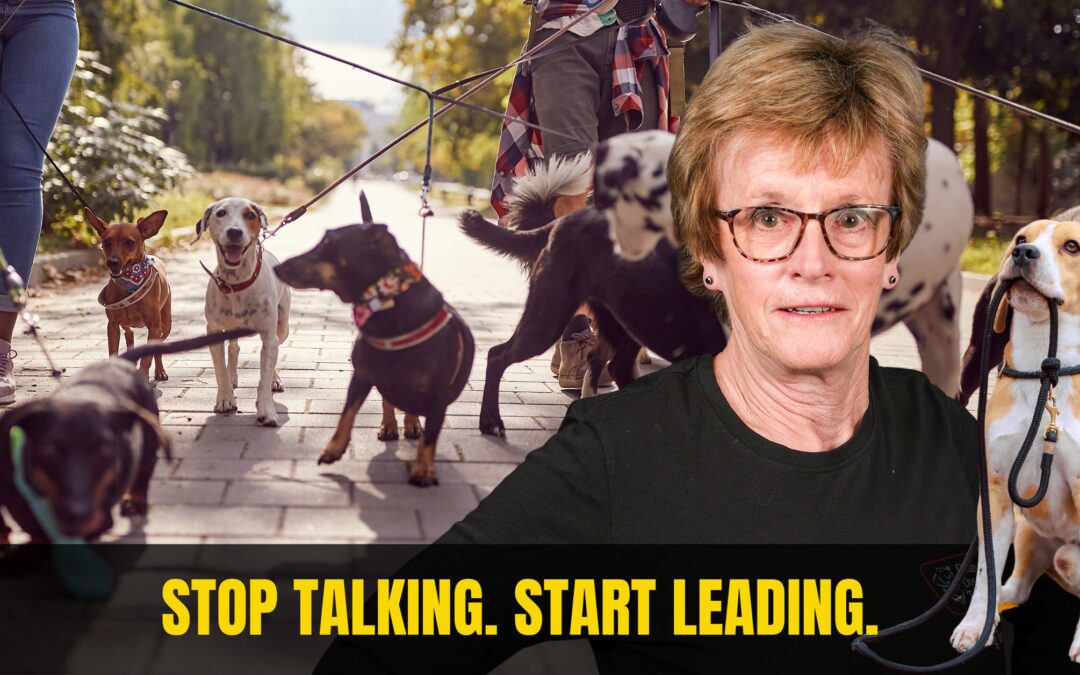
People love to say “calm, assertive leadership.”
It sounds good. It sounds wise. It sounds like something you would stitch onto a decorative pillow and place somewhere nobody actually lives.
But when owners are out walking a dog who has just spotted another dog, a squirrel, or some suspicious movement behind a hedge, most of them are not thinking, “Now I shall demonstrate calm, assertive leadership.”
They are thinking, “Oh no. Here we go.”
That is why this needs to be broken down in practical terms.
Because calm, assertive leadership is not a slogan. It is not a personality trait. It is not some mystical energy field that descends upon the chosen few.
It is visible.
It shows up in your body, your movement, your timing, your decisions, and just as importantly, in what you do not do.
Calm leadership starts before anything happens
Owners often think calm leadership is only needed once the dog reacts.
Not true.
It starts before the dog reacts.
It starts with scanning the environment, paying attention, and noticing the picture early.
It starts with being mentally present, not wandering down the sidewalk while thinking about groceries, emails, or whether you should have bought better coffee.
If you want to lead well in the moment, you need to arrive in the moment first.
What calm, assertive leadership actually looks like
It looks like keeping your eyes up.
It looks like noticing another dog before your dog locks on.
It looks like changing your position early instead of waiting.
It looks like continuing to move instead of freezing.
It looks like breathing.
It looks like shoulders down, hands steady, and feet that still know where they are going.
It looks like making a decision and following through with it.
Leadership on a walk is rarely dramatic. It is often a series of quiet, useful choices made early enough to matter.
What it does not look like
It does not look like panicking.
It does not look like jerking the leash because you were startled.
It does not look like apologizing to strangers while your dog is still mid explosion.
And it absolutely does not look like nervous talking.
This part matters a lot.
Many owners get anxious and start talking the second they feel the situation getting sticky.
“Fido, no.”
“Come on, buddy.”
“It’s okay.”
“Leave it.”
“No, no, no.”
“Come on, let’s go, let’s go.”
“Why are you doing this?”
That verbal diarrhea usually makes the picture worse.
Why?
Because the dog is already reading your tension through your body. When you add nervous chatter on top of that, you create more noise, more pressure, and less clarity.
Most dogs do not need a speech in that moment.
They need a leader.
And leaders do not usually sound like they are narrating their own panic.
Keep your mouth closed
This is one of the most practical skills owners can learn.
If you tend to talk when you are nervous, practice saying less.
Or better yet, say nothing.
Keep your mouth closed. Focus on your body, your position, your leash handling, and your movement.
Your dog will understand that much more clearly than a stream of anxious words.
Talking can become a release valve for the owner, but it is rarely helpful communication for the dog in a charged moment.
The more pressure you feel, the more important it is to simplify.
Move. Position. Breathe. Lead.
No running commentary required.
Why too much talking makes things worse
When owners babble, they often lose timing.
Instead of moving early, they talk.
Instead of changing position, they repeat cues.
Instead of breathing and staying organized, they fill the moment with noise.
That delay matters.
The dog does not need ten extra words. The dog needs one clear picture.
Your body is the message.
That is one reason I tell owners that leash walking is not mainly about what comes out of your mouth. It is about what your dog experiences through your movement, space, and consistency.
Calm and assertive does not mean cold or harsh
Some owners hear the word “assertive” and think it means being stern, rigid, or forceful.
It does not.
Assertive means clear. It means you make a decision and follow through. It means you do not collapse into indecision or emotional flailing when your dog needs direction.
You can be warm and still be clear.
You can be kind and still take charge.
You can be calm without becoming passive.
That is the balance.
Leadership is a skill, not a personality type
This is worth saying because many owners assume they are either naturally confident or they are not.
That is not how this works.
Calm, assertive leadership is something you can build.
You build it by noticing more.
You build it by practicing movement.
You build it by getting faster at recovery.
You build it by learning to keep your own emotions from driving the walk.
In other words, you build it through repetition.
Not by hoping to suddenly become a different person.
Final thought
If you want your dog to feel clearer on walks, start by becoming clearer yourself.
Keep your eyes up.
Keep your shoulders down.
Keep moving.
Keep your mouth closed when nerves rise.
Stop filling the moment with words and start leading with your body.
That is what calm, assertive leadership actually looks like in real life.
Not perfect. Not theatrical. Just useful.
Why this works
Dogs read body language, movement, and tension faster than they process words. Owners who reduce nervous talking and improve their physical leadership create a much clearer picture for the dog.
If you want your walks to feel more organized, less emotional, and easier for your dog to follow, The Great Stroll will help you build the kind of leash walking foundation that makes calm leadership much more natural.
And if you are a trainer who wants to get better at teaching owners how to lead without tension, noise, or confusion, that is exactly the kind of work we do inside TRIBE.
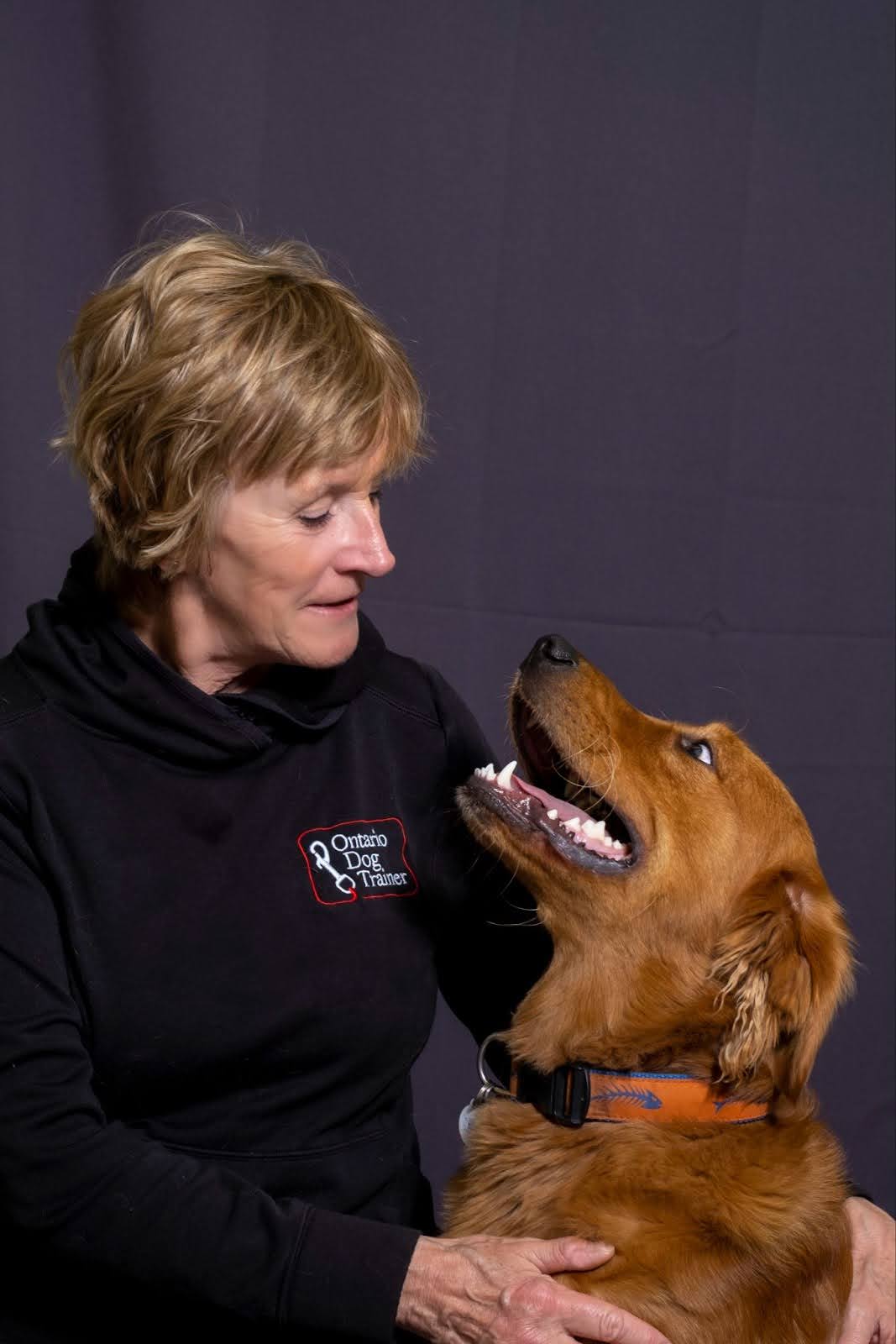 Karen Laws is a certified professional dog trainer, the founder of The Ontario Dog Trainer and the Dog Trainer TRIBE Training Academy. With decades of experience training dogs, educating people, and mentoring aspiring trainers, she is known for her practical, no-nonsense approach to helping both dogs and humans succeed.
Karen’s professional background includes education, public service, wildlife biology, competitive field dog work, and pet dog training. That combination gives her a unique perspective on behaviour, leadership, communication, and what it really takes to create lasting results.
Through her work with dog owners and developing trainers, Karen teaches far more than training exercises. She helps people understand the dog in front of them, improve their communication, and build the kind of confidence that leads to better outcomes in both training and business.
Karen is especially passionate about mentoring pet dog trainers who feel stuck and are ready to grow. Her message is clear, real, and grounded in experience: success in dog training comes from understanding behaviour, building trust, and being willing to do the work.
Follow Karen on Social Media: FaceBook, Instagram, LinkedIn, TikTok, YouTube,
Need personal help? Let’s chat! Click here to book a Virtual assessment!