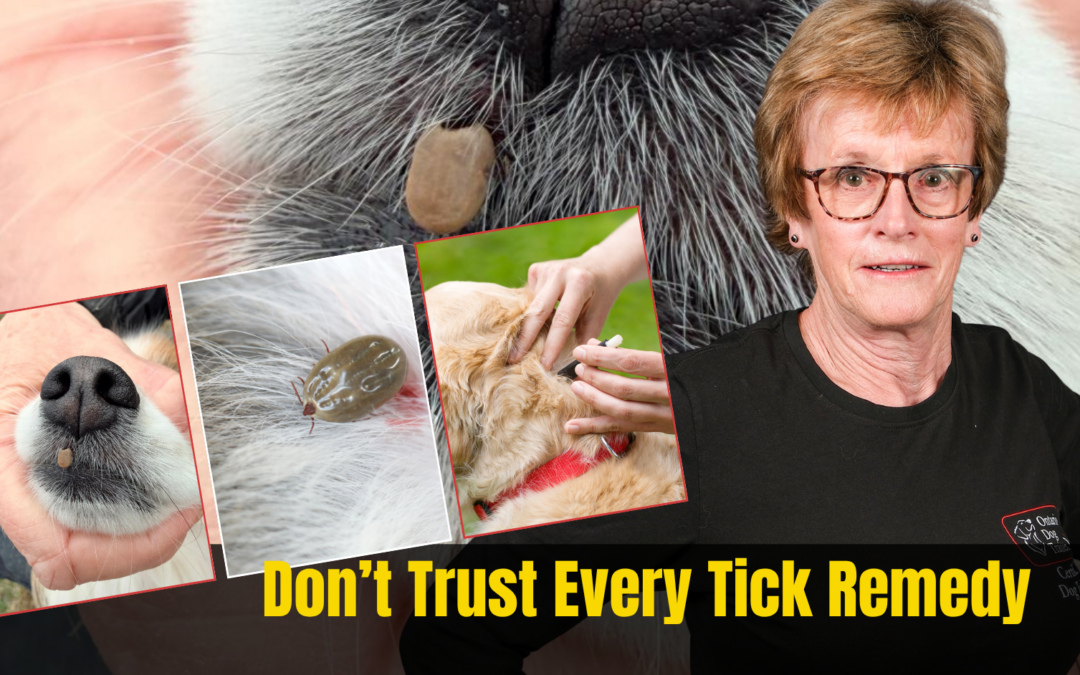
Tick season used to be predictable. Not anymore.
Across Ontario and much of Canada, ticks are showing up earlier, staying longer, and in some areas, never really leaving. I’ve already pulled ticks off my own dogs this week, and we’re not even into peak season yet.
So here’s the real question:
How are you going to protect your dog?
Because doing nothing is no longer a neutral choice.
What’s at Risk if You Don’t Treat?
Ticks are not just a nuisance. They carry diseases that affect both dogs and humans, including:
- Lyme disease
- Anaplasmosis
- Ehrlichiosis
Research from the Centers for Disease Control and Prevention shows Lyme disease cases have increased significantly over the past two decades, with expanding tick ranges due to climate shifts.
In Canada, the Public Health Agency of Canada reports a steady rise in Lyme disease risk, particularly in Ontario, Quebec, and the Maritimes.
This is no longer a “watch and wait” situation.
The Two Main Approaches
Most dog owners fall into one of two camps:
- Commercial prevention
- Natural or DIY prevention
Both have valid arguments. Both have limitations.
Let’s break them down.
Commercial Tick Prevention
Convenient, Consistent, and Clinically Tested
This includes oral medications, topical treatments, and tick collars available through veterinarians and retail outlets.
Pros
- Backed by controlled studies and regulatory approval
- Designed to kill ticks quickly after attachment
- Long-lasting, typically 30 to 90 days
- Minimal effort once administered
A 2021 review published in Parasites & Vectors found that isoxazoline-based products (like fluralaner and afoxolaner) are highly effective at killing ticks within hours of attachment, significantly reducing disease transmission risk.
Cons
- Potential side effects, including neurological reactions in rare cases
- Not all dogs tolerate them well
- Ongoing cost
- Some owners are uncomfortable with chemical exposure
The U.S. Food and Drug Administration has issued advisories noting that some tick medications may cause neurological side effects in certain dogs.
That doesn’t mean they’re unsafe across the board. It means they’re not risk-free.
Natural Tick Prevention
Lower Toxic Load, Higher Responsibility
This includes essential oil blends, herbal sprays, and DIY repellents.
Common ingredients:
- Lemon eucalyptus
- Cedarwood
- Geranium (Pelargonium graveolens)
- Neem
- Lavender
Pros
- Lower chemical exposure
- More control over ingredients
- Often more appealing for owners wanting a “natural lifestyle”
- Can be cost-effective over time
A study in the Journal of Medical Entomology found that oil of lemon eucalyptus (PMD) can provide protection comparable to low concentrations of DEET in repelling ticks.
Cons
- Repels rather than kills ticks
- Requires frequent reapplication
- Effectiveness varies widely depending on formulation
- Risk of improper dilution or misuse
The ASPCA warns that some essential oils can be toxic to dogs if used incorrectly.
Natural does not automatically mean safe.
The Real Difference Most People Miss
Commercial products are designed to kill ticks after they bite.
Natural options are designed to repel ticks before they attach.
That’s a very different strategy.
And it matters.
Because tick-borne disease transmission often requires hours of attachment, which is why fast-acting commercial products are effective.
Natural products rely on preventing the bite altogether, which means consistency is everything.
Miss an application, and you’ve lost your protection.
Lifestyle Matters More Than Philosophy
Here’s where this gets practical.
If you:
- Hike regularly
- Live near wooded or grassy areas
- Have a dog that roams or hunts
- Travel between regions
Your risk is higher.
If you:
- Walk mostly in urban areas
- Have limited exposure to tick habitats
- Are highly consistent with daily routines
You may have more flexibility.
There is no one-size-fits-all answer.
Only informed choices.
Climate Is Changing the Rules
In colder regions, tick prevention used to be seasonal.
That’s shifting.
Warmer winters and longer fall seasons are allowing ticks to survive and remain active beyond traditional timelines. The Public Health Ontario confirms that blacklegged ticks are expanding their range across Ontario, increasing year-round risk in some areas.
Translation:
Your old calendar might not work anymore.
So… Which Should You Choose?
Here’s the honest answer.
Both options can work.
Both options have risks.
Neither option works if used poorly.
If you want convenience and consistency, commercial products make sense.
If you want a lower chemical load and are willing to be diligent, natural options can be effective.
Some owners even combine approaches strategically.
What matters most is that you:
- Understand the risk
- Stay consistent
- Pay attention to your dog
Why This Conversation Matters
This isn’t about proving one side right.
It’s about raising the standard of how we think.
Because the real risk is not choosing the “wrong” product.
It’s doing nothing…
or assuming your dog is protected when they’re not.
Final Thought
Your dog depends on you to make decisions they can’t make for themselves.
Not based on trends.
Not based on fear.
Not based on what your neighbour is doing.
Based on understanding.
And that starts with asking better questions.
If you want help building a routine that fits your dog, your lifestyle, and your environment, reach out.
And as always, consult your veterinarian before starting or changing any flea and tick prevention program.
 Karen Laws is a certified professional dog trainer, the founder of The Ontario Dog Trainer and the Dog Trainer TRIBE Training Academy. With decades of experience training dogs, educating people, and mentoring aspiring trainers, she is known for her practical, no-nonsense approach to helping both dogs and humans succeed.
Karen’s professional background includes education, public service, wildlife biology, competitive field dog work, and pet dog training. That combination gives her a unique perspective on behaviour, leadership, communication, and what it really takes to create lasting results.
Through her work with dog owners and developing trainers, Karen teaches far more than training exercises. She helps people understand the dog in front of them, improve their communication, and build the kind of confidence that leads to better outcomes in both training and business.
Karen is especially passionate about mentoring pet dog trainers who feel stuck and are ready to grow. Her message is clear, real, and grounded in experience: success in dog training comes from understanding behaviour, building trust, and being willing to do the work.
Follow Karen on Social Media: FaceBook, Instagram, LinkedIn, TikTok, YouTube,
Need personal help? Let’s chat! Click here to book a Virtual assessment!