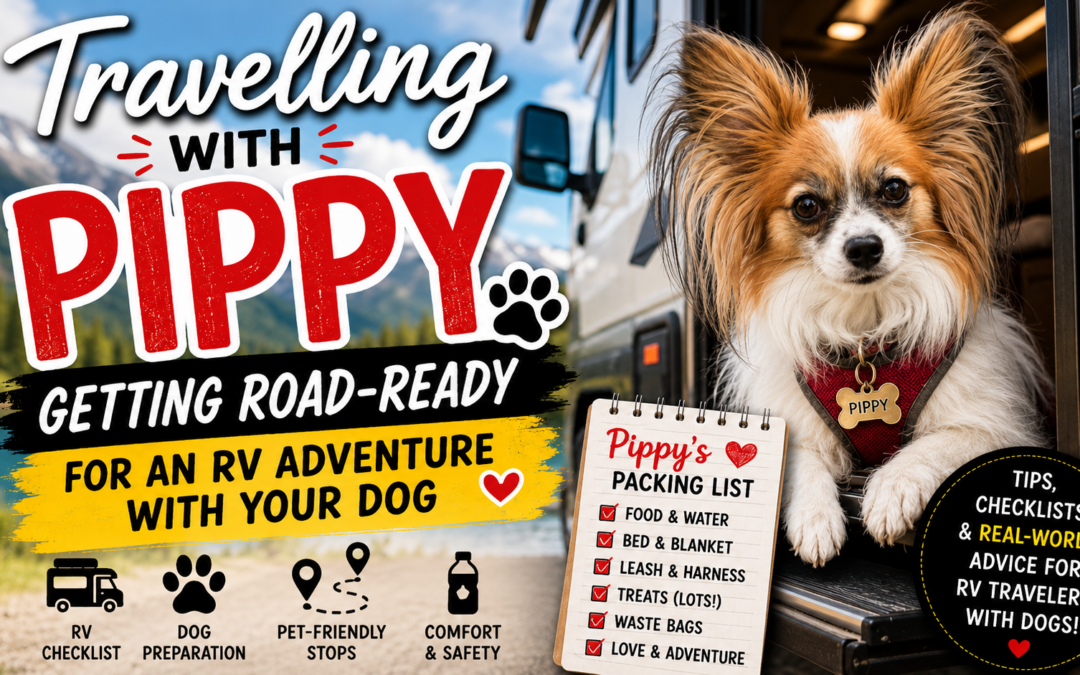
There’s something wonderfully exciting about seeing the RV parked in the driveway, almost ready to roll.
The cupboards are partly stocked. The route is taking shape. The checklists are multiplying. There are bags by the door, supplies on the table, and that familiar feeling that something good is about to happen.
And then there’s Pippy.
Pippy is my dog, my four-legged travel buddy, and the self-appointed supervisor of all RV trip preparations. She may not understand tire pressure, propane levels, or campground reservations, but she absolutely knows when something is happening.
The moment I start carrying supplies toward the RV, she watches me with great suspicion and even greater hope.
Her face says it all: “Are we going somewhere? And more importantly, am I coming?”
Yes, Pippy. Always.
Travelling by RV with a dog adds a little extra planning, but it also adds so much joy. There is something special about sharing the road with a loyal companion who reminds you to stop, stretch, sniff the air, and enjoy the simple moments along the way.
Before every adventure begins, I like to make sure both the RV and Pippy are road-ready.
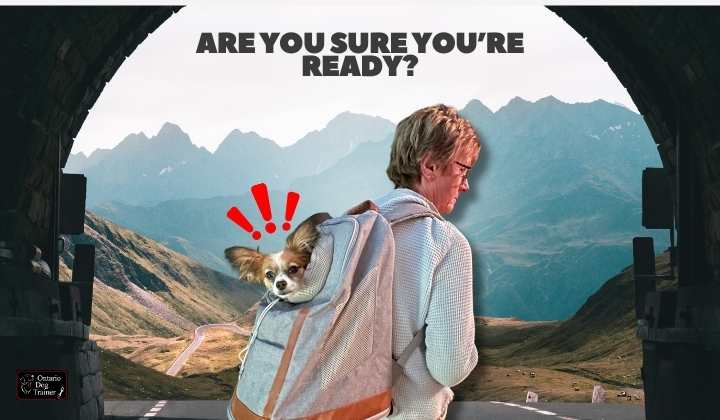
The Adventure Starts Before You Leave
For me, RV preparation is part of the fun.
I’m not a risk-taker when it comes to solo travel on the road; I begin the preparation months before the wheels ever leave the driveway. To be honest, I love RV travel SO much that planning for road trips is a year-round activity!
I love the anticipation that builds before a trip: checking supplies, planning routes and stops, looking at maps, and imagining where we’ll wake up next. As a solo traveller, I also know that good preparation gives me peace of mind.
Adventure is wonderful.
Preventable roadside stress? Not so much.
Before heading out, take a slow walk around your RV. Not a quick glance from the driveway. A real, intentional circle check.
Even if you do this when not travelling, that final ‘circle check’ is a way to minimize those annoying last-minute surprises and is one of the easiest ways to catch small issues before they become big problems on the road.
Check the tires, including the sidewalls, tread, and air pressure. Look underneath your rig for any leaks or loose parts. Make sure exterior compartments are latched, windows are closed, propane and hot water tanks are turned off, and the awning is fully secured. If your RV has solar panels, air conditioner and other roof equipment and an awning, it’s also important to get up on a ladder for a thorough cleaning and check to make sure everything is travel-ready.
A clean parking area or mat placed under the RV also helps. It gives you a better view of anything that may drip, shift, or need attention before departure.
Tip – Did you know that moisture from the ground can penetrate your RV’s undercarriage if parked for an extended time? This moisture buildup can lead to rust and corrosion. One way to prevent this is to lay a heavy plastic sheet or another vapour barrier on the ground and then park your RV on it. I do this for my RV’s winter storage so I can see any leaks. I also spread a sheet over the gravel-grass parking area in my yard to prevent the moisture penetration from the ground. This is my fourth year with my RV, and not only does the ground sheet make it easier to crawl around beneath the vehicle, but it also offers an easy preventative maintenance tool.
In some areas, winter can be tough on a vehicle that is sitting outside for a long period and doing a periodic check around the outside of your RV tells you a lot about its readiness. Look for cracks, debris build-up or anything unusual around the hookups, vents, doors, lights, and rear storage areas. Check for rust, corrosion or general deterioration at the back of the RV to avoid surprises on the road with your towable, travel gear, hitch equipment, cameras, or utility connections.
Make sure brake lights, turn signals, headlights, and backup lights are working before you head out. Also check the license plate, mirrors, windshield, and wipers.
A clean windshield and properly adjusted mirrors can make the first day of driving feel so much easier.
And wiper blades? Check them before you need them. Discovering that they should have been replaced during a sudden downpour is one of those “learning experiences” best learned from someone else. (Ask me how I know!)
You’re welcome.
Check the RV Systems That Make It Feel Like Home
An RV is more than a vehicle. It’s a transportation hub, kitchen, bedroom, shelter, storage unit, and snack headquarters all rolled into one.
Before a trip, I test the systems that make the RV comfortable.
That means checking the air conditioning, heat, fans, lights, water pump, outlets, batteries, and propane if your RV uses it. This is especially important when travelling with a dog. Reliable climate control is not just about comfort; it is about safety. Warm afternoons, chilly nights, rainy days, and unexpected delays are all easier when you know your RV systems are working the way they should.
I like to plug in the refrigerator ahead of time and give it a chance to prove itself before I trust it with groceries. Once I know it is cooling well, I pack food, drinks, and water so they are secure and easy to reach.
There is nothing quite like starting a road trip with confidence.
Except maybe starting it with coffee.
Confidence and coffee. That’s the dream.
Organize the Inside Before the Wheels Roll
Inside the RV, everything needs a place.
This matters in any RV, but especially in a smaller space, like my Class B Ascent by Pleasure-Way. Once you’re on the road, any loose item can become a tiny travelling troublemaker.
Before I leave, I check cabinet latches, drawers, counters, shelves, and anything that could slide, tip, rattle, or leap dramatically to the floor. Breakable items get packed safely. Liquids get secured. Food containers are closed tightly. Anything left on a counter gets put away.
Even a short drive can create an impressive amount of chaos if things are not properly stored.
The first time something flies out of a cupboard, you learn quickly.
The second time, you start questioning your relationship with gravity.
Pippy, of course, doesn’t help with this part. She supervises from a safe distance and occasionally gives me a look that suggests I am overcomplicating things.
Easy for her to say. She travels with one blanket, one bowl, and a level of confidence I can only admire.
Pippy Has Her Own Packing List
Packing for a dog is a lot like packing for a toddler who loves mud, snacks, and routine.
Pippy has her own travel essentials, and I like to keep them organized so I’m not digging through bags at the worst possible moment.
For her, I pack:
- Food for the full trip, plus a little extra in case plans change.
- Food and water bowls.
- Treats, because obviously.
- Leash, vehicle safety harness, and a long lead for campground walks.
- Waste bags.
- Towels and grooming wipes for muddy paws.
- Medications, if needed.
- A familiar blanket, bed, or toy.
- Vaccination records, ID tag information, microchip details, and vet contact information.
That familiar blanket or bed matters more than you might think. RV travel is exciting, but it can also be a big change for a dog. A familiar smell and a cozy spot help Pippy understand that this rolling little home is still our space.
And yes, I pack extra towels.
Always extra towels.
Because somehow, even on a dry day, dogs find mud. It’s a gift.
Create a Safe Travel Space for Your Dog
Before departure, I make sure Pippy has a safe and comfortable place to ride.
Dogs should not move freely around the RV while it is in motion. A secured crate, carrier, or crash-tested dog harness is a much safer choice. It helps protect your dog, prevents distractions, and makes travel calmer for everyone.
Pippy has her own special spot, which I lovingly refer to as her “Queen’s Chair.”
She settles in like she has accepted a royal appointment.
Before we leave, I make sure her space is ready. Her blanket is in place. Her harness or restraint is secure. Anything nearby that could fall or shift is moved. During stops, I offer water and a chance to stretch, but I do not leave a full water bowl out while driving because spills happen quickly.
The goal is simple: make the RV feel safe, predictable, and comfortable.
For both of us.
Plan the Route With Your Dog in Mind
When travelling with a dog, route planning is about more than distance and fuel.
It is about breaks, shade, walking areas, pet rules, and patience.
Before a trip, I look for dog-friendly campgrounds, parks, trails, rest areas, and outdoor spaces where Pippy can safely stretch her legs. Not every campground or park has the same pet rules, so I check before arriving.
Some campgrounds have dog runs or walking areas, which can be wonderful after a long travel day. I also look for shaded sites when possible, especially in warmer weather.
Fuel stops matter too. A quiet place where Pippy can walk for a few minutes makes a big difference. It gives her a reset, and honestly, it gives me one too.
One of the best lessons Pippy has taught me is that road trips are not just about getting there.
They are about stopping along the way.
Sniffing the breeze.
Taking a breath.
Noticing where you are.
Dogs are very wise travel teachers. They just don’t know how to read maps.
Think About Heat, Shade, Water, and Comfort
Travelling with a dog means paying close attention to temperature.
RVs can heat up quickly in sunny weather, even when the outside temperature feels manageable. Before leaving Pippy inside the RV, I always make sure the temperature is safe, ventilation is working, and power systems are reliable.
When parked, I use window shades, fans, and air conditioning whenever possible. I keep fresh water available and make sure Pippy has a comfortable place to rest out of direct sun.
Outside, I look for shade and avoid hot surfaces that could bother her paws. A mat, towel, or shaded resting spot helps make the campsite more comfortable.
I also watch for signs that she is getting too warm, tired, stressed, or overstimulated. Dogs can be enthusiastic little adventurers, but they still need downtime.
Pippy may be ready to inspect every tree, campsite, picnic table, and suspicious leaf, but rest is part of the plan too.
Practice Makes RV Life Easier
Not every dog instantly understands RV travel.
Some dogs settle right in. Others need time to adjust to the sounds, movement, smaller space, new sleeping arrangements, and changing routines.
If your dog is new to RV life, start small. Let them spend time in the RV while it is parked. Feed them a treat inside. Let them explore. Take a short drive before planning a long trip.
The goal is to help your dog associate the RV with comfort, safety, and good things.
Pippy has become a wonderful travel companion, but like any dog, she does best when she knows what to expect. Her familiar things, her safe travel spot, and our regular break routine all help make the road feel normal.
And once she settles in, she is all in.
Queen’s Chair. Scenic views. Snack breaks. Adventure.
Really, she has the lifestyle figured out.
Pack for Campsite Living
RV trips are not only about driving. They are about arriving.
That moment when you pull into a campsite, turn off the engine, open the door, and step into a new place is one of my favorite parts of travel.
To make campsite life comfortable, I pack outdoor chairs, a mat, walking shoes, bug spray, sunscreen, and whatever I need for meals outside.
For Pippy, I bring a collapsible water bowl, towels, a long leash, and a comfortable place for her to rest outdoors. A tie-out can be useful where allowed, but campground leash rules always come first.
And waste bags. Always waste bags.
Being a good campground neighbor matters, and cleaning up after your dog is part of travelling responsibly.
Once camp is set up, Pippy usually settles in and takes her role very seriously: watching people walk by, sniffing the air, and confirming that this new location meets her standards.
So far, she has approved most places.
Especially the ones with squirrels.
The Final Departure Check
Before pulling away, I do one last check.
Awning closed.
Steps in.
Doors locked.
Vents secure.
Cabinets latched.
Fridge closed.
Power, water, and sewer connections disconnected.
Nothing left outside.
Then I do the Pippy check.
Food packed.
Water packed.
Leash packed.
Harness ready.
Medications packed.
Waste bags within reach.
Pippy safely secured.
This final routine helps me leave with confidence instead of wondering, ten minutes down the road, whether I forgot something important.
Because we all know that feeling.
And it is usually followed by pulling over and checking anyway.
The Best Adventures Begin With Preparation
Travelling with a dog takes extra thought, but it is absolutely worth it.
Preparing the RV, organizing supplies, testing systems, planning dog-friendly stops, and making sure Pippy is safe and comfortable all help the trip begin smoothly.
The preparation may not be as glamorous as the scenic overlooks or peaceful campsites, but it is what makes those moments possible.
Once everything is checked and packed, the best part finally arrives.
I turn the key.
Pippy settles into her spot.
The driveway fades behind us.
And just like that, we are on our way — ready for the next road, the next campsite, and the next little adventure together.
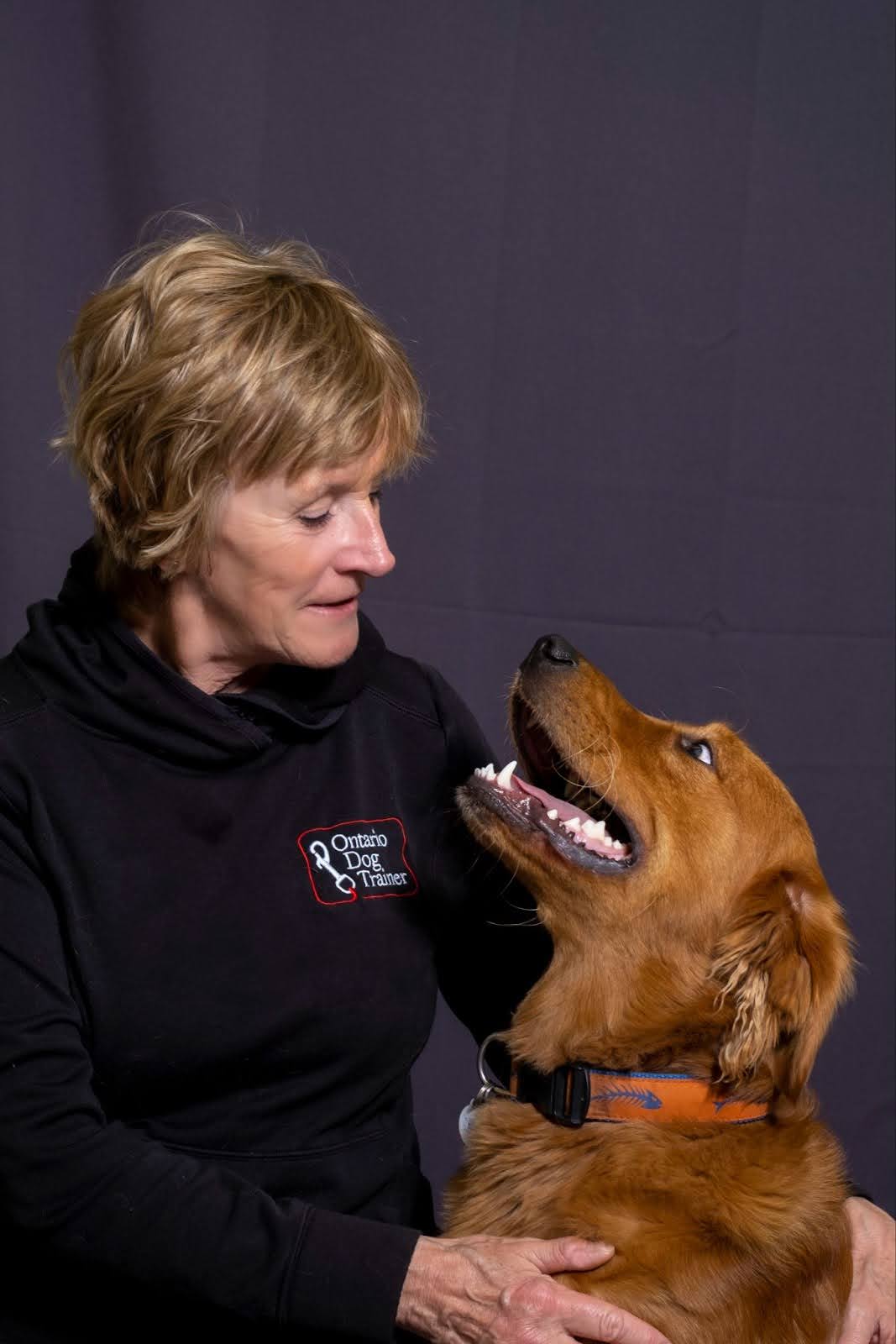 Karen Laws is a certified professional dog trainer, the founder of The Ontario Dog Trainer and the Dog Trainer TRIBE Training Academy. With decades of experience training dogs, educating people, and mentoring aspiring trainers, she is known for her practical, no-nonsense approach to helping both dogs and humans succeed.
Karen’s professional background includes education, public service, wildlife biology, competitive field dog work, and pet dog training. That combination gives her a unique perspective on behaviour, leadership, communication, and what it really takes to create lasting results.
Through her work with dog owners and developing trainers, Karen teaches far more than training exercises. She helps people understand the dog in front of them, improve their communication, and build the kind of confidence that leads to better outcomes in both training and business.
Karen is especially passionate about mentoring pet dog trainers who feel stuck and are ready to grow. Her message is clear, real, and grounded in experience: success in dog training comes from understanding behaviour, building trust, and being willing to do the work.
Follow Karen on Social Media: FaceBook, Instagram, LinkedIn, TikTok, YouTube,
Need personal help? Let’s chat! Click here to book a Virtual assessment!