
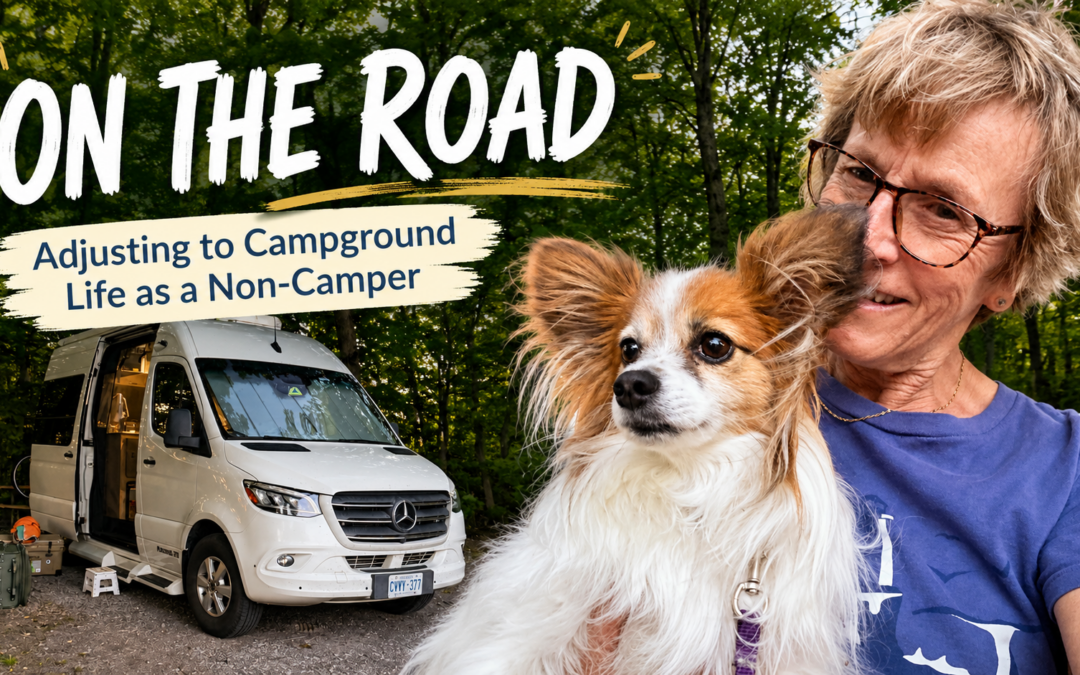
What I’m Learning About RV Life, Campgrounds, and Travelling With a Dog
I should probably start with a confession.
I’m not what anyone would call a ‘natural camper.’
I like nature. I like dogs. I like beautiful places. I like fresh air, trees, quiet mornings, and the idea of sitting outside with a coffee while the world wakes up.
What I do not naturally love is figuring out hookups, levelling blocks, campsite layouts, campground etiquette, where the garbage goes, what the mystery noise was at 2 a.m., and why every cupboard in the RV seems to shift its contents while I’m driving.
Apparently, this is part of the charm.
Or so campers tell me.
I’m currently choosing to believe them.
This RV trip has been a learning curve. A good one, but still a learning curve. Travelling with Pippy has made it even more interesting because nothing teaches you structure, patience, and humility quite like adjusting to campground life with a dog who also has opinions.
And, as we know, dogs are never short on opinions.
Campground Life Is Its Own Little World
One of the first things I noticed is that campground life has its own rhythm.
People arrive, park, level, plug in, unload, set up chairs, walk dogs, start fires, wave at neighbours, and somehow appear to know exactly what they are doing!
Meanwhile, the non-camper (that would be me), is trying to look calm while silently wondering if the RV is supposed to make that sound.
Campgrounds are like small temporary villages. Everyone has their site, their setup, their routine, and their preferred way of doing things. Some people are minimalist. Some people create full outdoor living rooms. Some people have lights, rugs, signs, flags, bikes, grills, swings, dog pens, and enough gear to suggest they are prepared for either a relaxing weekend or a mild apocalypse.
As a non-camper, I’m learning that there is no one right way to do campground life.
There’s only the way that works for you, your dog, your RV, your patience level, and your ability to locate the coffee in the morning.
That last one is not optional. So I teach my dog trainer students, “Just do you.” When it comes to RV life, that’s sometimes easier said than done.
The First Lesson: Slow Down
At home, I’m used to efficiency.
I know where things are. I know the routine. I know what needs doing. My dogs know the patterns. My day has structure and I’m generally in control.
On the road, everything takes a little longer.
Making coffee takes longer. Feeding the dog takes longer. Getting ready to leave the RV takes longer. Finding the leash that was absolutely right there five minutes ago takes longer.
Campground life has forced me to slow down.
Not in the dreamy, inspirational quote kind of way.
More in the “you cannot rush this because you have no idea where you put the can opener” kind of way.
But there’s value in that.
When you slow down, you notice more. You notice the campground waking up. You notice how your dog responds to the environment. You notice who walks by your site. You notice how much easier things become when you stop trying to force your home routine into a travel setting.
RV life is not home life on wheels.
It is its own thing.
And once I accepted that, RV life became a lot easier to enjoy.
Travelling With a Dog Changes Everything
Travelling with Pippy means I can’t just think about where I want to go or what I want to see.
I have to think about shade, temperature, walking areas, noise, other dogs, site layout, potty spots, rest time, water, and whether a campground is truly dog-friendly or just dog-tolerant.
There is a difference.
A dog-friendly campground gives you space to walk, clear rules, responsible expectations, and an environment where dogs can settle.
A dog-tolerant campground allows dogs but may not offer much in the way of thoughtful setup. That means it’s up to the owner to manage their dog well.
And honestly, it’s always up to the owner anyway.
Dogs don’t arrive at a campground magically understanding campsite boundaries, leash rules, quiet hours, or why the squirrel population appears to be running a full entertainment program… Just ask Pippy about the squirrels!!
Pippy has to learn campground life too.
That means I need to give her structure.
Not constant freedom.
Not constant correction.
Structure.
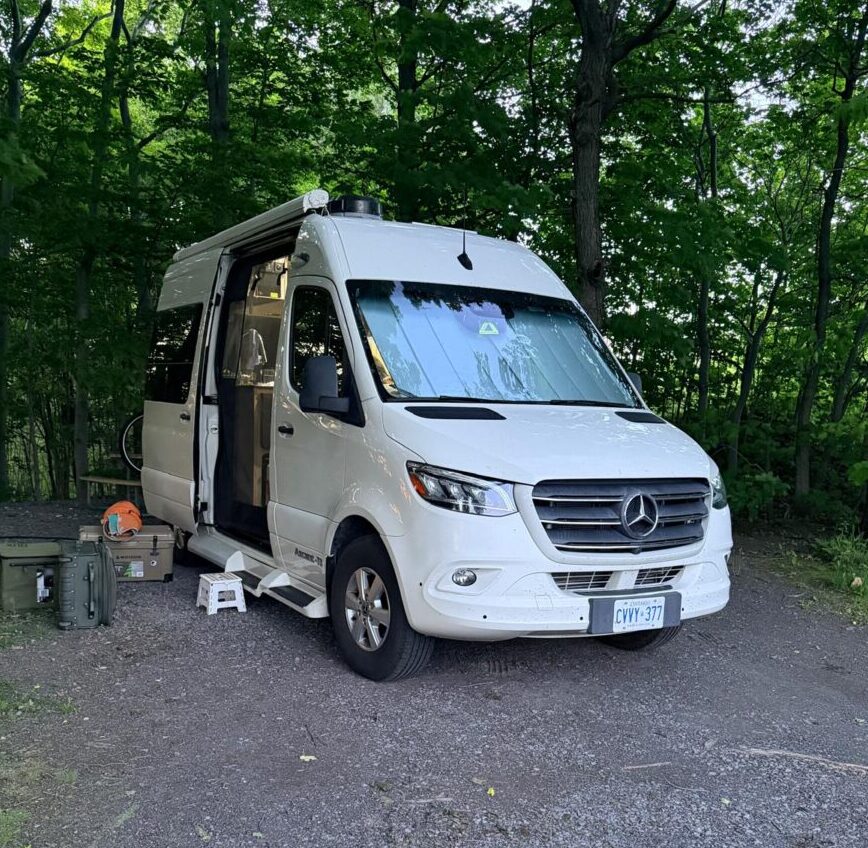
Campsites Are Not Backyards
This is a big one.
A campsite may feel like your temporary yard, but it’s not the same as your backyard.
There are people walking by. Dogs passing. Kids riding bikes. Vehicles moving. Camp chairs appearing. Food smells drifting. Wildlife popping in like they own the place.
Because, technically, they were there first.
For a dog, a campsite can be exciting, confusing, and overstimulating. That’s why I don’t assume Pippy knows what to do just because she is with me.
I keep things simple.
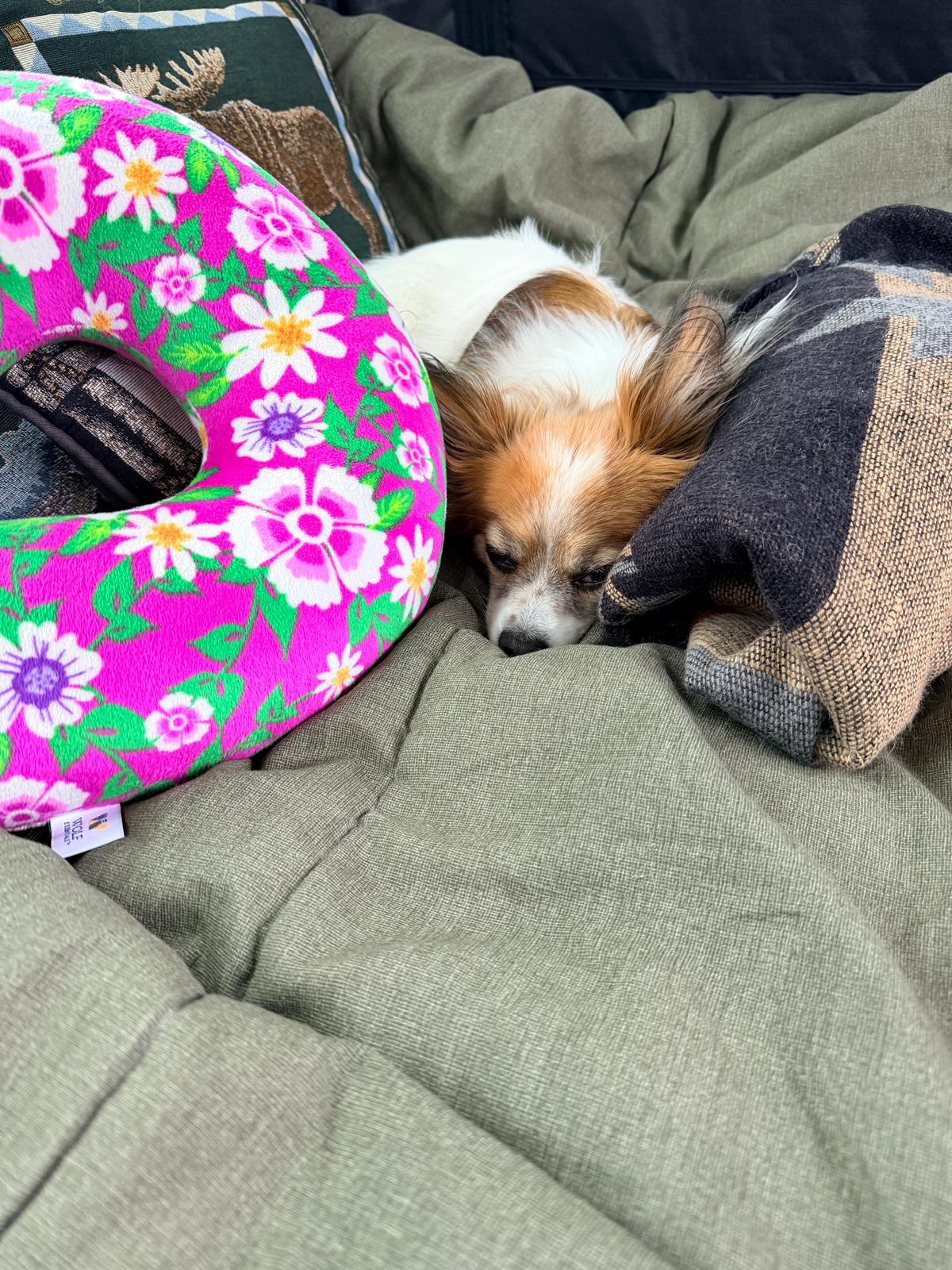
She has a safe resting spot.
She has structured walks.
She has breaks from the action. When she’s had enough, she self isolates in the RV on her special co-pilot bed.
She has time to observe without needing to participate in every single thing that happens.
That last part matters.
A dog doesn’t need to greet every person, bark at every dog, investigate every picnic table, or personally supervise every neighbour’s firewood situation.
Some dogs would like to apply for that job.
They don’t need to be hired.
The Importance of a Dog Who Can Settle
Campground life makes one thing very obvious.
A dog who can settle is worth their weight in gold.
You can have the best leash, the fanciest harness, the cutest travel bowl, and a perfectly packed dog bag, but if your dog cannot relax, your trip becomes work.
Not the good kind of work.
The “why did I think this would be peaceful?” kind.
Before travelling, it helps to practise calm skills at home. Place work, crate time, leash manners, quiet observation, and short periods of doing nothing are not boring skills. They are travel skills.
A dog who can settle at home has a better chance of settling at a campground and any place you may visit along the way.
Not guaranteed, of course. Dogs like to keep us humble.
But the foundation matters.
With Pippy, I want campground life to feel normal. That means I can’t make every moment exciting. I need to build calm into the day.
A walk.
A rest.
A little training.
A potty break.
A quiet sit outside.
Another rest.
It sounds simple, because it is.
Simple does not mean effortless.
There is a difference.
I Am Learning to Set Up With the Dog in Mind
When I arrive at a campsite, I’m learning to look at the site through two sets of eyes.
Mine and Pippy’s.
Where is the shade?
Where will she rest?
Where can I safely clip a leash if needed?
Where are dogs likely to pass?
Is the picnic table too close to a walking path?
Is there a quiet corner where she can observe without being in the middle of everything?
Where is the best potty area?
Where can I place water so it’s easy to access?
These details matter because they shape how calm or chaotic the stay feels.
A campsite setup isn’t just about chairs, mats, and where to put the cooler. Though, apparently, the cooler may also double as office furniture if necessary. Very glamorous. Very executive.
For dog owners, the setup has to support good behaviour.
If I place Pippy in the busiest part of the site and expect her to relax while dogs, bikes, kids, and squirrels go by, that’s not training.
That’s optimism wearing bad shoes, and our bond will be compromised.
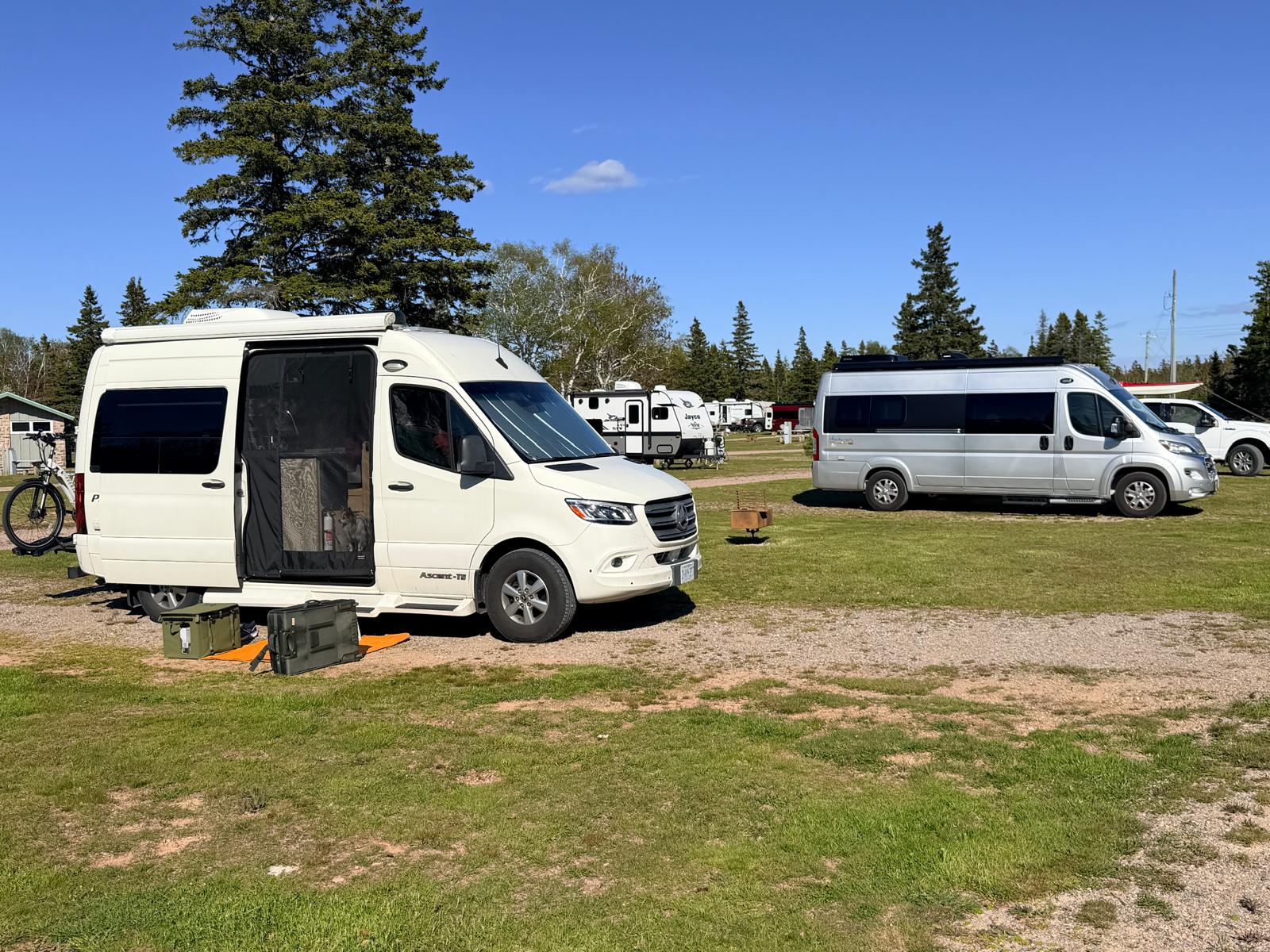
Campground Etiquette Matters
As a dog trainer, I wish I could say this gently, but I will say it clearly.
Not everyone wants to meet your dog.
Not every dog wants to meet your dog.
And not every campground neighbour wants to hear your dog narrate the entire vacation.
Campground etiquette matters.
Keep your dog on leash.
Do not let your dog wander into other campsites.
Pick up after your dog.
Do not allow barking to become the soundtrack of the campground.
Give other dogs space.
Ask before approaching.
Respect quiet hours.
These are basic expectations, but they make a huge difference.
Good dog owners help keep campgrounds welcoming to dogs.
Careless dog owners make rules tighter for everyone else.
There it is. The annoying truth, sitting there like a wet towel on a camp chair.
The Non-Camper Learning Curve Is Real
There are things I’m getting better at.
Parking.
Packing and re-packing.
Organizing and re-organizing.
Planning stops.
Knowing what needs to be accessible.
Remembering that the thing I put “somewhere safe” is now basically gone forever.
The RV learning curve is real.
But so is the reward.
There is something satisfying about figuring it out. There’s confidence in learning how to set up, adjust, manage, and make the space work. There’s a sense of freedom in realizing you don’t have to be perfect at this to enjoy it.
That may be the biggest lesson.
You don’t have to be a lifelong camper to enjoy campground life.
You just have to be willing to learn, laugh at yourself, stay flexible, and accept that something will probably go sideways.
Hopefully not the sewer hose.
But something.
Pippy Is Adjusting Too
Pippy is not just along for the ride.
She’s learning too.
Every campground is new. New smells. New sounds. New dogs. New people. New routines.
That means I need to be fair.
I can’t expect her to understand campground life instantly. I need to show her what I want. I need to help her settle. I need to manage her environment before she makes poor choices and then looks surprised when I object.
Dogs are excellent at that look.
The “Who, me?” face.
Yes, you.
This trip is giving Pippy new experiences, but it’s also giving us more ways to build trust. Every calm walk, every quiet rest, every successful campsite moment adds up.
That’s the good stuff.
Not perfect behaviour.
Progress.
What I Would Tell Other Non-Campers Travelling With Dogs
Start simple.
You don’t need every gadget on your first trip. You need the basics, a plan, a sense of humour and the willingness and ability to laugh at yourself.
Pack for your dog’s comfort, not just your convenience.
Bring familiar bedding, food, bowls, leash, long line if appropriate, crate or safe travel setup, tick tools, towels, grooming supplies, and more water than you think you need.
Plan dog-friendly stops.
Don’t wait until your dog is frantic before stopping.
Build rest into the day. You will both be happier.
A tired dog is not always a calm dog. Sometimes a tired dog is just a dramatic dog with worse judgment.
Practise calm before you need it.
If your dog can’t settle at home, the campground will not magically fix that. It will simply add squirrels, smoke, children, bicycles, other dogs, and a man in sandals walking past with bacon.
That’s not a fair training environment.
Be realistic.
Be prepared.
Be willing to adjust.
The Best Part of Campground Life
Despite the learning curve, I get it now.
I understand why people love this.
There is something lovely about being outside more. About slowing down. About watching your dog take in a new place. About morning walks before the campground gets busy. About evenings when everything settles and the day starts to quiet.
It’s not all peaceful, of course.
There are still bugs, barking dogs, awkward parking moments, damp towels, and the ongoing mystery of where I put that one thing I definitely packed.
But there is a lot to enjoy.
And maybe that’s the point.
You don’t have to become a different person to enjoy RV life.
You don’t have to pretend you were born knowing how to camp.
You can be a non-camper learning campground life one stop at a time.
With a dog beside you, a plan in your head, and hopefully, coffee within reach.
Final Thoughts
Adjusting to campground life as a non-camper has reminded me that learning something new is uncomfortable before it becomes familiar.
That’s true for people.
It’s true for dogs.
And it’s definitely true when you’re trying to make an RV feel like home while your dog wonders why the yard keeps changing.
This trip is not just about where we go.
It’s about learning how to travel well, settle well, and enjoy the process without needing everything to be perfect.
Pippy and I are figuring it out together.
One campground at a time.
And honestly?
That’s not a bad way to travel.
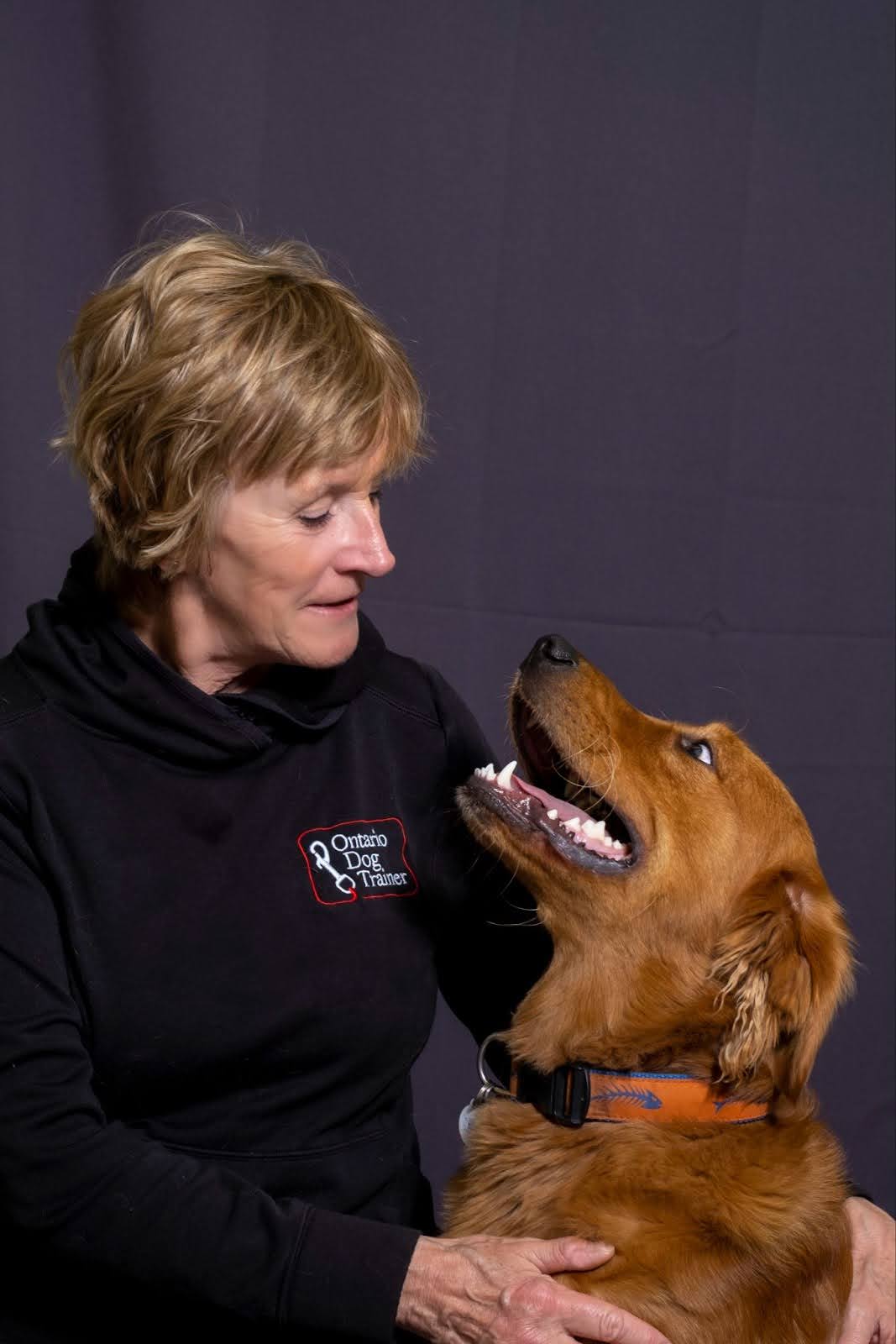 Karen Laws is a certified professional dog trainer, the founder of The Ontario Dog Trainer and the Dog Trainer TRIBE Training Academy. With decades of experience training dogs, educating people, and mentoring aspiring trainers, she is known for her practical, no-nonsense approach to helping both dogs and humans succeed.
Karen’s professional background includes education, public service, wildlife biology, competitive field dog work, and pet dog training. That combination gives her a unique perspective on behaviour, leadership, communication, and what it really takes to create lasting results.
Through her work with dog owners and developing trainers, Karen teaches far more than training exercises. She helps people understand the dog in front of them, improve their communication, and build the kind of confidence that leads to better outcomes in both training and business.
Karen is especially passionate about mentoring pet dog trainers who feel stuck and are ready to grow. Her message is clear, real, and grounded in experience: success in dog training comes from understanding behaviour, building trust, and being willing to do the work.
Follow Karen on Social Media: FaceBook, Instagram, LinkedIn, TikTok, YouTube,
Need personal help? Let’s chat! Click here to book a Virtual assessment!