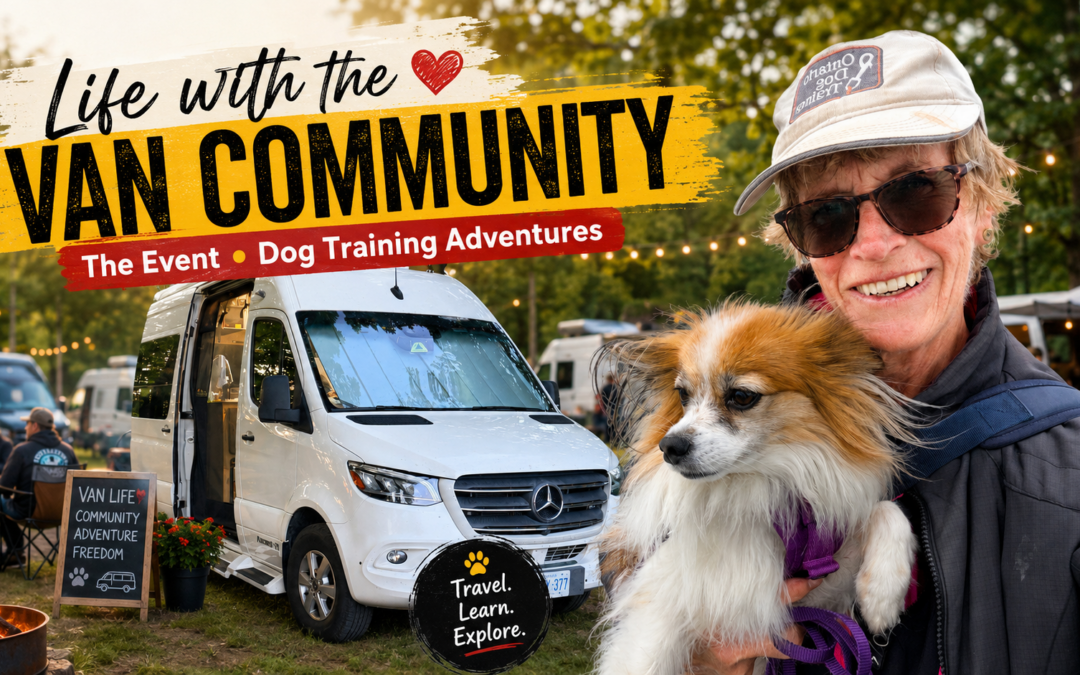
There’s something about travelling in an RV that changes the way you experience a place.
You’re not just arriving somewhere.
You’re bringing your little rolling household with you. Your bed, your coffee, your dog supplies, your storage bins, your “very organized” systems, and at least one item you know you packed but cannot find because the RV has apparently eaten it.
This trip with Pippy had plenty of those moments.
We tucked into campsites, squeezed into spaces that looked suspiciously like they were designed by someone who has never actually parked an RV, took a ferry ride, met new people, reconnected with old friends, and eventually rolled into one of the big highlights of the adventure.
The event.
The Rally By The Sea.
Rallying. By the sea. With our Pleasure-Way van community.
And yes, there were dogs.
Which meant, naturally, there was also training.
Arriving at the Rally
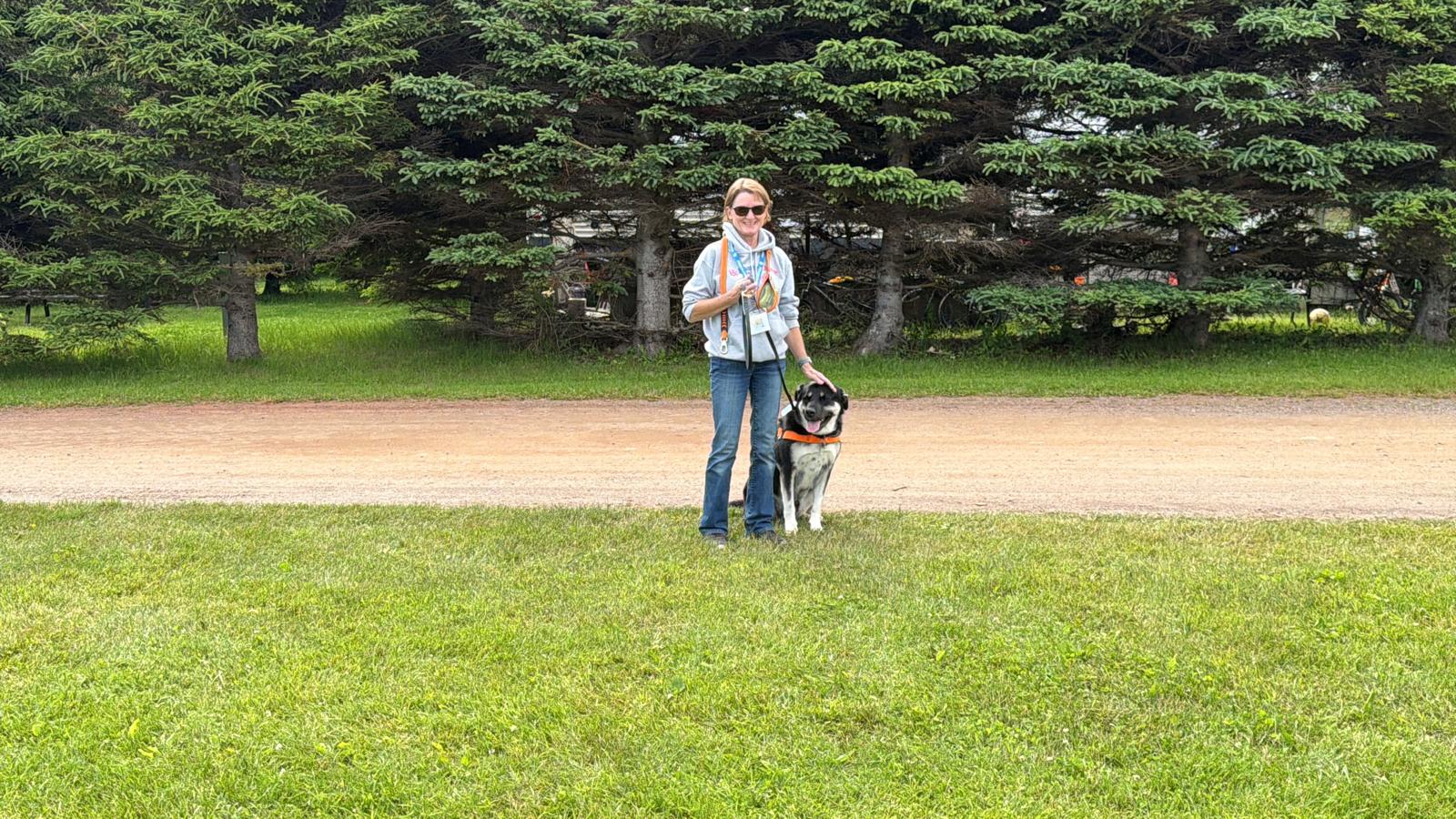
A van or RV gathering has a different feeling from a regular campground.
At a regular campground, people wave, nod, walk their dogs, quietly judge each other’s backing-up skills, and then get on with their evening.
At a rally, people are there to connect.
They want to talk.
They want to compare their Pleasure-Way model with yours, discuss what they love, what they would change, and what clever storage solution they found after deciding the first five did not work.
Class B van owners are always looking for new ways to use tiny spaces better. It is practically a group sport.
People want to know where you’ve been, where you’re going next, which campgrounds are worth returning to, what routes you recommend, what went sideways, and what you would never do again unless heavily bribed.
And, of course, they want to meet the dogs.
Dogs have a way of cutting through the awkwardness of meeting new people. You don’t need a polished introduction when there is a dog at the end of a leash looking mildly interested, suspicious, excited, or fully convinced they are the official welcome committee.
Pippy was very much part of that on this trip.
Small dog. Big presence. Clear opinions.
The Pleasure-Way Van Community
This Pleasure-Way RV Rally is one of the road trip moments I look forward to each year.
There’s something energizing about being around people who understand the appeal of the road. They understand that travel is not always tidy. Campgrounds can be beautiful and ridiculous in equal measure. Even the best-planned route can change because of weather, construction, fuel, timing, or a dog who has decided that now is absolutely not the moment to be rushed.
The van community is practical because it has to be.
When you live, even temporarily, in a small space with wheels, you quickly discover what matters and what is just taking up valuable space.
People share what works.
We laugh about what did not.
Someone always has the tool, tip, or piece of advice you didn’t know you needed.
It’s a wonderful mix of independence and connection. Everyone has their own setup, routine, and reason for being there, but there is still that shared feeling of “Yes, this is strange and wonderful, and somehow we all chose it on purpose.”
For me, this event brought together two parts of my life that I love: RV travel and dog training.
Travelling With a Dog Is Wonderful
Travelling with a dog is wonderful.
It is also not as simple as packing a leash and hoping for the best.
That’s a bold strategy.
Not a good one, but bold.
When you bring a dog to a busy event, you are not just managing your own campsite. You are sharing space with other people, other dogs, moving vehicles, lawn chairs, food smells, bicycles, laughter, conversations, doors opening, dogs passing, and all the little surprises that make real life real.
Some dogs take it all in stride.
They settle beside the chair, watch the world go by, and look as though they have read the campsite etiquette manual.
Other dogs find the whole situation deeply exciting.
People walking past? Exciting.
Dogs walking past? Very exciting.
A cooler opening? Urgent.
A chair folding? Suspicious.
Someone laughing two campsites away? Worth reporting immediately.
This is where training matters.
Not trick training.
Not flashy training.
Useful, everyday lifestyle training.
The kind that helps a dog settle, walk politely, recover from excitement, leave other dogs alone, and understand that not every moving object requires a public announcement.
That is real-life training.
And it is exactly the kind of training I care about most.
Training Adventures on the Road
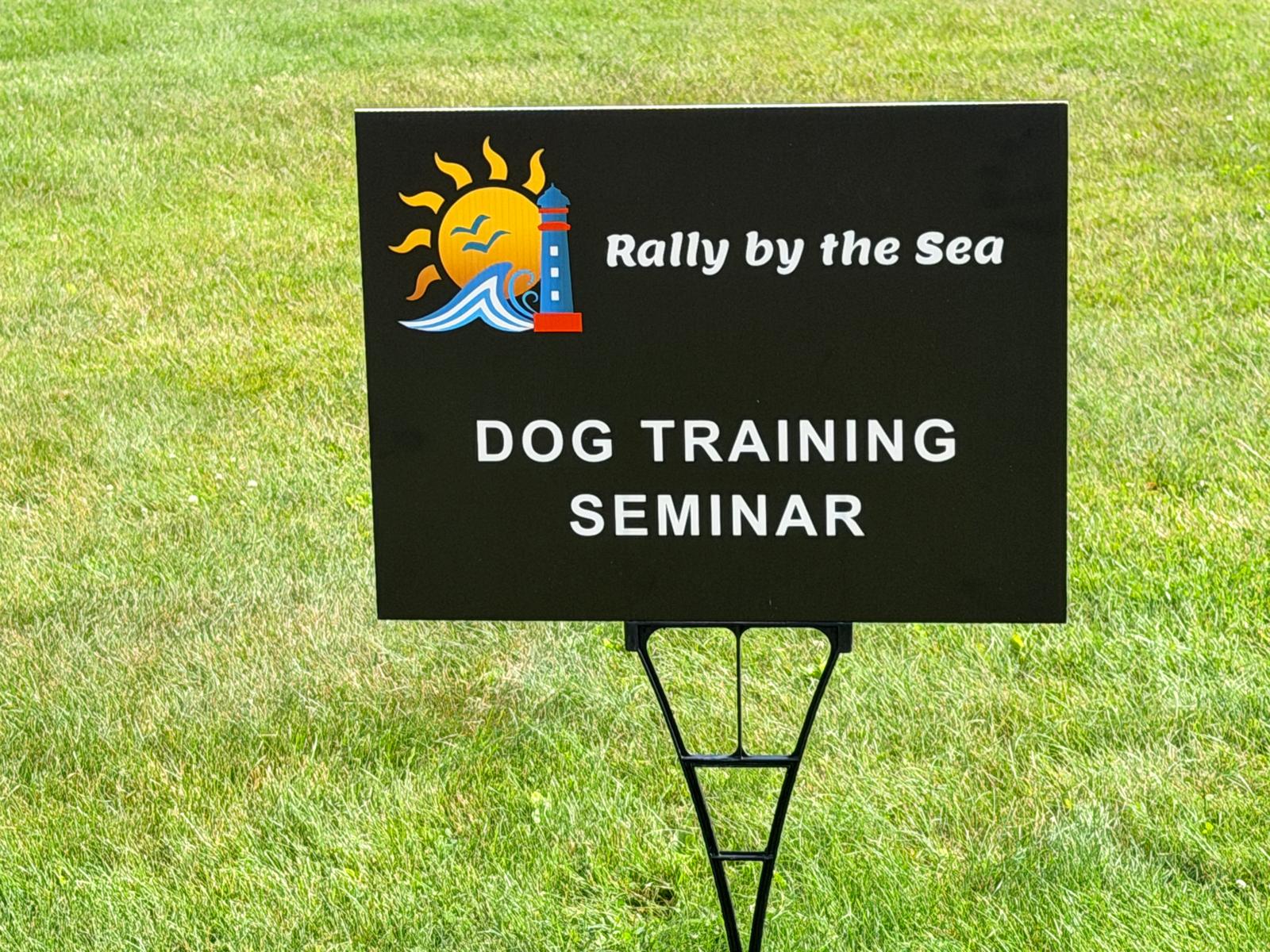
During the rally, I had the opportunity to teach and train a few people and their dogs.
That made me happy.
After several years of working with dogs, as a professional dog trainer, I still love watching the lightbulb go on for owners.
Sometimes it’s a big moment.
Sometimes it’s small.
A dog checks in instead of pulling.
A dog settles on a mat instead of pacing.
A dog labelled as aggressive initiates friendly play with another dog.
An owner realizes they’re reacting too late or too loudly.
A leash loosens.
A dog walks past another dog without making it weird.
Those moments matter.
Especially in a place like this.
Training at a van rally is training where life is actually happening. It’s one thing to ask your dog to sit in the kitchen. It’s another thing entirely to ask that same dog to settle at a busy campsite with people, dogs, smells, noises, and movement everywhere.
That doesn’t mean your dog is being bad when they struggle.
It means they need help understanding what is expected in that environment.
The environment changed.
The training needs to come with them.
The Skills That Matter Most
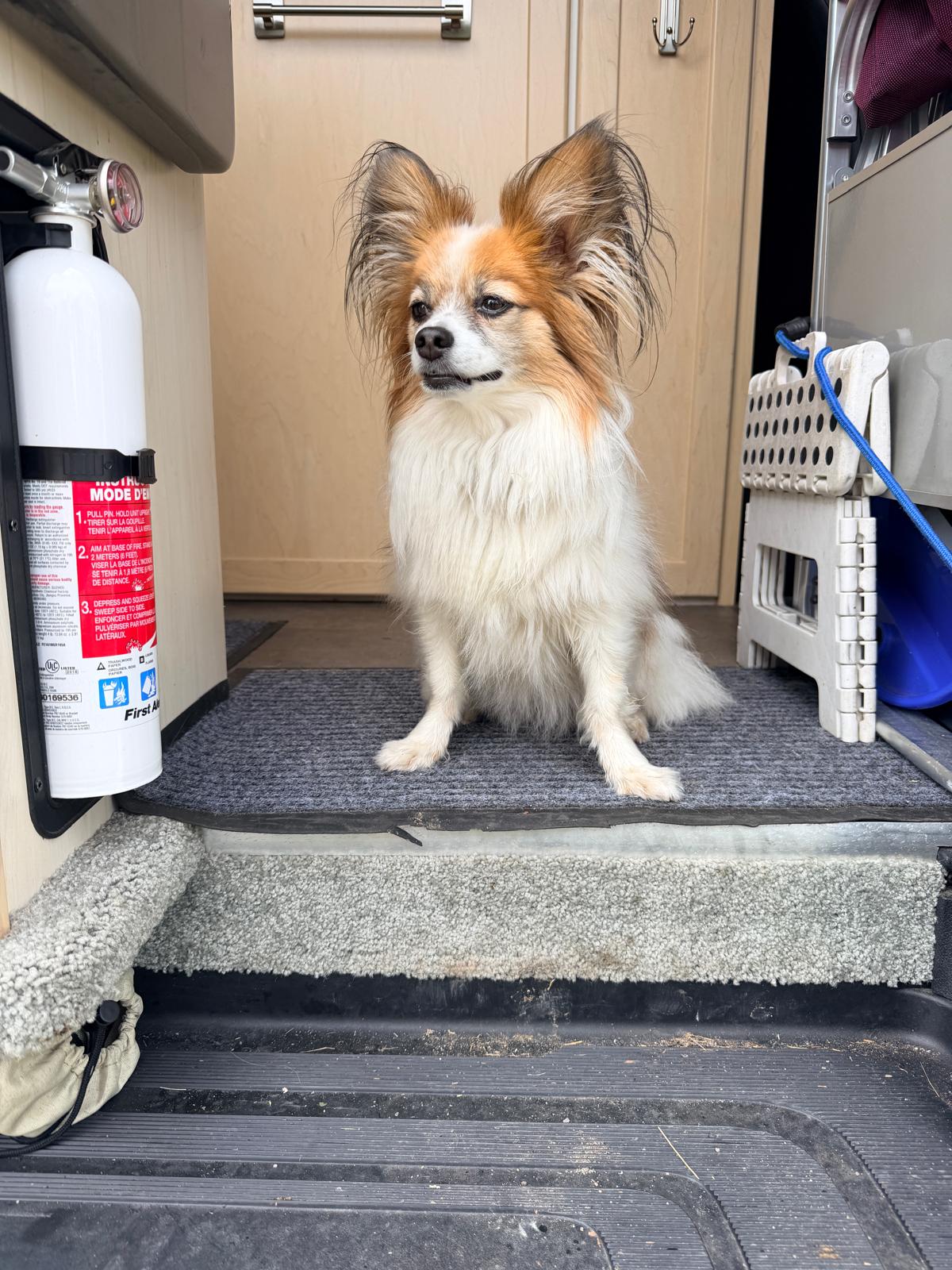
The skills that matter most for RV and van life are not complicated, but they are important.
Calm, controlled exits from the van or RV.
Loose leash walking through busy spaces.
Settling at the campsite.
Passing other dogs without lunging, barking, or dragging the owner into next week.
Coming when called.
Resting in a crate, on a bed, or in a designated space.
Learning when to engage with people or other dogs, and when to switch off.
Those are the skills that give dogs more freedom.
A dog who can settle gets to be included.
A dog who can walk politely gets to explore more places.
A dog who can handle distractions gets to enjoy the trip instead of being managed every second.
That’s the whole point.
Training is not about controlling every breath your dog takes.
It’s about giving them enough structure and clarity to make better choices.
And owners need that too.
A good training plan gives the human something useful to do instead of standing there holding the leash, apologizing, and hoping the ground opens up.
Pippy’s Role in the Adventure
Pippy was part of every bit of this trip.
She travelled in the RV, settled into different campsites, handled new places, and joined me for the ferry ride.
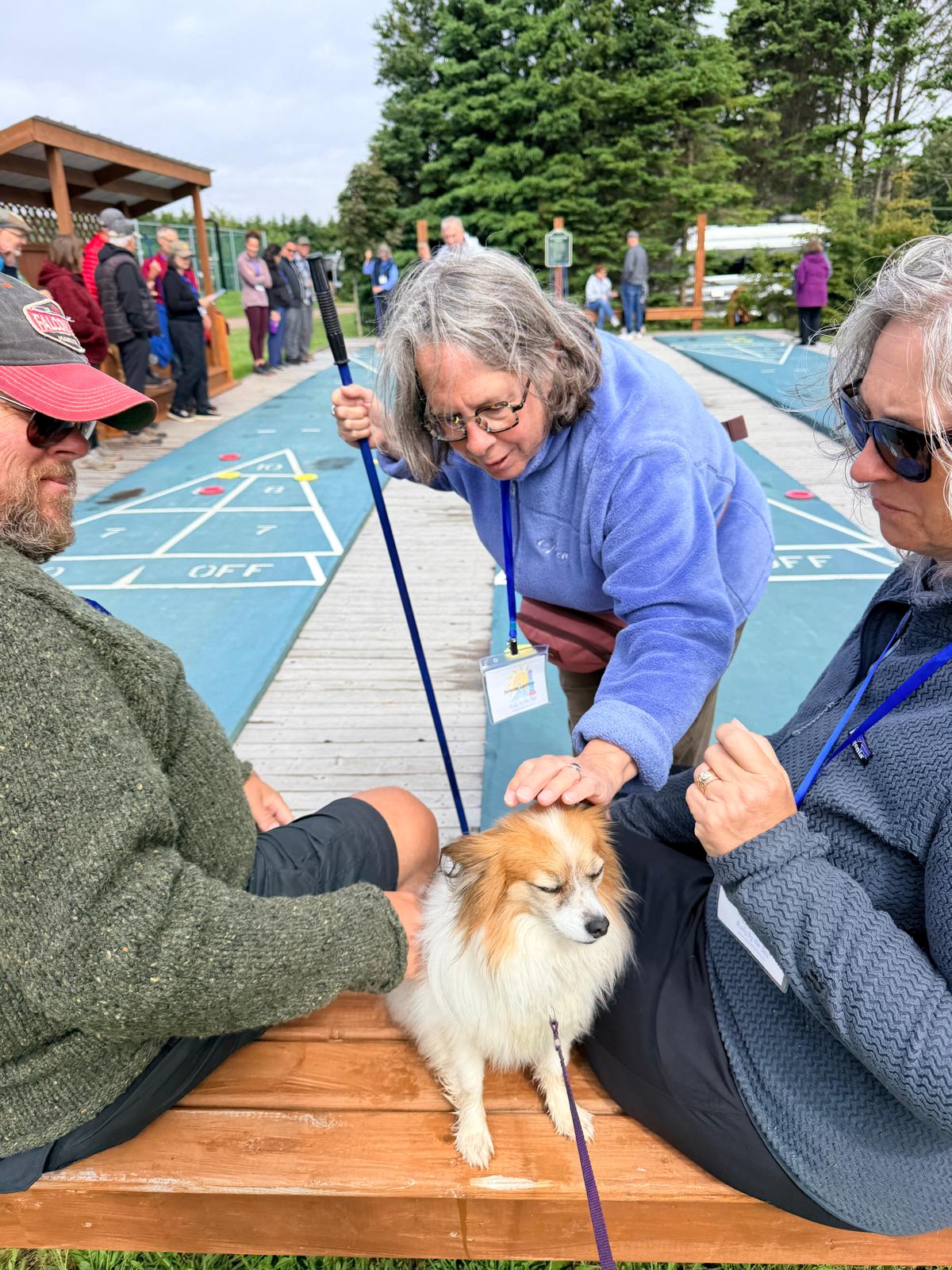
There we were, wind, water, open space behind us, and Pippy tucked in close, taking it all in.
That is one of the gifts of travelling with a dog. They become part of the memory in a very real way.
But Pippy is also a reminder that small dogs still need real training.
Small dogs are often expected to simply cope with things because they are easy to pick up. But picking up your dog is not the same as teaching them how to feel safe, calm, and capable.
Pippy still needs structure.
She still needs rest.
She still needs clear expectations and a safe place to settle.
She still needs to know when it’s time to participate and when it’s time to take a break.
Small dog. Real dog. Same principles.
Possibly more dramatic hair in the wind.
Training Creates Freedom
One of the biggest reasons I care so much about training is that effective training creates freedom.
That has always been at the heart of my work.
Owners usually come to training because something is not working. Their dog is pulling, barking, jumping, reacting, bolting, pestering, biting, nipping, or generally making life more complicated than expected.
Training helps bring life back into balance.
It gives your dog clarity.
It gives the owner confidence.
It creates more freedom for both.
This matters even more when travelling.
A dog who can handle new environments gets to come along more often. A dog who can settle at the campsite gets to enjoy more of the trip. A dog who can walk through an event without turning every passing dog into a crisis gets to be included instead of left behind.
Freedom is not created by letting your dog do whatever they want.
That usually creates chaos with a leash attached.
Freedom comes from structure, trust, consistency, and a dog who understands how to live in the world with you.
That’s the good stuff.
The Real World Is the Best Teacher
I love training in real environments because the dog always tells the truth.
There is no pretending.
If the dog understands the skill only when the room is quiet, that is useful information.
If the dog can do it at home but not at a campground, that is useful information too.
If the owner realizes they have been rewarding the very behaviour they keep complaining about, well, that is also useful information.
Slightly uncomfortable, perhaps.
But useful.
The goal is not perfection.
Perfection is overrated and usually does not survive the first squirrel.
The goal is progress.
A dog that recovers faster.
An owner who responds earlier.
A leash that stays softer.
A dog who learns to look, think, and choose instead of react first and ask questions never.
That is the work.
More Than an Event
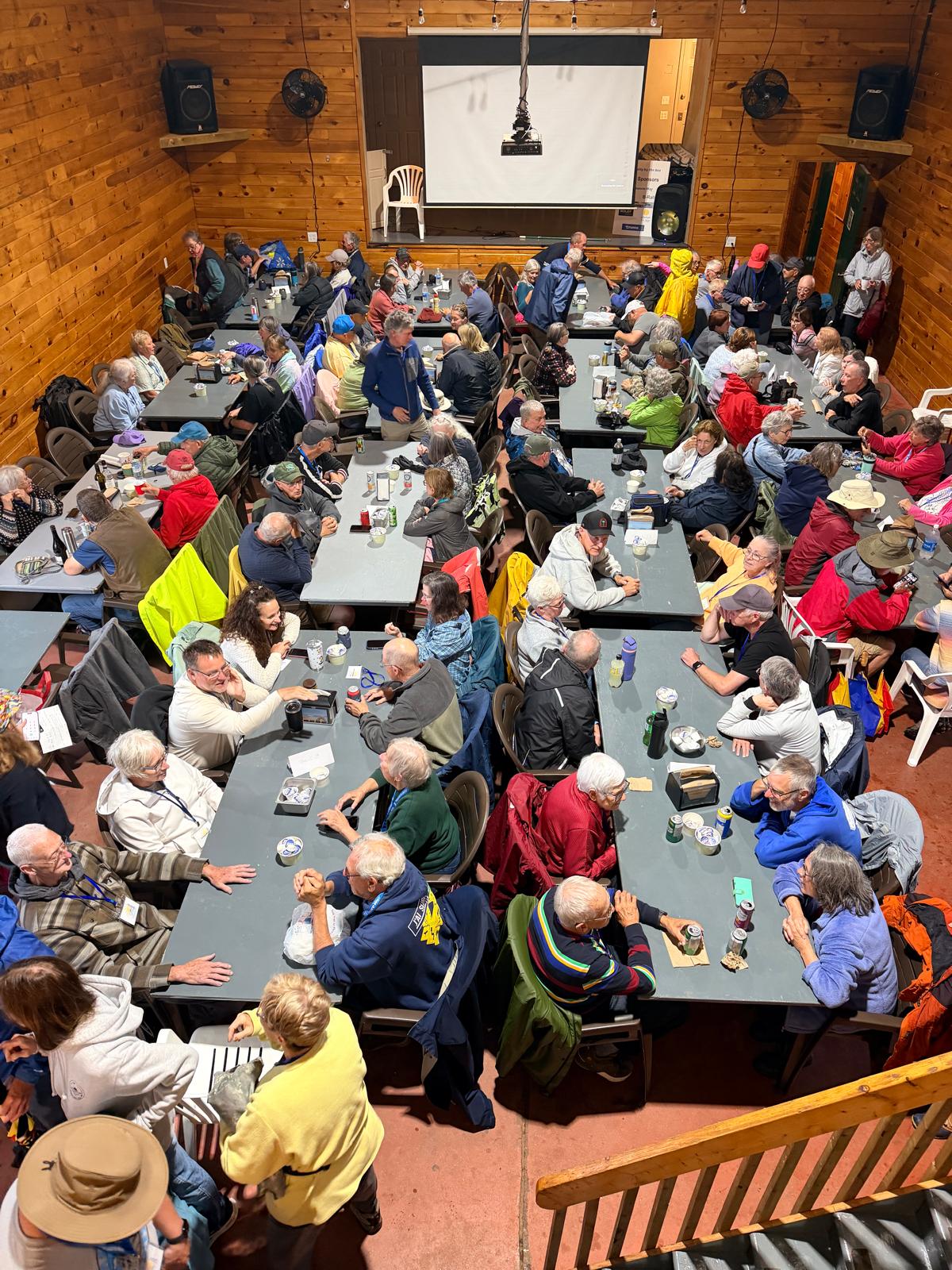
The Rally By The Sea was about more than vans.
It was about community.
It was about people who love travel, dogs, the outdoors, and the strange satisfaction of figuring out how to make a small space work.
It was about sharing stories, learning from each other, and laughing about the things that go sideways.
And for me, it was about bringing my dog training experience into a setting where it was wanted and useful.
At the campsite.
On the path.
Beside the van.
In the middle of the event energy.
That’s where dogs and owners need practical skills.
Not theory.
Not perfection.
Just clear, useful training that makes everyday life better.
The Mystery of the Missing Microphone Windscreen
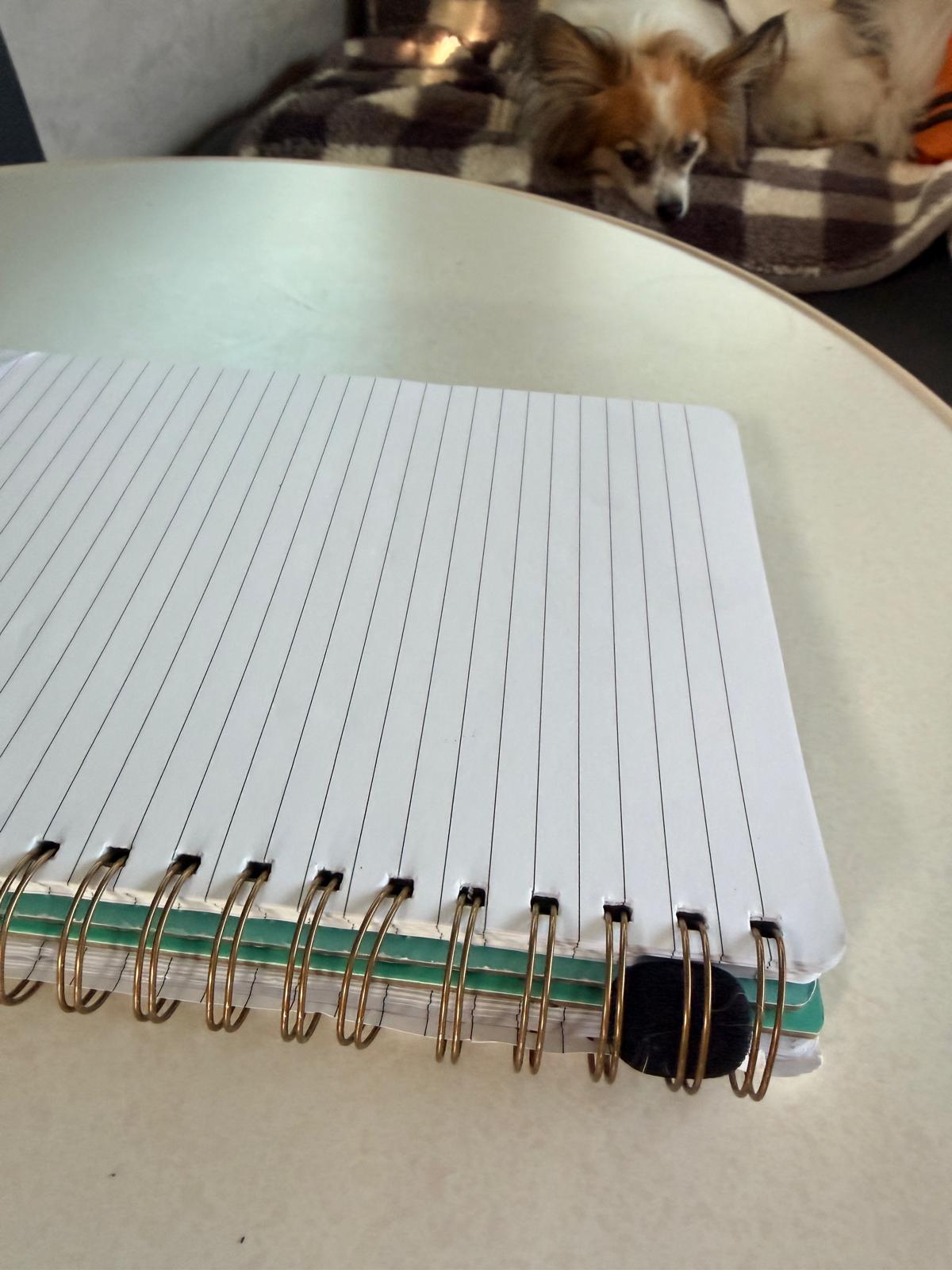
Of course, no RV trip would be complete without losing something. Not truly losing it, obviously.
Putting it somewhere “safe.”
Which is worse.
Somewhere around Day 5 of the trip, my microphone windscreen disappeared.
Gone.
Vanished.
I knew I had packed it. I knew I had used it. I knew it had to be somewhere in the van.
And yet, nothing.
I looked in all the sensible places. Then I looked in all the ridiculous places. Then I started questioning my memory, my organizational systems, and possibly reality itself.
By the end of the trip, I had accepted that the windscreen was gone.
Then, on Day 30, while cleaning out the van, I found it.
Not in a drawer.
Not in a bag.
Not tucked beside the microphone.
It was lodged in the spiral binding of a notebook inside my van manual briefcase.
Honestly, I couldn’t make that shot into a basket if I tried.
RV life likes to keep us humble.
Just when you start to feel organized, your van quietly hides a small piece of equipment in a place no reasonable person would ever look and waits a month to make its point.
The Adventure Continues
Life with the Rally By The Sea van community was social, generous, funny, and full of learning.
There were conversations.
There were dogs.
There were training moments.
There were people to help.
There were stories to share.
And there was, apparently, one microphone windscreen living its best secret life inside a notebook spiral.
Mostly, this part of the trip reminded me why I love this lifestyle.
The road brings freedom.
The van community brings connection.
The dogs bring honesty.
And training helps tie it all together so people and dogs can enjoy more of the adventure together.
Pippy and I were ready.
Well, I was ready.
Pippy was ready as long as snacks, naps, and a full review of all interesting smells remained on the schedule.
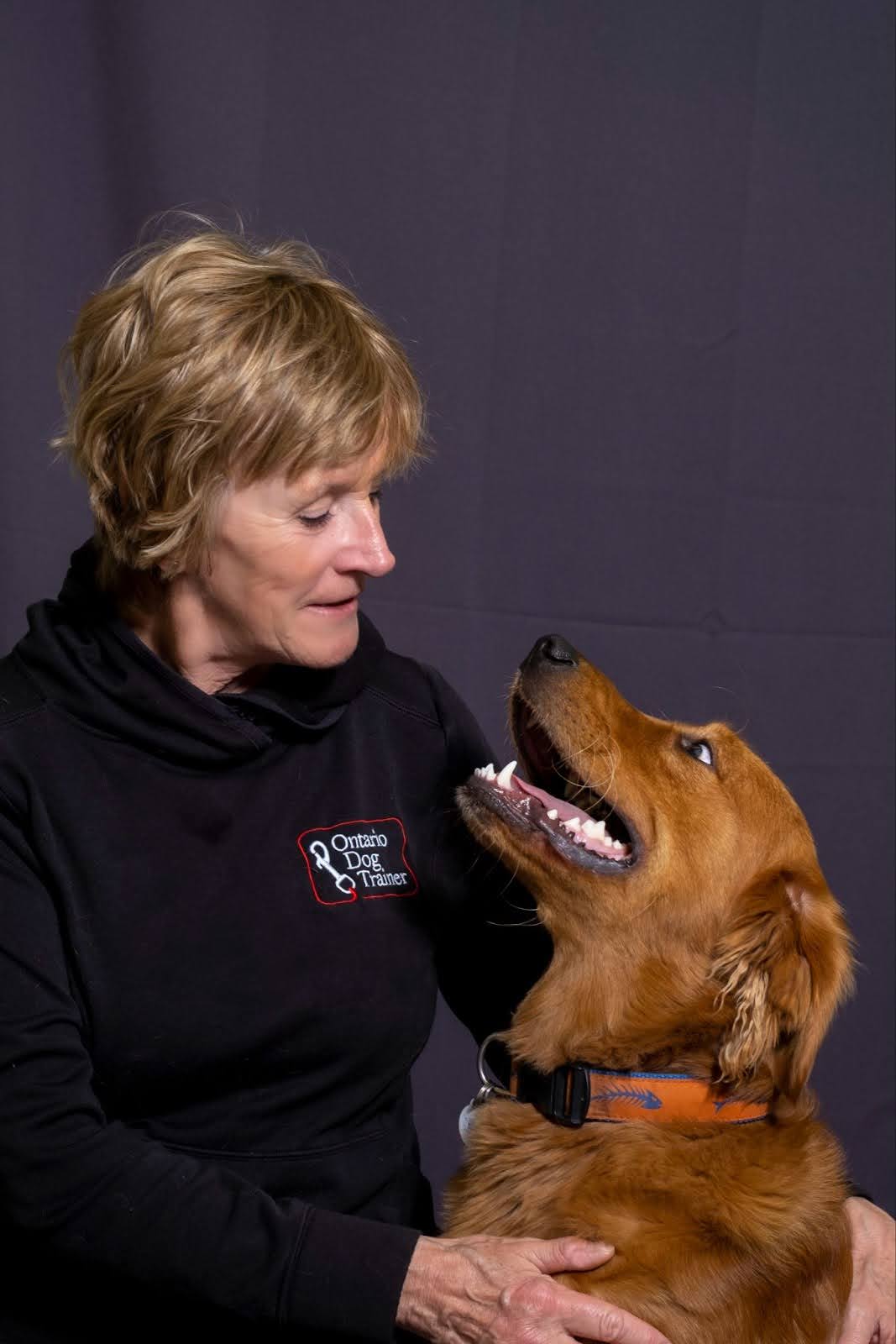 Karen Laws is a certified professional dog trainer, the founder of The Ontario Dog Trainer and the Dog Trainer TRIBE Training Academy. With decades of experience training dogs, educating people, and mentoring aspiring trainers, she is known for her practical, no-nonsense approach to helping both dogs and humans succeed.
Karen’s professional background includes education, public service, wildlife biology, competitive field dog work, and pet dog training. That combination gives her a unique perspective on behaviour, leadership, communication, and what it really takes to create lasting results.
Through her work with dog owners and developing trainers, Karen teaches far more than training exercises. She helps people understand the dog in front of them, improve their communication, and build the kind of confidence that leads to better outcomes in both training and business.
Karen is especially passionate about mentoring pet dog trainers who feel stuck and are ready to grow. Her message is clear, real, and grounded in experience: success in dog training comes from understanding behaviour, building trust, and being willing to do the work.
Follow Karen on Social Media: FaceBook, Instagram, LinkedIn, TikTok, YouTube,
Need personal help? Let’s chat! Click here to book a Virtual assessment!